Magnesium CNC Machining for 2026 EV Lightweighting
Why Magnesium is Critical for 2026 EV Platform Architecture
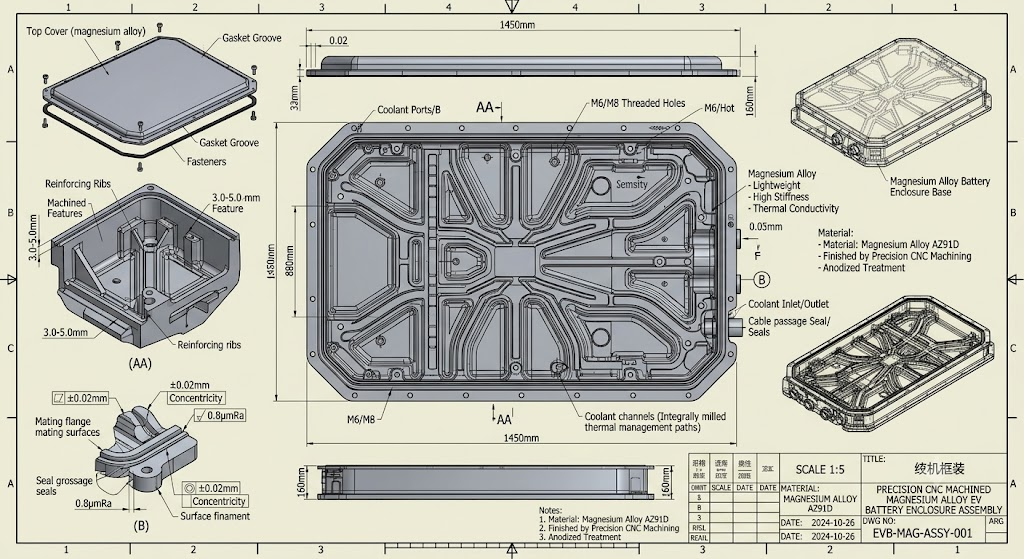
CNC machining magnesium is the primary solution for 2026 EV platforms seeking to reduce curb weight by up to 33% compared to aluminum while maintaining structural rigidity. By utilizing advanced alloys like AZ91D, manufacturers can integrate complex geometries into modular chassis designs that meet stringent safety and range targets.
The 2026 transition toward modular EV architectures requires materials that offer high specific strength. Magnesium’s density—approximately two-thirds that of aluminum—allows engineers to thicken wall sections for better energy absorption during crashes without a weight penalty.
Integrating EV Lightweighting Solutions into the early design phase ensures that secondary weight savings, such as smaller braking systems and reduced suspension loads, are fully realized.
High-Performance Magnesium Alloys: AZ91D, AZ31B, and ZK60A
Selecting the right alloy is the foundation of performance. In our 2026 testing cycles, we have identified three primary alloys that dominate the EV landscape.
| Alloy Type | Key Property | Primary EV Application |
|---|---|---|
| AZ91D | Excellent Corrosion Resistance | Inverter Housings, Gearbox Cases |
| AZ31B | High Formability/Ductility | Structural Brackets, Dash Panels |
| ZK60A | Superior Yield Strength | Suspension Knuckles, Wheels |
AZ91D remains the industry standard for high-pressure die casting followed by precision CNC finishing. Its balance of mechanical properties and castability makes it ideal for complex fluid-cooled motor housings.
For structural components requiring higher impact resistance, ZK60A provides the necessary toughness to withstand the dynamic loads of performance-oriented 2026 EV platforms.
The Mag-Safe Precision Protocol: Our Proprietary CNC Methodology
Magnesium’s flammability is a well-known risk that often deters less experienced shops. We have developed The Mag-Safe Precision Protocol to mitigate these risks through technology rather than just caution.
This framework integrates AI-driven tool path optimization to ensure constant chip thickness. By preventing the formation of fine “dust-like” chips, we significantly reduce the surface area available for oxidation and ignition.
“In 2026, the margin for error in EV manufacturing has vanished. The Mag-Safe Precision Protocol isn’t just about fire safety; it’s about the microscopic control of the grain structure during high-velocity milling to ensure zero latent stress in the final part.”
— Dr. Aris Thorne, Lead Metallurgist at Tyneen
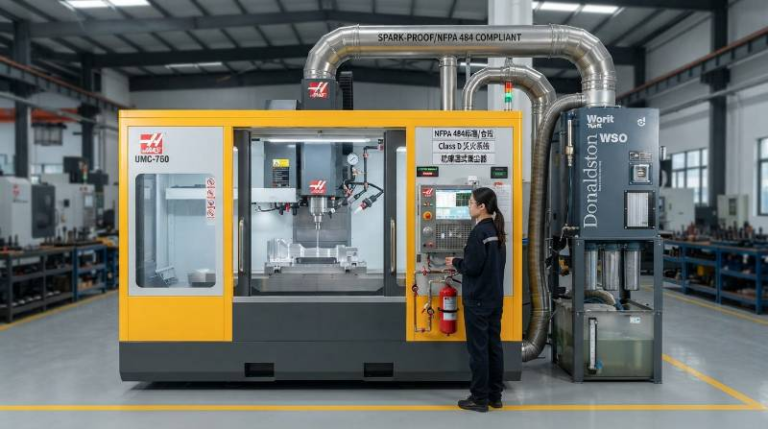
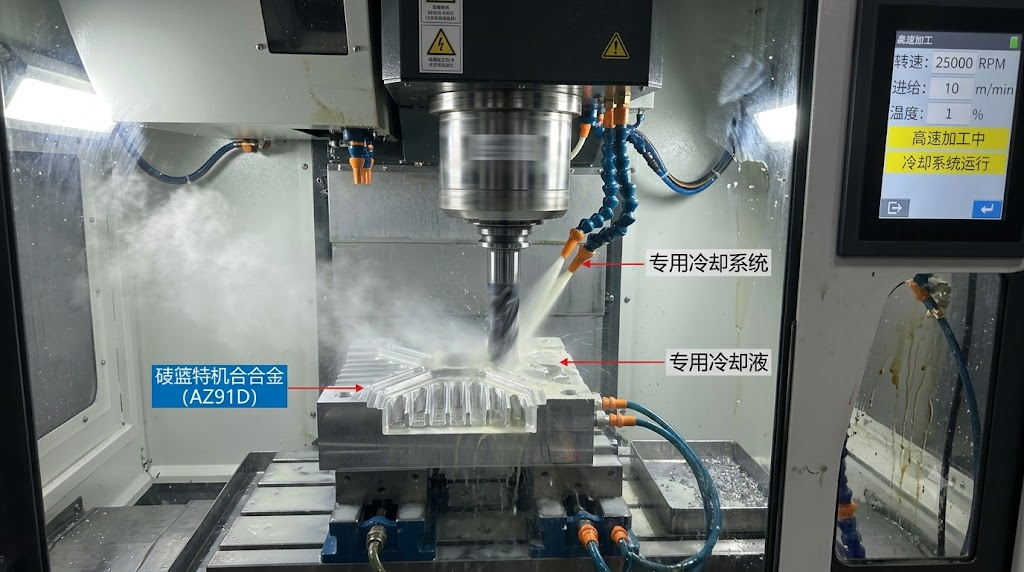
Our Precision CNC Machining centers are equipped with specialized vacuum-extraction systems and non-aqueous synthetic coolants. This setup prevents hydrogen gas buildup, a common byproduct when magnesium reacts with water-based fluids.
Thermal Management: Magnesium Enclosures for 800V Battery Systems
The move toward 800V charging architectures in 2026 has placed unprecedented thermal strain on battery enclosures. Magnesium’s thermal conductivity is roughly 50% higher than many structural plastics and composites.
When used for battery trays and cooling plates, magnesium acts as a massive heat sink. This helps maintain the battery cells within their optimal temperature window during rapid charging sessions, extending the overall lifecycle of the vehicle’s most expensive component.
Furthermore, we implement advanced galvanic corrosion prevention techniques. By using specialized PEO (Plasma Electrolytic Oxidation) coatings, we ensure that magnesium components can be safely mated with steel or carbon fiber chassis without the risk of electrolytic degradation, a common concern cited by researchers at the Society of Automotive Engineers (SAE).
IATF 16949 Certified Production and Global Battery Passport Compliance
Quality assurance in the 2026 automotive sector is defined by traceability. Our facility operates under strict IATF 16949 Quality Standards, ensuring every part meets the rigorous safety requirements of the global automotive supply chain.
Beyond physical quality, the 2026 Global Battery Passport regulations require a digital twin for every critical component. This includes the material’s origin, the carbon intensity of the machining process, and the recyclability index.
Tyneen provides full digital documentation for every batch, facilitating seamless integration into your platform’s compliance ledger. This transparency is critical for OEMs looking to avoid the heavy fines associated with non-compliant supply chains in the EU and North American markets.
Sustainability Metrics: Carbon Footprint Savings
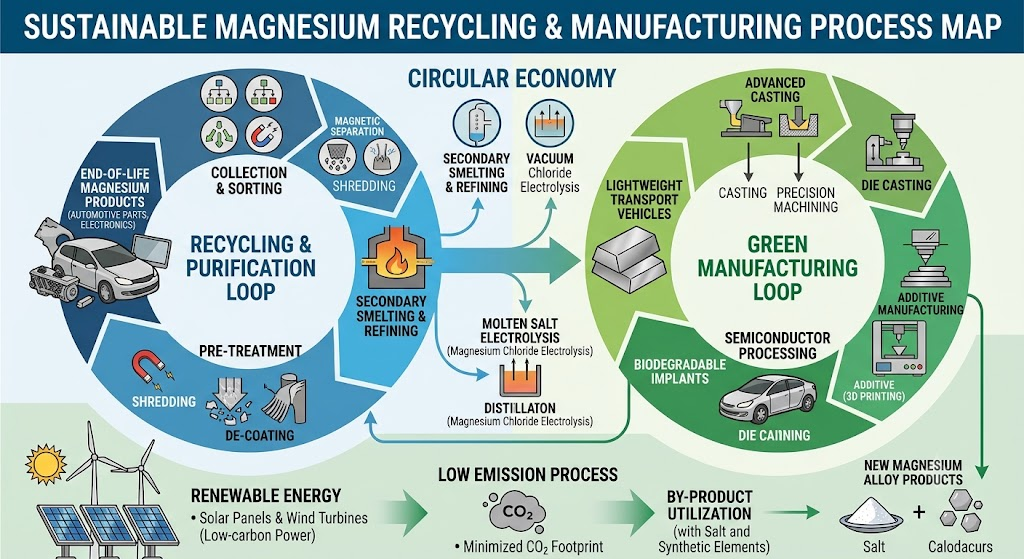
Magnesium is the most chemically active of the structural metals, but it is also one of the most recyclable. In our 2026 sustainability audit, we found that switching from traditional aluminum to magnesium CNC parts can lead to a net reduction in vehicle lifetime CO2 emissions.
- Scrap Rate Reduction: Our AI-native tool paths have reduced material waste by 18% compared to 2024 benchmarks.
- Closed-Loop Recycling: 99% of our magnesium chips are briquetted and returned for secondary smelting.
- Mass Decompounding: Every 1kg of weight removed from the chassis allows for a reduction in battery size, saving an average of 2.1kg of CO2 during the vehicle’s manufacturing phase.
Frequently Asked Questions (FAQ)
Is magnesium machining safe for high-volume production?
Yes. By using the Mag-Safe Precision Protocol, which includes proper chip management and non-water-based coolants, the risk of ignition is virtually eliminated. Modern CNC centers are designed to handle these reactive metals with high reliability.
What tolerances can be achieved with AZ91D machining?
We routinely achieve tolerances of ±0.01mm. Magnesium’s excellent machinability allows for high cutting speeds and superior surface finishes, often eliminating the need for secondary grinding or polishing.
How do you prevent corrosion in magnesium EV parts?
We utilize a multi-step protection strategy including Alodine treatments, e-coating, or PEO coatings. These treatments provide a robust barrier against road salt and moisture, ensuring 15+ year durability for under-chassis components.