
PA (Nylon) Machining
Polyamide (PA/Nylon) engineering plastics including PA6, PA66, PA12, and glass-filled grades, offering outstanding wear resistance, toughness, and chemical resistance for demanding mechanical and structural applications.
Material Properties
1.13-1.15
g/cm³
1.13-1.15
g/cm³
70-85
MPa
80-90
MPa
220
°C
265
°C
75-80
1.3-1.8
%
Machining Recommendations
Recommended Methods
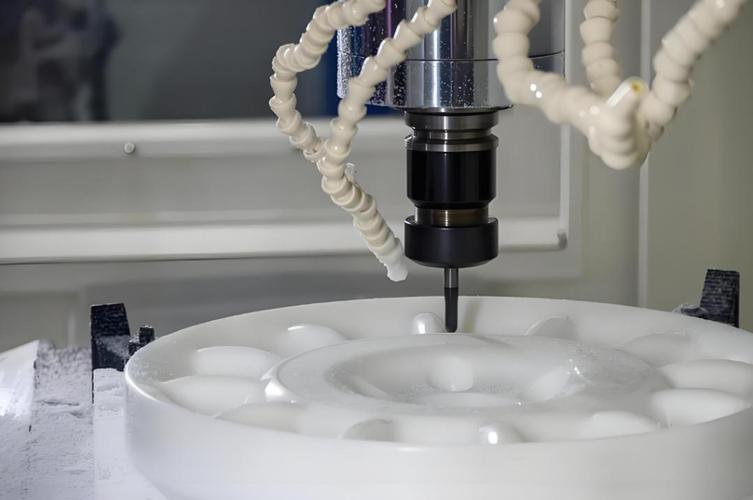
CNC milling, turning, drilling, threading, routing
Tool Materials
Carbide or high-speed steel; sharp tools essential to prevent tearing
Cutting Speeds
200-500 m/min (comparable to soft metals)
Feeds
0.1-0.4 mm/rev
Coolant
Dry machining or compressed air preferred; avoid water-based coolants to minimize moisture absorption
Machinability
Good – tendency to absorb moisture requires pre-drying; glass-filled grades are more abrasive
Surface Finish
Ra 0.4-1.6 μm standard; Ra 0.2 μm achievable with fine finishing passes
Application Case Studies
Automotive Fuel System Components
Industry: Automotive
Challenge
PA66 fuel line connectors and brackets requiring resistance to fuel, oils, and temperatures up to 150 °C
Solution
Selected heat-stabilized PA66 grade and optimized machining parameters to maintain dimensional stability
Result
Parts passed 1000-hour fuel immersion testing; supplied 200,000+ components annually to Tier-1 automotive suppliers
Industrial Conveyor Wear Pads
Industry: Industrial Manufacturing
Challenge
PA6 wear strips for high-speed conveyor systems requiring low friction and long service life
Solution
Machined oil-filled PA6 grade to precise profile tolerances; implemented self-lubricating surface treatment
Result
Extended wear pad service life from 6 months to 24 months; reduced maintenance downtime by 60%
Medical Instrument Housings
Industry: Medical & Life Sciences
Challenge
Sterilizable PA12 housings for portable diagnostic instruments requiring dimensional stability after repeated autoclave cycles
Solution
Used low-moisture-absorption PA12 grade with precision CNC machining; validated dimensional change < 0.1% after 100 autoclave cycles
Result
Achieved ISO 13485 compliance; supplied 5,000+ housings to medical device OEMs
Precision Gears for Robotics
Industry: Robotics & Automation
Challenge
PA66-GF30 (30% glass-filled) gears for collaborative robot joints requiring high stiffness and low backlash
Solution
5-axis CNC machining of gear profiles with ±0.01 mm tooth profile accuracy; CMM verification of every part
Result
Achieved gear noise level < 45 dB and backlash < 0.05°; extended robot joint service life by 40%
Electrical Connector Housings
Industry: Electronics & Electrical
Challenge
PA66 UL94 V-0 flame-retardant connector housings for industrial control panels
Solution
Machined flame-retardant PA66 grade to tight pin-hole tolerances; implemented 100% dimensional inspection
Result
Passed UL94 V-0 flammability testing; zero field failures across 500,000+ installed units
Technical Specifications
Available Forms
2mm to 500mm diameter/width; sheets up to 1000×2000 mm
Tolerances±0.02mm to ±0.05mm (standard); ±0.01mm for precision applications (conditioned)
Lead Times1-2 weeks for standard orders; 3-5 days for prototypes
Quality StandardsFrequently Asked Questions
Related Services
CNC Milling
Learn more about our cnc milling capabilities
CNC Turning
Learn more about our cnc turning capabilities
CNC Drilling
Learn more about our cnc drilling capabilities
Advanced Machining
Learn more about our advanced machining capabilities
Ready to Get Started?
Contact our engineering team to discuss your metals machining requirements.