Precision CNC Machining for Magnesium Auto Parts | Tyneen
Transitioning from prototyping to production requires controlling several metallurgical characteristics. Magnesium’s low elastic modulus, pyrophoric chip risks, high thermal expansion coefficient, and galvanic vulnerability demand specialized equipment and tooling strategies. Tyneen addresses these engineering constraints through purpose-built multi-axis machining cells and proven safety architectures.
Magnesium Automotive Parts Machining: Technical Decision Matrix & Risk Framework
Magnesium has a hexagonal close-packed (HCP) crystalline lattice that limits room-temperature ductility but enables excellent machinability at high surface speeds. Magnesium alloys generate lower cutting forces—roughly 50% lower than 6061-T6 aluminum and one-sixth that of carbon steel. This characteristic lowers cutting tool spindle loads and minimizes tool wear rates.
“Machinability Index (MI) reflects the relative cutting speed possible without degrading surface integrity or tool life. Wrought magnesium AZ31B achieves an MI of 500 (relative to free-cutting brass at 100), compared to 300 for Al 6061-T6 and 70 for 4140 steel, allowing spindle feeds exceeding 2,500 m/min.”
Selecting the right alloy balance depends directly on the structural requirements of the vehicle subassembly:
- AZ31B (3% Al, 1% Zn): Wrought extrusion and sheet alloy offering high toughness, superior elongation (12% to 15%), and weldability. Common for structural brackets, cockpit crossmembers, and prototype chassis gussets.
- AZ91D (9% Al, 1% Zn): The standard high-pressure die casting (HPDC) alloy. Harder and stronger with a yield strength of 150 MPa to 160 MPa, but exhibits brittle failure modes at high strains (elongation 3%). Machined for inverter enclosures, motor front-plates, and gearbox split-lines.
- AM60B (6% Al, 0.3% Mn): High-energy absorption alloy optimized for crashworthiness. Yields elongation over 8% with superior impact resilience. Typical for steering column nodes, seat frames, and structural subframe nodes.
To examine raw alloy availability and physical properties, evaluate our comprehensive portfolio of automotive lightweight materials.
Thermal Drift and Low Modulus Compensation in Precision Magnesium Milling
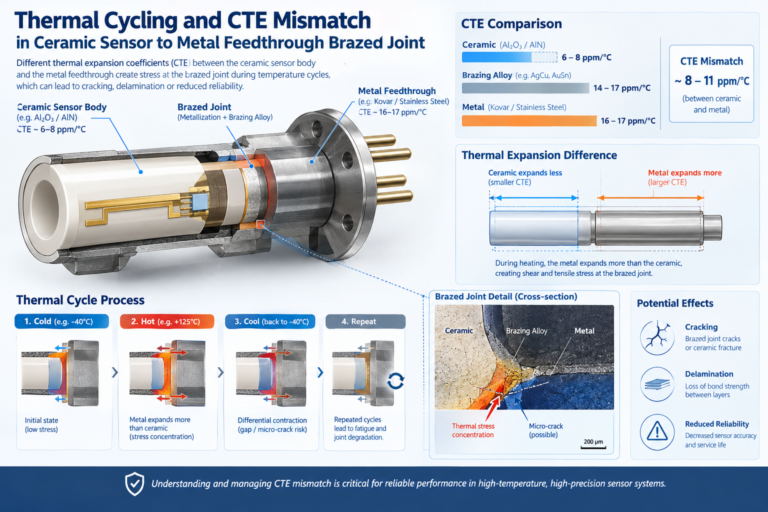
Precision magnesium machining presents two metallurgical challenges: a low elastic modulus (45 GPa versus aluminum’s 69 GPa and steel’s 210 GPa) and a high coefficient of thermal expansion (CTE ≈ 26 × 10⁻⁶/K). Clamping forces that are acceptable for aluminum can easily deflect thin-walled magnesium components, causing geometric spring-back and out-of-round bore profiles once released from fixtures.
ΔL: Thermal Expansion (mm), L₀: Nominal Dimension (mm), α: CTE (26 × 10⁻⁶/K), ΔT: Temperature Differential (°C)
A temperature rise of just 15°C inside an uncontrolled machine enclosure will expand a 300 mm gearbox housing by 0.117 mm. This thermal growth is large enough to exceed a standard ±0.008 mm bearing journal tolerance. Tyneen controls these forces using these specific shop floor protocols:
- Polycrystalline Diamond (PCD) Tooling: Polished PCD end mills with steep rake angles (15° to 20°) and polished flutes minimize friction, eliminate built-up edge (BUE), and prevent heat transfer into the substrate.
- Dynamic Fixture Clamping: Multi-point hydraulic fixtures with custom elastomeric nests spread clamping loads over wide contact surfaces, preventing localized thin-wall deflection.
- In-Process Renishaw Optical Probing: On-spindle probes take reference measurements at critical datums before each finish cut, allowing the CNC controller to offset toolpaths for ambient thermal variation.
Pyrophoric Risk Mitigation: The Tyneen Safe-Mag™ Inert Machining Protocol
Magnesium chips, swarf, and fine particulates oxidize rapidly when exposed to air. When finely divided, magnesium is pyrophoric and can ignite at temperatures above 473°C (883°F). Standard water-soluble coolants cannot be used: hot magnesium reacts chemically with water to produce flammable hydrogen gas and magnesium hydroxide.
Water-coolant contact produces flammable hydrogen gas and generates intense exothermic heat.
Tyneen prevents shop floor fire risks by applying strict procedural controls across every magnesium machining cell:
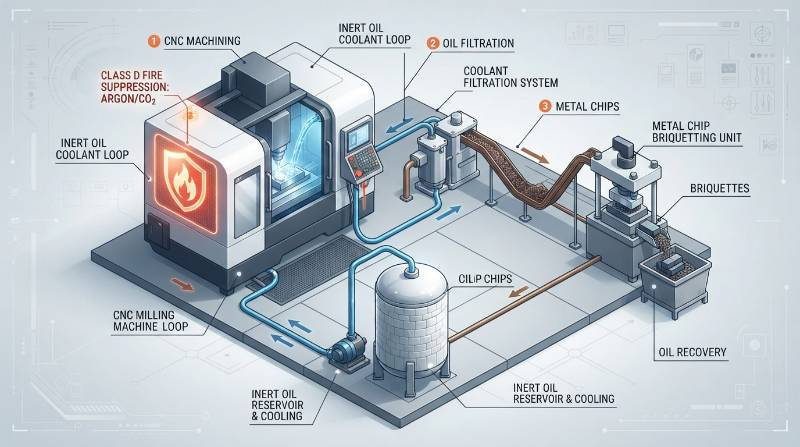
- Synthetic Ester High-Flash Mineral Oil: Machining centers use high-flash-point mineral oils (flash point > 210°C) or operate via dry high-speed milling paired with compressed chilled air (vortex cooling). This completely eliminates water from the cutting interface.
- Targeted High-Feed Chip Evacuation: Toolpath programs avoid prolonged rubbing, dwell times, or dull tool passes that could generate fine, dust-like swarf. Coarse chips absorb and carry away cutting heat safely without igniting.
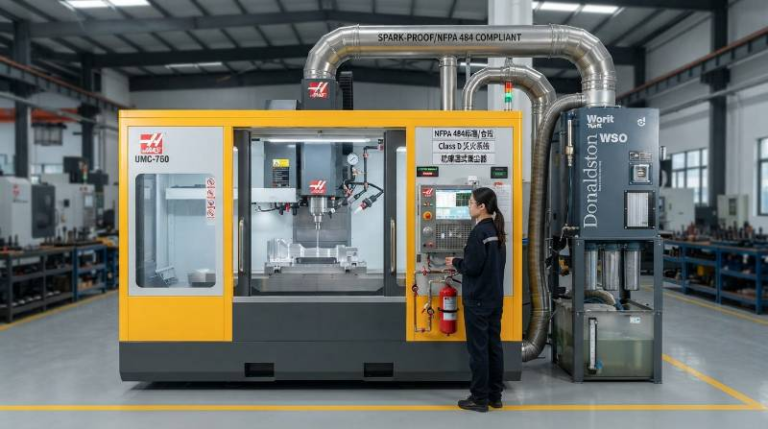
- Class D Fire Suppression Setup: Machining enclosures are protected by automatic argon-gas purging systems and equipped with adjacent dry Class D powder canisters (sodium chloride/flux based according to NFPA 484 Standard for Combustible Metals).
- Continuous Briquetting: Conveyors pull swarf out of machine enclosures continuously into scrap compactors that press loose chips into dense pucks, eliminating combustible air pockets.
EV Lightweighting Magnesium CNC: Structural Applications in Powertrains and Chassis
Electric vehicle battery assemblies add 400 kg to 700 kg to modern chassis architectures. As a result, automotive OEMs target adjacent structural assemblies to shed parasitic mass and improve vehicle handling dynamics. Magnesium CNC machining provides an efficient production route for several key assemblies:
- Drive Unit Inverter Enclosures: AZ91D high-pressure die cast covers require 5-axis finish milling across sealing surfaces, o-ring grooves, and high-voltage conduit ports. Typical production targets require Ra 0.4 μm seal finishes and ±0.015 mm flatness to prevent dielectric fluid leakage.
- Single-Speed EV Reduction Gearboxes: Magnesium gearcase halves lower transmission mass by 4.2 kg compared to cast aluminum A380. High-speed line boring operations maintain tight concentricity across input and output shaft bores (±0.008 mm).
- Battery Enclosure Transverse Crossmembers: AZ31B extrusions machined with integrated crash crumple nodes help absorb lateral collision energy while trimming weight from pack trays.
High-Precision CNC Machining for Steering Column and Cockpit Structural Nodes
Modern cockpit modules rely heavily on magnesium’s vibration damping characteristics—which are 10 times higher than aluminum—to quiet cabin NVH (Noise, Harshness, and Vibration). Steering column jackets, intermediate shafts, and cross-car instrument panel (IP) brackets are prime candidates for high-speed multi-axis finishing.
To manufacture steering column housings, tooling must hold precise concentricity and runout between the upper and lower bearing positions, along with tight spline tolerances to eliminate play in the steering wheel. Tyneen uses multi-axis mill-turn centers and precision CNC milling services to complete thin-wall profile roughing, deep bearing bore finishing, and splining in a single clamping setup, avoiding datum transfer errors.
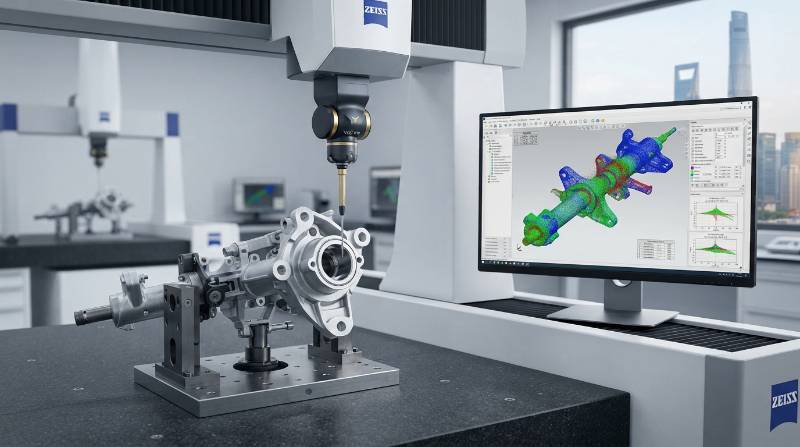
Key geometric dimensioning and tolerancing (GD&T) metrics maintained in production include:
- Bearing Bore Cylindricity: Within 0.006 mm over an 80 mm bore length.
- Spline Tooth Profile Runout: ≤ 0.012 mm relative to primary steering axis datums.
- Mounting Face Perpendicularity: 0.02 mm across thin 1.8 mm mounting ears without dynamic machining chatter.
High-Volume Magnesium CNC Machining: Tool Life, Automation, and Cycle Optimization
Moving from pilot batches to automotive production volumes (100,000+ parts per year) requires process automation, minimal spindle downtime, and extended cutting tool life. Magnesium’s low cutting resistance allows higher feed rates, but chip packing can quickly snap small tools if flutes become clogged.
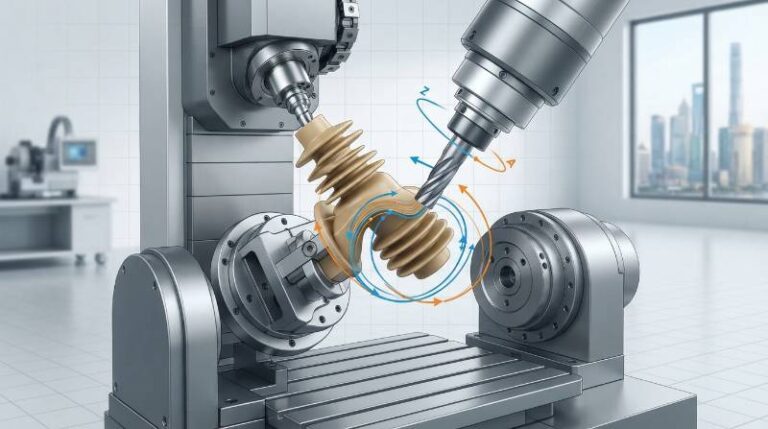
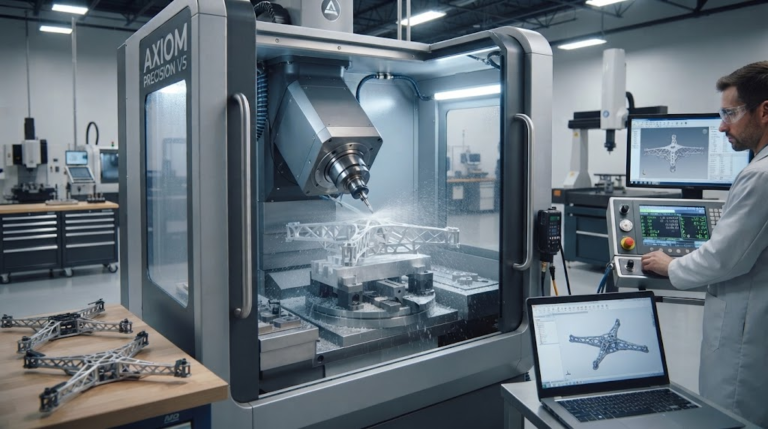
Tyneen runs high-volume programs on automated horizontal machining centers (HMCs) and 5-axis production lines with pallet pools. Utilizing our 5-axis advanced machining infrastructure, components are machined across multiple faces in one operation. Real-time spindle-load monitors automatically flag tool wear before tool breakage occurs.
- Diamond-Like Carbon (DLC) Coatings: DLC and uncoated polished micro-grain carbides prevent magnesium adhesion, extending tool life beyond 12,000 parts per tool edge.
- Through-Spindle High-Pressure Gas Purging: Chilled nitrogen or dry air blasts chips clear of deep cavities, preventing recutting.
- Twin-Pallet Load Shuttles: Operators or robotics swap components on external fixtures while the spindle cuts inside the enclosure, maintaining spindle duty cycles above 88%.
Corrosion Mitigation: Micro-Arc Oxidation (MAO) and Galvanic Chassis Isolation
Magnesium has a standard reduction potential of -2.37 V, making it the most active metal commonly used in structural engineering. Left unprotected, it acts as a sacrificial anode when placed in direct contact with steel, carbon fiber, or aluminum in corrosive environments. Automotive exterior and underbody applications require dependable surface passivation.
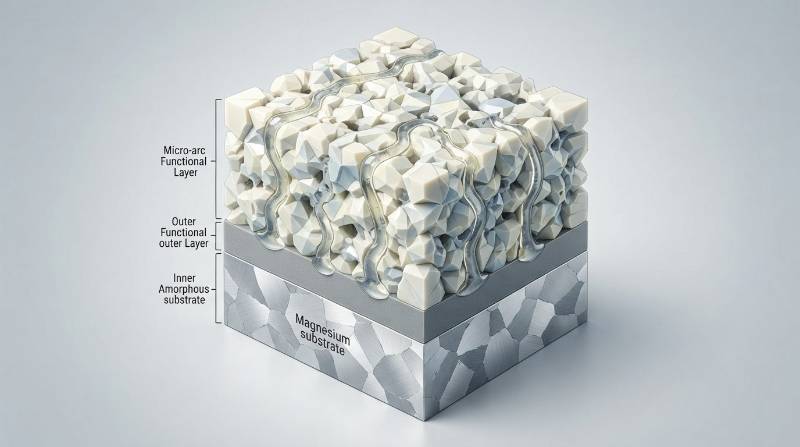
Tyneen applies advanced surface conversion processes to protect critical components:
- Micro-Arc Oxidation (MAO / PEO): Plasma electrolytic oxidation generates a dense, hard crystalline ceramic barrier layer (predominantly MgAl₂O₄ spinel phases) deep inside the alloy substrate. This coating resists stone-chip damage and withstands over 1,000 hours of neutral salt spray testing under ASTM B117 Standard Practice for Operating Salt Spray (Fog) Apparatus.
- Electrophoretic Deposition (E-Coat): Automotive-grade electro-coating seals micropores in cast AZ91D alloys, providing a smooth, protective base for primer and topcoat systems.
- Dielectric Isolation Fastening: Steel chassis bolts are paired with zinc-nickel (Zn-Ni) coatings, Dacromet finishes, or engineered insulating washers to prevent direct galvanic contact with the magnesium housing.
Automotive Quality Assurance: IATF 16949 Compliance, PPAP Level 3, and Zeiss Metrology
Automotive tiers require rigorous quality control documentation and lot traceability. Tyneen operates under certified IATF 16949:2016 and ISO 9001:2015 quality management systems, managing risk across every stage of the machining process.
Our quality assurance framework includes full Production Part Approval Process (PPAP) Level 3 documentation, including Process Flow Diagrams, Process Failure Mode and Effects Analysis (PFMEA), Control Plans, and Measurement Systems Analysis (MSA/Gage R&R < 10%).
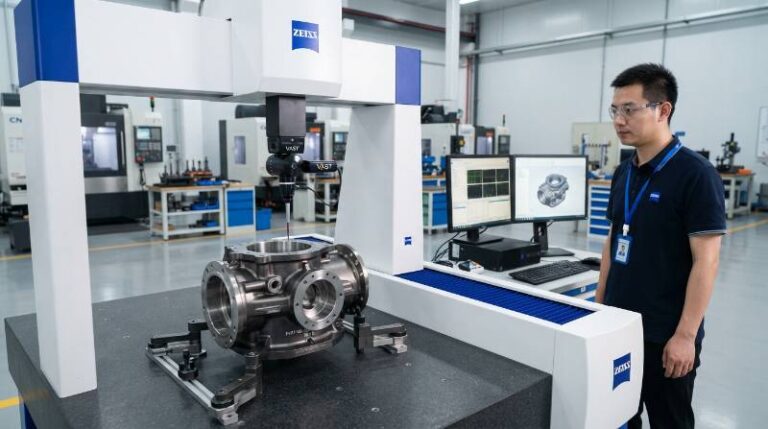
- Zeiss Coordinate Measuring Machines (CMM): Climate-controlled metrology suites (held at 20°C ± 0.5°C) house multi-sensor Zeiss CMMs capable of point measurements to an accuracy of 0.9 μm + L/350.
- Optical Emission Spectrometry (OES): Incoming bar stock, billets, and castings undergo raw material spark testing to confirm chemical compositions and detect trace impurities like copper, nickel, and iron that degrade corrosion resistance.
- Surface Roughness Stylus Profilometry: Verifies sealing interfaces meet Ra 0.4 μm to Ra 0.8 μm requirements for liquid gasket adhesion.
Engineering Benchmarks: Magnesium (AZ31B) vs Aluminum (6061-T6) in Automotive Applications
Evaluating an alloy switch requires comparing density, manufacturing costs, damping capacity, and strength-to-weight ratios:
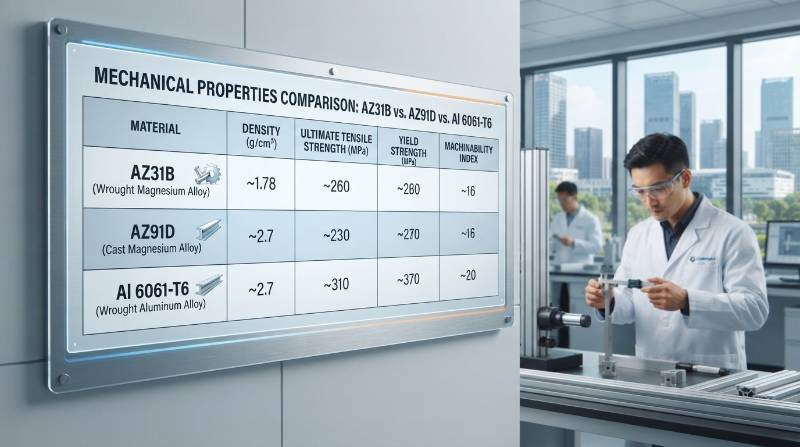
| Property / Metric | Magnesium AZ31B (Wrought) | Magnesium AZ91D (Cast) | Aluminum 6061-T6 (Wrought) |
|---|---|---|---|
| Density (g/cm³) | 1.77 | 1.81 | 2.70 |
| Yield Strength (MPa) | 220 | 150 – 160 | 276 |
| Elastic Modulus (GPa) | 45 | 45 | 68.9 |
| Specific Strength (kN·m/kg) | 146.9 | 127.1 | 114.8 |
| Damping Capacity Ratio | High (10× Base) | Very High (25× Base) | Baseline (1.0) |
| Relative Machining Power Needed | 0.55 kW/cm³/min | 0.50 kW/cm³/min | 1.00 kW/cm³/min |
| Coolant Requirement | Dry / Mineral Ester | Dry / Mineral Ester | Water-Soluble Emulsion |
Frequently Asked Questions About Magnesium CNC Machining
How do you prevent magnesium fires during high-speed CNC milling?
Fire prevention relies on controlling heat and eliminating water. Tyneen uses sharp PCD or DLC-coated tooling with generous relief angles to minimize tool friction. We avoid fine, powdery cuts by maintaining healthy chip loads, clear chips away with high-flow mineral oils or inert dry gases, and protect machine enclosures with automatic Class D fire suppression systems.
How does Tyneen manage thin-wall deflection given magnesium’s low modulus?
Magnesium’s 45 GPa elastic modulus makes it susceptible to bending under heavy clamping forces. We mitigate deflection with custom vacuum or hydraulic multi-point nest fixtures, segmented toolpaths that distribute residual stress symmetrically, and automated on-machine Renishaw probing to verify datums between roughing and finishing passes.
Can wrought magnesium billet match the structural integrity of die-cast magnesium?
Wrought magnesium billets (such as AZ31B) consistently offer higher tensile strength, greater elongation, and better fatigue life than die-cast components (AZ91D) because they do not have the internal gas or shrinkage porosity common to casting. For low-to-medium volumes, billet CNC machining provides better structural properties without expensive die tooling investments.
What surface treatment best prevents galvanic corrosion in multi-material chassis joints?
Micro-Arc Oxidation (MAO/PEO) delivers the strongest defense by growing a hard ceramic barrier directly into the alloy surface. When paired with Zn-Ni coated or isolated fasteners and an exterior e-coat or powder layer, it easily exceeds standard 1,000-hour ASTM B117 salt spray exposure tests without galvanic degradation.
Streamlined 3-Step Pathway to Magnesium Automotive Production with Tyneen
Integrating precision-machined magnesium components into vehicle production requires tight control over metallurgical and safety variables. Tyneen provides an efficient, transparent manufacturing pathway from initial CAD review through volume PPAP sign-off:
Launch Your Magnesium Machining Program
- Step 1: Upload 3D CAD/STEP Model: Securely transmit your native 3D geometry and GD&T drawings through our encrypted quoting portal.
- Step 2: Automated DFM Report & Instant Quote in 2 Hours: Our engineering team reviews thin walls, bore tolerances, and tool clearances, delivering an actionable DFM report and price breakdown.
- Step 3: Fast-Turn Sample Production & Metrology Approval: We ship pilot samples with full Zeiss CMM inspection reports, material certifications, and PPAP documentation for quick verification.