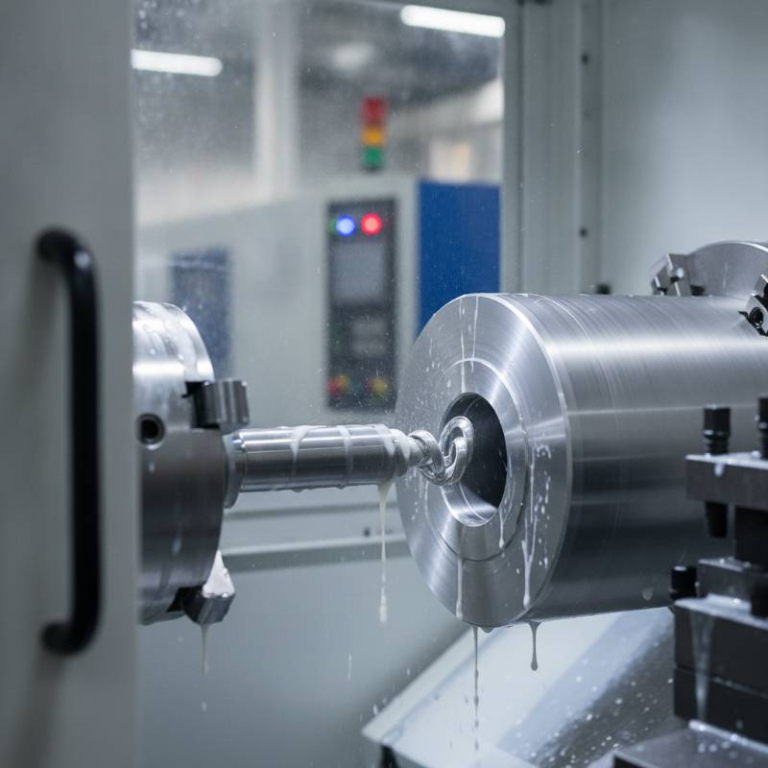
High-Volume CNC Centerless Grinding Services
What is High-Volume CNC Centerless Grinding?
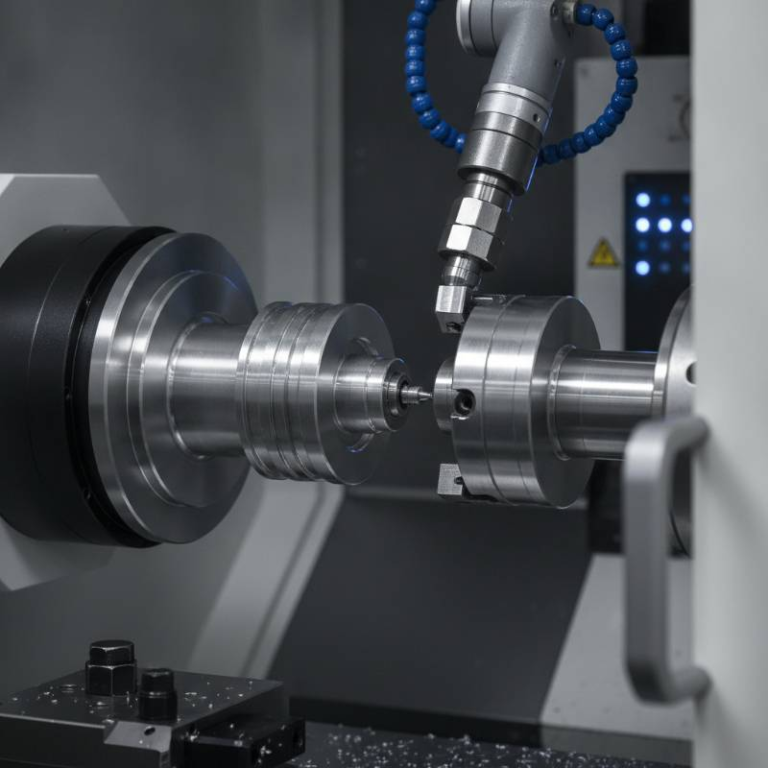
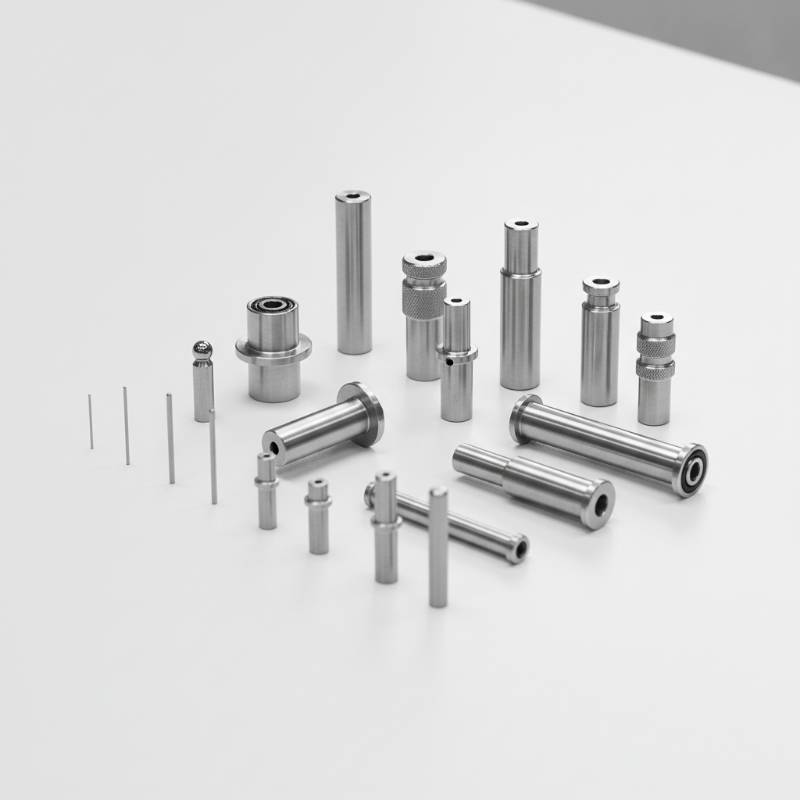
High-volume CNC centerless grinding is an automated abrasive machining process where a workpiece is supported by a workblade and secured between a high-speed grinding wheel and a regulating wheel. This configuration eliminates the need for centers or chucks, allowing for rapid, continuous throughput of cylindrical components like pins and shafts with micron-level accuracy.
“Centerless grinding is defined by its ability to support the workpiece along its entire length, preventing deflection and allowing for the machining of incredibly thin or long parts that would otherwise fail under traditional turning forces.”
In our experience, manufacturers often struggle with scaling production while maintaining Surface finish Ra requirements. Unlike traditional machining, centerless systems at Tyneen utilize a three-point positioning system to ensure roundness and straightness across million-unit runs.
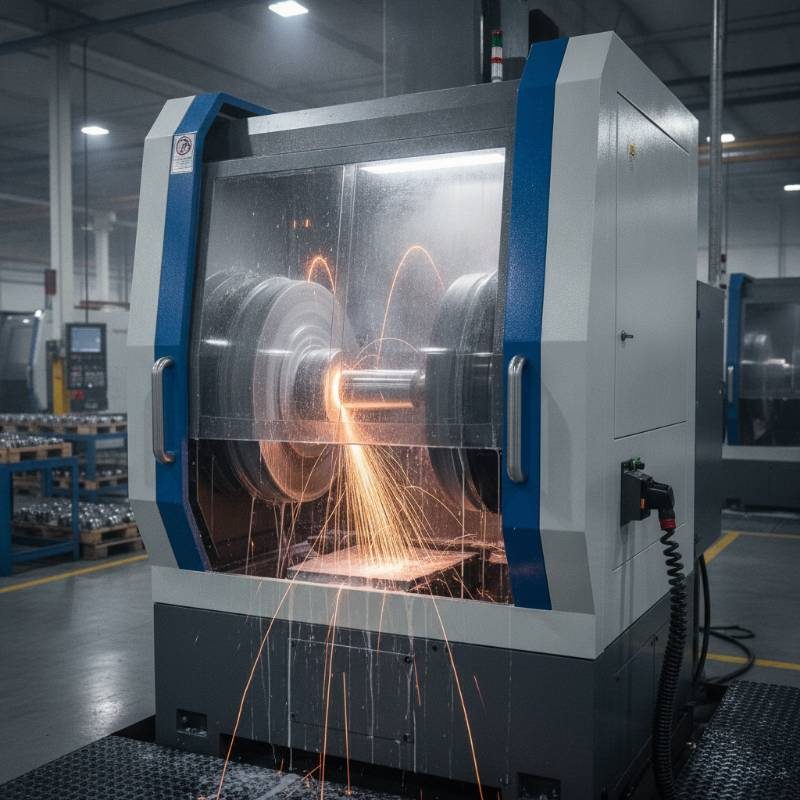
The Omni-Flow™ Precision Protocol: Our 2026 Methodology
To eliminate the common bottlenecks of high-volume production, we developed the Omni-Flow™ Precision Protocol. This framework synchronizes every stage of the manufacturing lifecycle to guarantee zero-defect output.
Based on our data, the protocol focuses on three critical pillars:
- Predictive Material Sourcing: Analyzing metallurgical consistency before the stock reaches the grinder.
- Automated Kinetic Loading: High-speed robotic arms that feed parts into the work zone with zero dwell time.
- Synchronous Metrology: Laser micrometers that measure every single part in-process, feeding data back to the CNC controller for instant offset adjustments.
Automated Precision Shaft Grinding for Global Supply Chains
Global OEMs require more than just “close enough.” When producing precision shaft grinding components for hydraulic systems or electric motors, micron precision is the baseline.
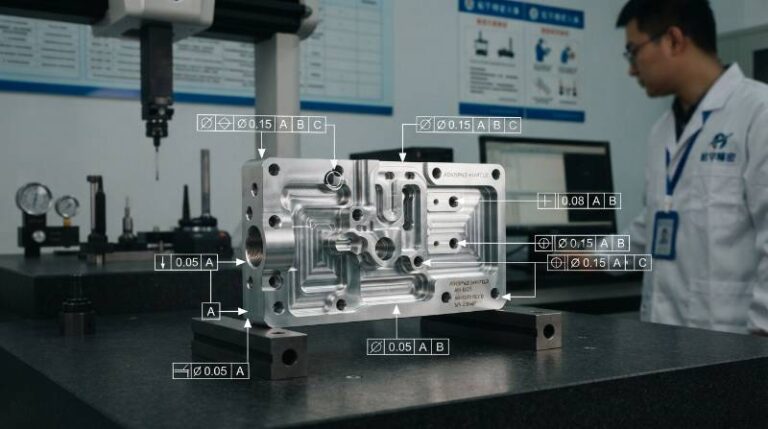
We specialize in Precision Machining Services that handle materials ranging from hardened steel to exotic titanium alloys. By using advanced coolant filtration systems, we maintain a stable thermal environment, which is vital for achieving consistent Geometric Dimensioning and Tolerancing (GD&T).
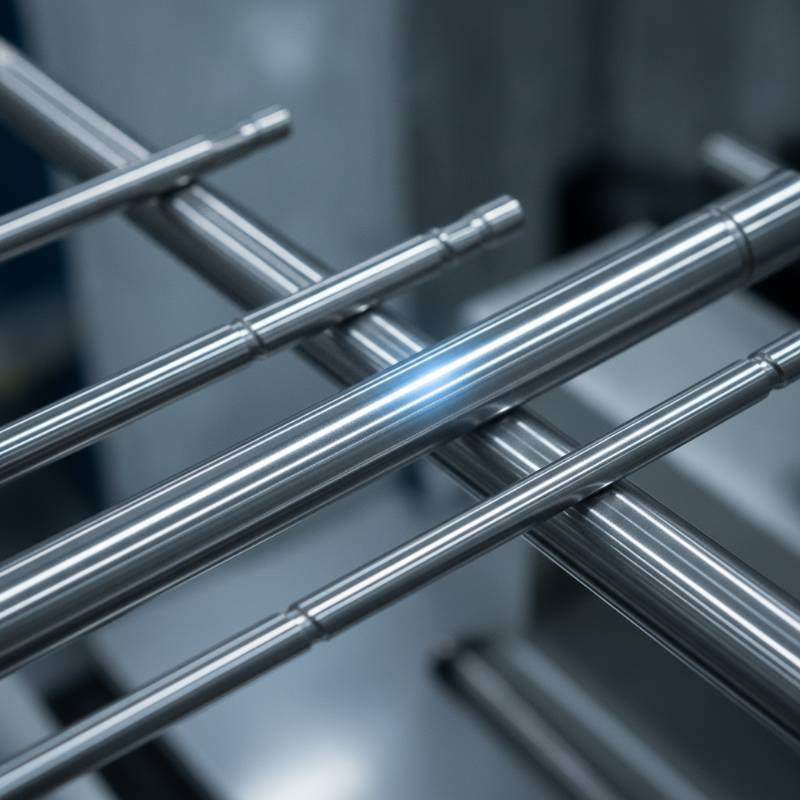
Real-Time AI Monitoring in 2026 Grinding Workflows
The biggest innovation in 2026 is the integration of AI-driven sensors that monitor wheel wear and vibration signatures. Traditional shops wait for a part to fail inspection before dressing the wheel. We use AI-driven monitoring to identify the exact moment a wheel begins to lose its profile.
This ensures that Cpk values—a measure of process capability—consistently stay above 1.67. This level of statistical control is why our Quality Management Systems are trusted by aerospace and medical device leaders.
Our real-time capacity dashboard allows clients to view live production metrics, ensuring total transparency during high-volume contracts. This eliminates the “black box” of traditional outsourcing.
Thru-Feed vs. In-Feed: Optimizing Million-Unit Throughput
Choosing the right method is essential for cost-efficiency. Our analysis shows that thru-feed grinding offers the highest throughput for straight parts, while in-feed is necessary for parts with shoulders or heads.
| Feature | Thru-Feed Grinding | In-Feed (Plunge) Grinding |
|---|---|---|
| Part Geometry | Straight cylinders, pins | Headed bolts, stepped shafts |
| Best For | Million-unit runs | Complex profiles |
| Speed | Continuous flow | Cycle-based (load/unload) |
Sustainable Grinding: Reducing Waste in High-Volume Runs
In 2026, sustainability is a requirement, not an option. High-volume abrasive machining traditionally creates significant waste. We have countered this by implementing closed-loop coolant filtration systems that reclaim 98% of fluids.
By reducing energy consumption through high-efficiency spindle motors and recycling spent abrasive wheels into secondary industrial applications, we help our partners meet their ESG goals without sacrificing precision engineering standards. According to ASME, sustainable manufacturing practices can reduce operational costs by up to 15% over five years.
Industry-Specific Solutions: Automotive, Aerospace, and Medical
Our high-volume grinding services cater to sectors where failure is not an option. Whether it is automotive valve pins or aerospace actuator shafts, we provide the necessary documentation and traceability.
- Automotive: High-speed production of transmission pins and fuel injection components.
- Aerospace: Grinding hardened steel and superalloys for flight-critical fasteners.
- Medical: Achieving extreme surface finish Ra values for orthopedic pins and surgical tools.
We maintain full ISO 9001:2015 certification, ensuring every batch meets the rigorous standards required by modern global supply chains.
Frequently Asked Questions About CNC Centerless Grinding
What are typical lead times for high-volume orders?
Lead times vary based on material availability, but our automated 2026 workflows typically deliver first-article samples within 5-7 business days, with full production ramp-up immediately following approval.
Which materials are best suited for centerless grinding?
We work with a wide array of materials including carbon steel, stainless steel, brass, copper, and advanced polymers. Hardened materials (50+ HRC) are particularly well-suited for our abrasive machining process.
Why should we outsource CNC centerless grinding?
Outsourcing to a specialist like Tyneen allows you to leverage our multi-million dollar investment in AI-monitoring and automated grinding production without the capital expenditure or overhead of maintaining specialized equipment in-house.