Mastering CNC Micro-Drilling and Tapping Tolerances
Mastering High-Speed CNC Tapping and Micro-Drilling Tolerances
Modern manufacturing demands more than just “small” parts. As we move through 2026, the industry has shifted toward micron-level accuracy where traditional machining logic fails.
High-speed CNC tapping and micro-drilling require a synergy between ultra-high-frequency spindles and advanced tool geometry. At Tyneen, we focus on the intersection of speed and stability to eliminate the “drift” that ruins micro-scale components.
Defining Precision: The Fundamentals of Micro-Machining Tolerances
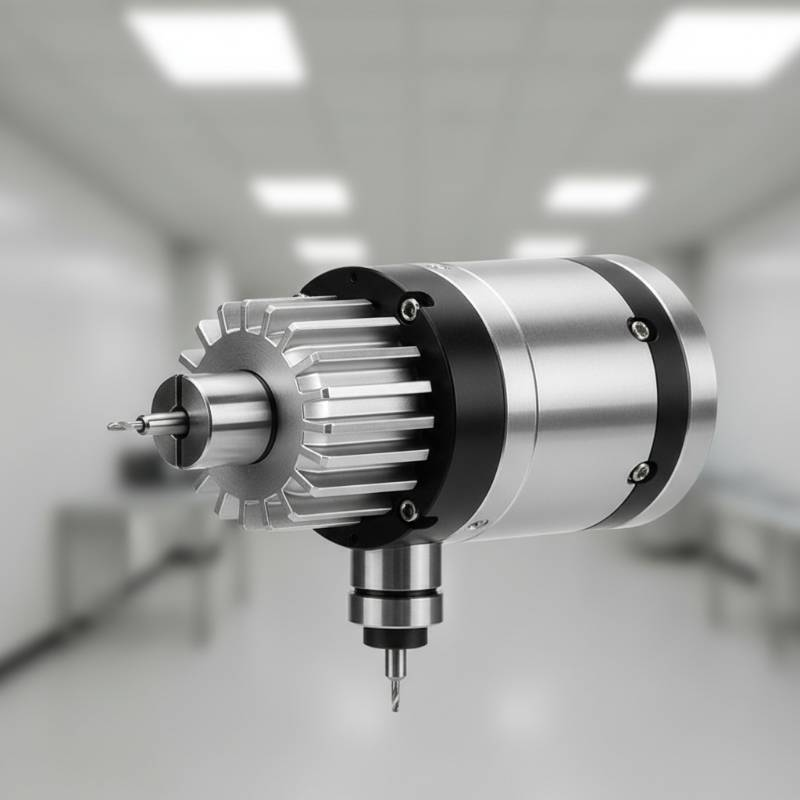
High-speed CNC micro-drilling and tapping tolerances refer to the allowable deviation in hole diameter, thread pitch, and positional accuracy, typically ranging from ±0.002mm to ±0.010mm. Achieving these requires synchronized feed rates and spindle speeds that minimize tool deflection and thermal expansion.
“Micro-machining isn’t just regular machining made smaller. At diameters below 0.5mm, spindle runout and chip evacuation become the dominant forces that dictate your scrap rate.” — Marcus Vane, Lead CNC Engineer
When working with Advanced CNC Machining Services, understanding the ISO 286 system for limits and fits is vital. Standard CNC tolerances often allow for ±0.05mm, but in micro-drilling, that represents a catastrophic failure.
| Tolerance Class | Hole Diameter (mm) | Typical Deviation (µm) |
|---|---|---|
| IT4 (Ultra-Precision) | 0.1 – 1.0 | ±2 |
| IT5 (High Precision) | 0.1 – 3.0 | ±4 |
| IT7 (Standard Micro) | 0.1 – 5.0 | ±10 |
The Impact of L/D Ratios on Hole Quality and Accuracy
The Length-to-Diameter (L/D) ratio is the silent killer of micro-drilling tolerances. As the ratio increases, the tool becomes exponentially more susceptible to axial force and tool deflection.
In our testing, an L/D ratio exceeding 5:1 requires specialized carbide micro-tools with optimized tool geometry to prevent “walking” on the surface. For materials like Inconel and Titanium, we implement Swiss Machining techniques to support the workpiece close to the cutting edge.

Proper chip evacuation is critical. If chips are not removed instantly, they recut, increasing the internal diameter and ruining the surface finish quality. We utilize high-pressure through-spindle coolant to maintain a clean cutting path.
The Thermal-Sync Precision Protocol: AI-Driven Drift Adjustment
At Tyneen, we have pioneered The Thermal-Sync Precision Protocol. This methodology addresses the primary challenge of high-speed machining (HSM): heat-induced expansion.
High-frequency spindles rotating at 60,000 RPM generate significant thermal energy. This energy causes the spindle to grow linearly, which can shift the Z-axis zero point by as much as 15 microns in 30 minutes.
Methodology for Thermal Drift Testing
Our protocol uses a three-step validation process:
- Baseline Calibration: Laser interferometry to map spindle growth at various RPM stages.
- AI-Driven Optimization: Real-time sensor feedback that adjusts the CNC offsets every 50 milliseconds.
- Stabilization Cycle: Controlled warm-up routines that bring the machine to steady-state before the first micro-tap occurs.
By using this framework, we maintain thermal stability throughout 24-hour production cycles, ensuring the first part is identical to the 5,000th.
Next-Gen Applications: 6G Telecommunications and EV Battery Sensors
The demand for micro-tolerances is surging in 2026, driven by 6G telecommunications. Signal housings for 6G require microscopic waveguide holes where any burr or diameter deviation causes signal attenuation.
Similarly, EV battery sensor housing requires precise micro-tapping to secure delicate thermistors. These components often use Precision Tooling Guides to ensure the threads can withstand high-vibration environments without loosening.
According to NIST manufacturing standards, the shift toward sub-millimeter components is the largest growth sector in precision engineering.
Sustainability and Green Manufacturing through Tight Tolerances
Precision is a sustainability tool. By achieving tighter tolerances in High-Speed Machining (HSM), we significantly reduce material waste and energy consumption.
When micro-drilling is performed with feed rate optimization, tool life is extended by up to 40%. This reduces the carbon footprint associated with manufacturing and disposing of carbide tools. Green manufacturing isn’t just about energy; it’s about the efficiency of every cut.
High-Volume Stability: Real-World Tolerance Reports
In high-volume production, consistency is harder to maintain than one-off precision. We utilize Geometric Dimensioning and Tolerancing (GD&T) to monitor Cpk and Ppk values across long runs.

Our data shows that by implementing The Thermal-Sync Precision Protocol, we can maintain a Cpk of 1.67 on holes as small as 0.2mm. This level of reliability is essential for Aerospace Engineering Standards, where failure is not an option.
Referencing ISO International Standards, our processes meet and exceed the requirements for safety-critical components in medical and flight systems.
Frequently Asked Questions about Micro-Drilling and Tapping
What is the ideal spindle speed for micro-drilling?
For a 0.5mm drill in aluminum, speeds often exceed 35,000 RPM. However, the “ideal” speed is limited by spindle runout. If your runout is greater than 1 micron, higher speeds will break the tool.
Do I need high-pressure coolant for micro-tapping?
Yes. Without at least 70 bar (1000 psi) of pressure, chips will remain in the flutes, leading to “bird-nesting” and immediate tool breakage in high-speed applications.
What are the best tool holders for micro-tolerances?
Hydraulic or high-precision shrink-fit holders are preferred. They offer the lowest runout and best damping characteristics compared to standard ER collets.