Inconel 625 CNC Machining for Chemical Valves | Tyneen
Precision Inconel 625 Machining for High-Performance Chemical Valves
Inconel 625 valve machining requires rigid machine setups, positive rake micro-grain carbide or ceramic inserts, and constant chip load to overcome severe work hardening and extreme thermal retention. By pairing continuous 5-axis toolpaths with high-pressure through-spindle coolant (70+ bar), manufacturers maintain dimensional tolerances within ±0.005 mm and achieve sealing finishes of Ra 0.2 µm for extreme chemical exposure.
Chemical processing plants handle highly aggressive media ranging from boiling hydrochloric acid to wet chlorine gas and high-pressure sour crude. Under these operating conditions, conventional austenitic and duplex stainless steels quickly succumb to stress corrosion cracking and pitting.
Nickel-chromium superalloy machining provides the metallurgical barrier necessary for zero-failure chemical isolation. Tyneen utilizes dedicated advanced CNC machining services to machine monolithic control valve bodies, multi-port chemical manifolds, and high-pressure slurry trim components to exacting international standards.
Material Metallurgy & Chemical Exposure: Why Inconel 625 Dominates Severe Service
Inconel 625 (designated as UNS N06625 and governed by ASTM B446 for rod/bar and ASTM B564 for forgings) is an austenitic nickel-chromium-molybdenum-niobium superalloy. Unlike precipitation-hardened grades such as Inconel 718, alloy 625 derives its strength from the solid-solution hardening of its refractory molybdenum (8.0–10.0%) and niobium (3.15–4.15%) additions within its high-nickel matrix.
Pitting Resistance Equivalent Number (PREN): A quantitative measure calculated as PREN = %Cr + 3.3(%Mo + %W) + 16(%N). Inconel 625 scores a PREN > 45, outperforming Hastelloy C-276 in broad-spectrum oxidizing and reducing acid environments.
This metallurgical composition makes Inconel 625 immune to chloride-induced stress corrosion cracking (SCC) while preventing intergranular attack during thermal cycling. Valve trims exposed to sour gas environments meet all requirements defined under NACE MR0175 / ISO 15156 without post-machining heat treatment when properly solution-annealed.
| Chemical Medium | Operating Temp / Pressure | Failure Mode Prevented | Critical Valve Component |
|---|---|---|---|
| Hydrochloric Acid (10–20% HCl) | Up to 65°C / 40 bar | Severe Pitting & General Dissolution | Control Valve Plugs & Orifices |
| Wet Chlorine Gas (Cl₂) | Ambient to 120°C / Class 600 | Crevice Corrosion Under Gaskets | Flange Facings & Bonnet Seats |
| Sour Crude / H₂S + Chlorides | Up to 200°C / 10,000 PSI | Sulfide Stress Cracking (SSC) | Trunnion Ball Valve Stems |
| Sulfuric Acid (H₂SO₄) Slurry | 80°C / High Velocity | Erosion-Corrosion Synergy | Needle Seats & Impellers |
Learn more about our full inventory of corrosion-resistant superalloy materials to determine if Grade 1 or Grade 2 annealed bar stock fits your fluid dynamics profile.
Tooling Strategies and Machining Dynamics for Inconel 625
Inconel 625 is notoriously abrasive and exhibits rapid strain hardening. Its low thermal conductivity (9.8 W/m·K at 20°C) means roughly 80% of cutting heat concentrates directly in the cutting edge rather than dissipating via the chip.
Work Hardening Mitigation Strategies
The alloy hardens instantly upon contact if a cutting tool rubs rather than shears. To eliminate this issue, our machinists maintain a constant, positive chip load. Feed rates should never drop below 0.08 mm/rev during turning or 0.05 mm/tooth during milling.
Depth of cut (DOC) must consistently stay below the work-hardened zone generated by previous roughing passes (minimum 0.25 mm DOC for finishing). Tool dwell must be mechanically locked out in CAM post-processors.
Ceramic and Carbide Cutting Tool Geometries
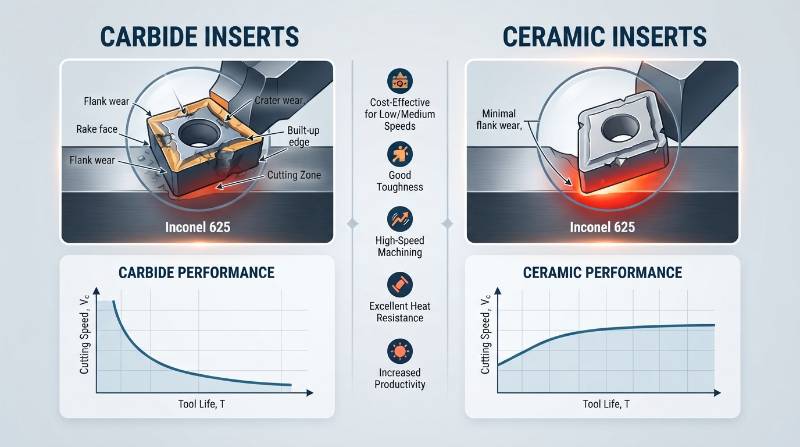
- Sub-Micron Solid Carbide: Best suited for finish milling and small-diameter drilling. Tools require sharp, positive rake angles (10° to 15°) with TiAlN or AlTiN PVD micro-coatings to prevent chemical diffusion wear.
- Whisker-Reinforced Ceramics (SiCw): Recommended for high-speed roughing of monolithic valve forgings. Ceramic inserts cut at 5x to 8x the surface speed of carbide without thermal deformation.
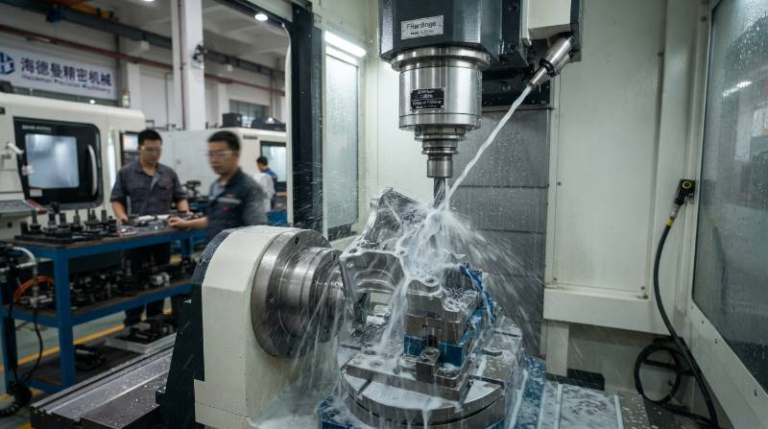
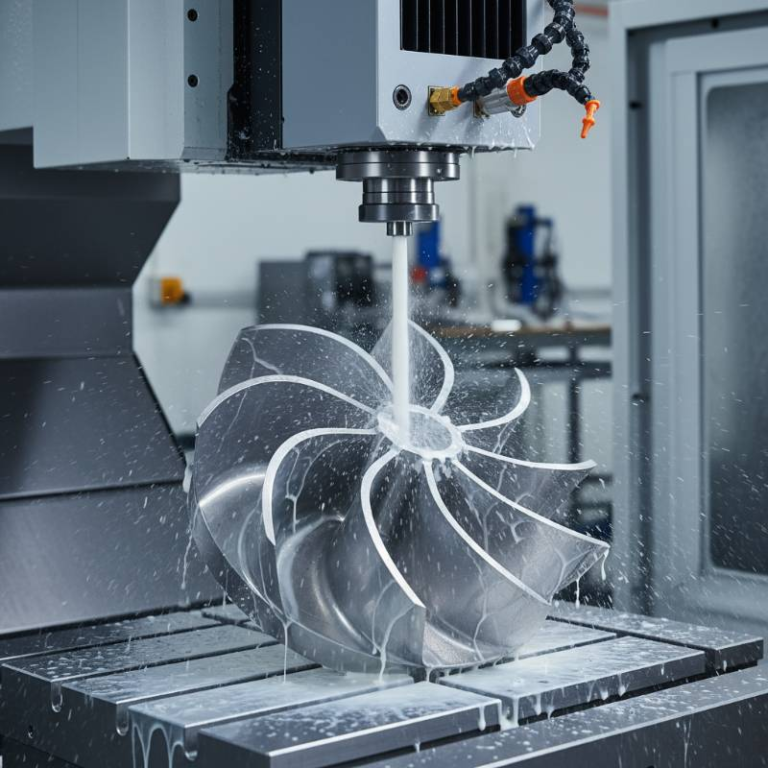
- High-Pressure Coolant Delivery: We implement through-spindle coolant delivery systems running at 70 to 100 bar (1000–1450 PSI). This breaks the vapor barrier, lowers shear-zone temperatures by over 300°C, and hydraulically fractures stringy chips.
| Operation | Tooling Grade | Cutting Speed (Vc) | Feed Rate (fz / fn) | Depth of Cut (ap) |
|---|---|---|---|---|
| Heavy Face Roughing | Whisker Ceramic (SiCw) | 160 – 220 m/min | 0.08 – 0.12 mm/tooth | 1.5 – 2.5 mm |
| Profile Finish Milling | AlTiN Carbide End Mill | 25 – 35 m/min | 0.04 – 0.07 mm/tooth | 0.30 – 0.50 mm |
| OD/ID Rough Turning | PVD Carbide (ISO S15) | 30 – 45 m/min | 0.15 – 0.25 mm/rev | 1.2 – 2.0 mm |
| Precision Ball Micro-Finish | Cermet / Ultra-Fine Carbide | 40 – 60 m/min | 0.05 – 0.08 mm/rev | 0.15 – 0.25 mm |
| Internal Thread Milling | Solid Carbide Thread Mill | 20 – 30 m/min | 0.03 – 0.05 mm/tooth | Radial Pass Multi-Step |
5-Axis CNC Milling of Complex Multi-Port Valve Bodies and Manifolds
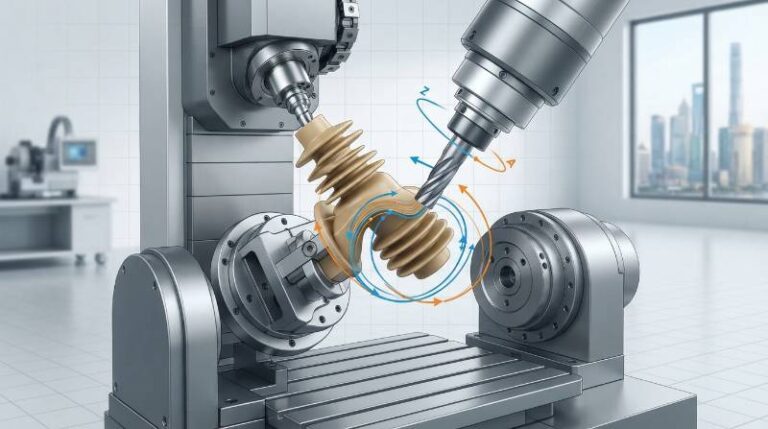
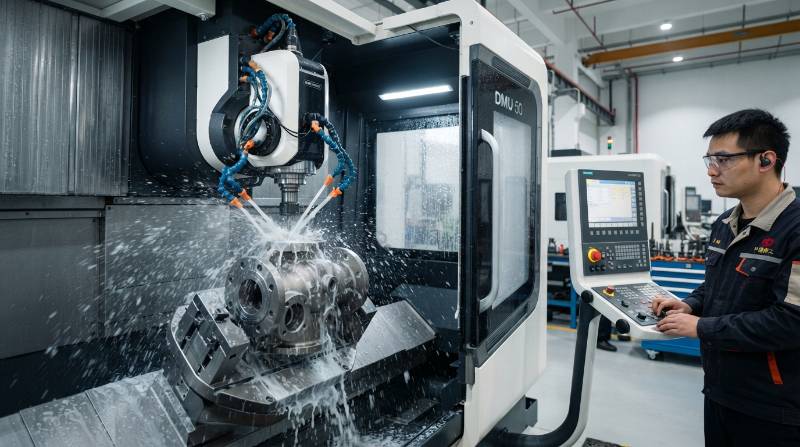
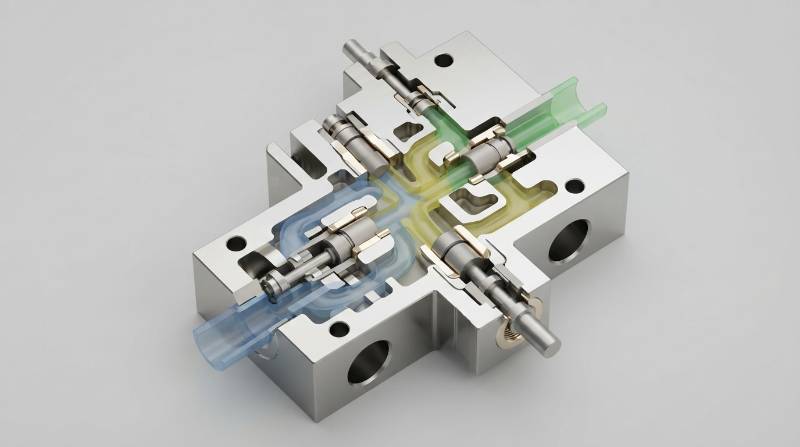
Chemical processing plants increasingly demand monolithic valve designs to eliminate potential external leak paths found in welded pipe assemblies. Machining these complex multi-port valve bodies from solid Inconel 625 forgings requires continuous simultaneous 5-axis motion.
Re-fixturing Inconel components across multiple 3-axis setups causes cumulative datum shift and positional tolerance stacking. Tyneen solves this by executing complex bodies on simultaneous multi-axis centers using high-rigidity hydraulic clamping.
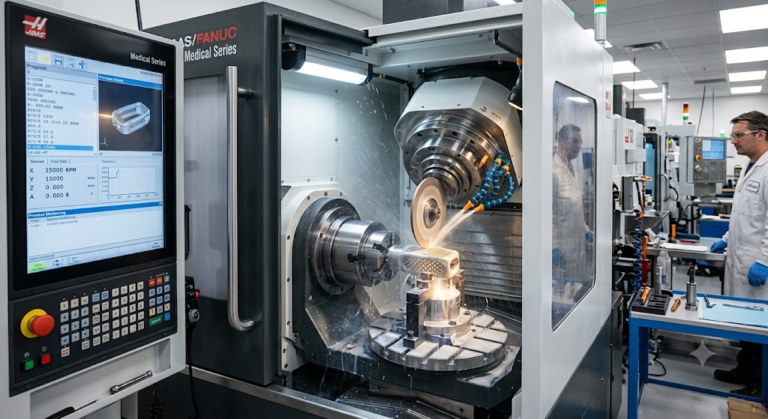
Our multi-axis CNC milling setups access deep, angled internal flow galleries while maintaining runout and true position tolerances within 0.005 mm across multi-flange configurations.
Dynamic toolpath algorithms, including adaptive trochoidal milling, keep the radial engagement angle constant (between 30° and 45°). This prevents sudden spike loads on the tool when entering deep internal valve cavities, cutting cycle times by up to 35% compared to linear step-over paths.
Precision CNC Turning and Micro-Finishing for Zero-Leakage Sealing Surfaces
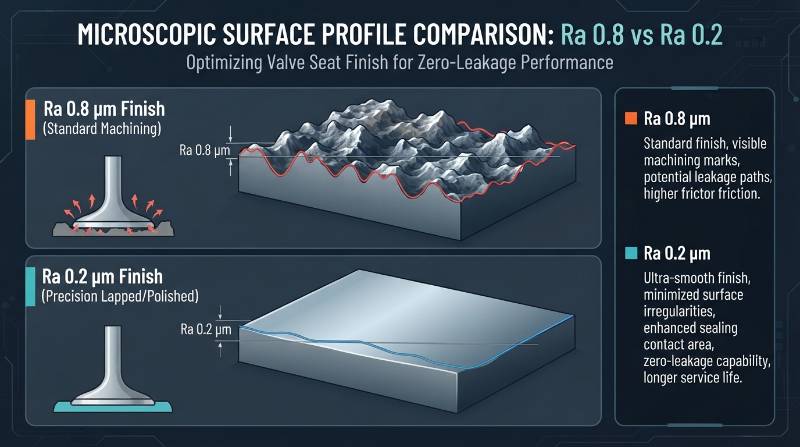
In metal-seated ball, gate, and needle valves handling hazardous acids, mechanical sealing depends entirely on surface geometry. Even micro-scale surface imperfections will cause fugitive emissions under API 6D or ISO 5208 testing.
Turning Inconel 625 valve stems, spherical balls, and seat rings requires rigid multi-tasking lathe centers equipped with sub-micron feedback scales. Our precision CNC turning platforms utilize custom diamond-lapped tool profiles to achieve true sphericity within 0.003 mm on valve balls up to 300 mm in diameter.
Sealing Finish Specification: Achieving a surface roughness Ra 0.2 to 0.4 µm (Rz ≤ 1.2 µm) is mandatory for severe chemical shutoff. This eliminates micro-crevices where high-pressure acid slurry can initiate cavitation or seal degradation.
Following CNC turning, critical seats undergo automated micro-lapping and superfinishing. This process eliminates torn surface fibers, leaving an isotropic mirror finish verified by white light optical interferometry.
The Tyneen Hyper-Sealing Superalloy Manufacturing Protocol
To ensure total reliability in severe-service chemical components, Tyneen manufactures all high-pressure Inconel parts using our proprietary 5-step production methodology:
- Metallurgical Pre-Machining Stress Analysis: Every raw forging or bar undergoes ultrasonic flaw inspection and solution-anneal verification to eliminate internal residual stresses before roughing.
- Adaptive Constant-Engagement Toolpath Generation: Toolpaths maintain a strict 10%–15% radial immersion using trochoidal step-overs to avoid work-hardening the workpiece.
- High-Pressure Coolant Jet Micro-Flushing: Dual 80-bar coolant jets target the cutting interface to wash away chips instantly and prevent thermal buildup.
- Dual-Pass In-Situ Diamond Polishing: Finish-turned sealing faces receive an integrated secondary superfinishing pass on the same spindle center to ensure concentricity.
- Multi-Axis Coordinate Metrology Validation: Parts are measured in a climate-controlled inspection cell (20°C ± 0.5°C) to confirm geometric tolerances before release.
Engineering Insight from the Tyneen Shop Floor: “When machining Inconel 625 for severe chemical valves, conventional tooling approaches fail because people run them like stainless steel. In our production runs, ramping cutting speed down by 40% while doubling through-tool coolant pressure to 75 bar consistently extends tool life by 300% and keeps valve seat surface finishes well within Ra 0.25 µm.”
Design for Manufacturability (DFM) & Cost-Reduction Tips for Valve Cavities
Inconel 625 is an expensive material to purchase and machine. Modifying part geometry through DFM can significantly reduce tool wear and total machining hours:
- Optimize Internal Corner Radii: Avoid sharp 90° internal floor-to-wall transitions. Specify corner radii at least 1.25x to 1.5x the milling cutter radius (e.g., use an R4 mm radius for a 6 mm end mill). This prevents tool jamming and corner chatter.
- Limit Thread Depth and Aspect Ratios: Tapping blind holes in Inconel 625 carries a high risk of tool breakage. Limit thread depths to 1.5x to 2x nominal diameter and design holes with generous clearance at the bottom. Use thread milling rather than traditional taps.
- Standardize Seal Pocket Geometries: Use standard seal groove dimensions whenever possible. Custom proprietary pocket shapes require specialty ground tooling, which increases lead times and setup costs.
- Minimize Deep Cavity Aspect Ratios: Keep internal cavity depth-to-width ratios below 4:1. Deeper cavities require long-reach tool holders, which cause deflection and necessitate slower feed rates.
Quality Assurance, NDT Testing, and Compliance (ASME B16.34 & NACE MR0175)
Severe-service chemical components require complete material traceability and certified quality documentation. Valve bodies and pressure-retaining components manufactured by Tyneen adhere to strict engineering standards:
- ASME B16.34 Compliance: Wall thickness verification, minimum body shell structural strength, and flanged/butt-weld end prep tolerances.
- NACE MR0175 / ISO 15156 Sour Service: Hardness testing verifies material remains under 35 HRC for solution-annealed UNS N06625, preventing sulfide stress cracking.
- Positive Material Identification (PMI): High-resolution X-ray fluorescence (XRF) spectroscopy confirms exact alloy percentages before and after machining.
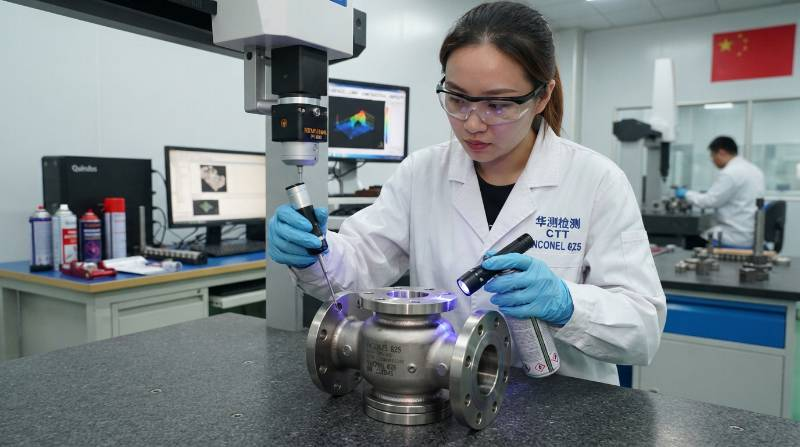
- Liquid Penetrant Testing (PT): Certified Level II inspectors test 100% of critical sealing faces per ASTM E1417 to ensure zero micro-cracking or porosity.
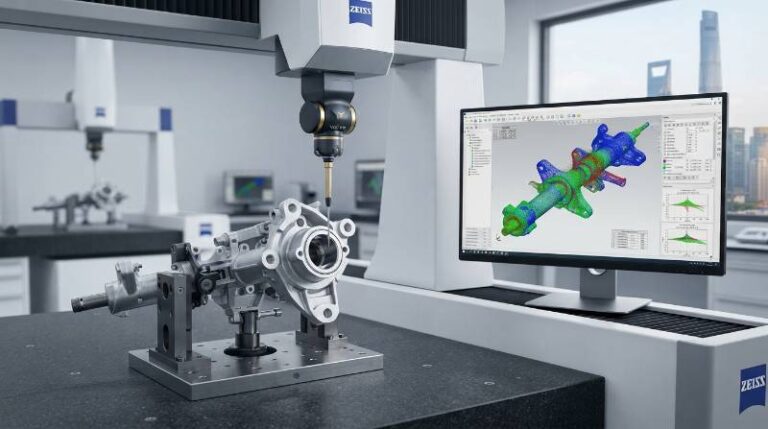
- CMM Coordinate Metrology: Multi-axis coordinate measuring machines (Zeiss CMM) verify geometric true position, roundness, and concentricity within ±0.002 mm.
Tyneen High-Precision Contract Manufacturing & Rapid Valve Prototyping
Whether you need a rapid prototype for fluid dynamic testing or scheduled production runs of critical valve assemblies, Tyneen delivers end-to-end CNC manufacturing for superalloys. Our facilities are certified under ISO 9001:2015 and AS9100D, ensuring consistent quality for critical flow control applications.
We work directly from your native CAD/CAM models and 2D engineering drawings to machine high-pressure valves, acid pumps, manifold blocks, and specialty pipe fittings. Every batch ships with complete EN 10204 3.1 material test reports, dimensional inspection logs, and NDT certificates.
Partner with an experienced team for your next project. Contact our engineering team today to request a manufacturing DFM quote and discuss lead times.
Frequently Asked Questions About Inconel 625 Valve Machining
What is the primary difference between machining Inconel 625 vs Inconel 718 for valves?
Inconel 625 is a solid-solution strengthened alloy with higher ductility and a tendency to strain-harden more aggressively during cutting. Inconel 718 is a precipitation-hardened alloy that achieves higher yield strength and hardness (often 40–45 HRC in aged condition), generating higher cutting forces and abrasive tool notch wear. Inconel 625 is generally chosen for corrosive chemical environments, while Inconel 718 is preferred for high-stress structural applications.
Why is high-pressure coolant critical when machining Inconel 625?
Because Inconel 625 has low thermal conductivity, heat concentrates at the tool-chip interface. Delivering high-pressure coolant (70+ bar) directly into the cut zone penetrates the vapor barrier, lowers temperatures, chips away abrasive swarf, and prevents catastrophic tool failure.
Can Tyneen guarantee Ra 0.2 µm finishes on Inconel valve sealing balls?
Yes. By pairing multi-axis precision turning with automated micro-lapping and superfinishing, we reliably hit Ra 0.2 µm (Rz ≤ 1.0 µm) with spherical runout under 0.003 mm, ensuring bubble-tight shutoff under API 598 and ISO 5208 standards.
What are typical turnaround times for custom Inconel 625 valve prototypes?
Standard rapid prototype lead times range from 1 to 2 weeks, depending on raw forging availability and NDT testing requirements. Production runs generally ship within 3 to 5 weeks with full CMM inspection and material certification.
Accelerate Your Severe-Service Valve Machining
Upload your CAD models to receive a comprehensive DFM manufacturability analysis, cycle-time assessment, and competitive production quote from Tyneen’s superalloy CNC specialists.