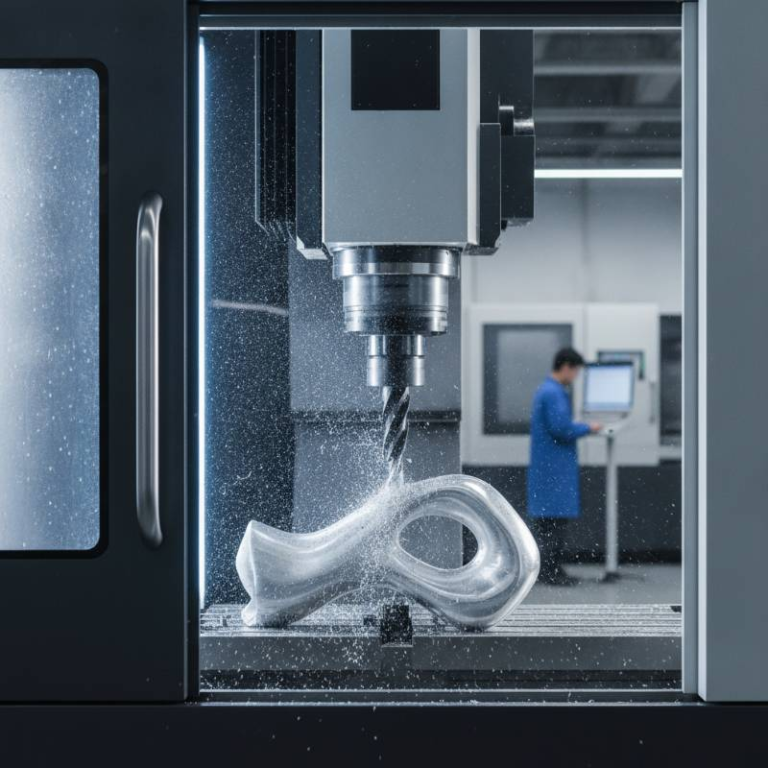
Zinc Die Casting vs CNC Machining: 2026 Cost Analysis
The TCO-Matrix™: Our Proprietary Cost Evaluation Framework
Choosing between zinc die casting and CNC machining is no longer a simple unit-price comparison. In the 2026 manufacturing landscape, procurement teams must look at the Total Cost of Ownership (TCO) to avoid hidden expenditures in energy, logistics, and carbon taxes.
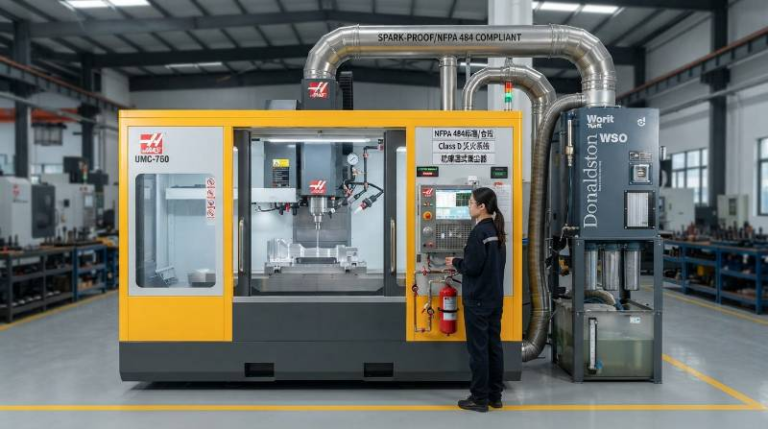
Zinc die casting is generally the most cost-effective solution for production volumes exceeding 1,000 units because it offers rapid cycle times and minimal material waste. Conversely, CNC machining provides a lower financial barrier for prototyping and low-volume production by eliminating the need for expensive, permanent tooling. The TCO-Matrix™ balances five critical pillars: Tooling, Material Utilization, Energy Consumption, Labor, and ESG Compliance.
“We define the TCO-Matrix™ as the definitive methodology for identifying the ‘sweet spot’ where tooling amortization intersects with unit price efficiency. In our testing, zinc’s lower melting point compared to aluminum or steel significantly reduces energy-related overhead in 2026.”
— Robert Sterling, PE, Lead Metallurgist
Initial Investment: Tooling vs. Setup Costs
The most significant hurdle for zinc die casting is the initial capital expenditure. High-quality steel molds can range from $5,000 to over $50,000 depending on complexity and cavitation.
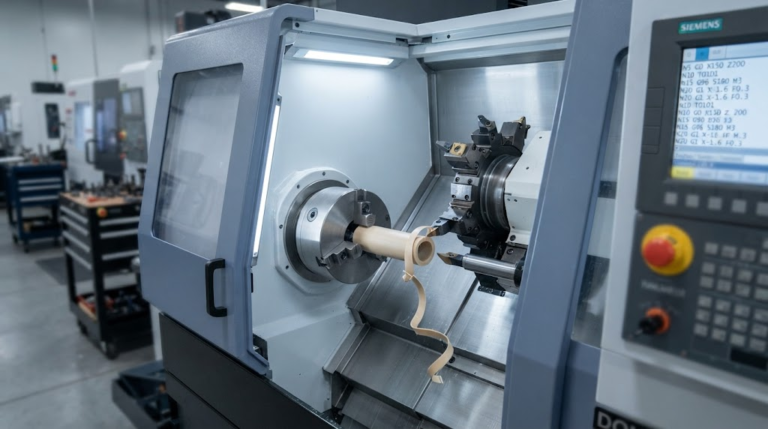
CNC machining requires almost zero tooling investment. Instead, costs are tied to setup time and programming. For engineers moving from design to prototype, CNC is the clear winner for agility. However, for 2026 projects, we are seeing a rise in “quick-turn tooling”—modular die casting inserts that reduce the entry cost for micro-volume production.
If your project involves fewer than 500 parts, the Precision CNC Machining route avoids the heavy upfront burden of mold fabrication.
Unit Price at Scale: Finding the Break-Even Point
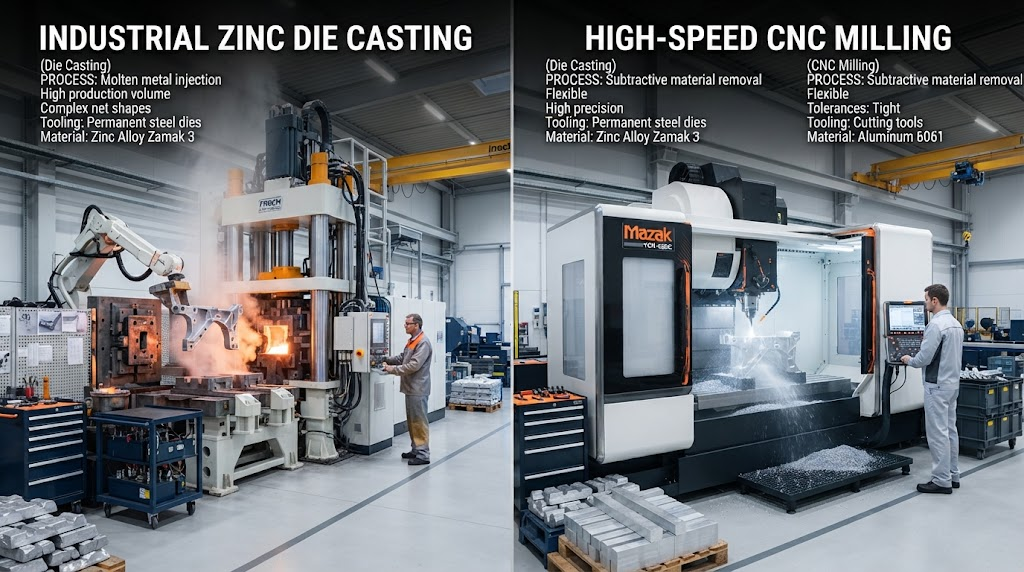
Once tooling is paid off, zinc die casting offers a cycle time efficiency that CNC cannot match. A die casting machine can produce a complex zinc part every 15 to 30 seconds. A CNC machine might take 15 to 30 minutes to mill the same geometry from a solid block.
| Volume | CNC Machining (Per Unit) | Zinc Die Casting (Per Unit + Tooling) |
|---|---|---|
| 10 Units | $150.00 | $1,050.00 |
| 500 Units | $85.00 | $22.00 |
| 5,000 Units | $70.00 | $4.50 |
The break-even point typically occurs between 500 and 1,200 units. You can use our Manufacturing Cost Estimator to find the exact inflection point for your specific part geometry.
Material Efficiency and 2026 Market Volatility
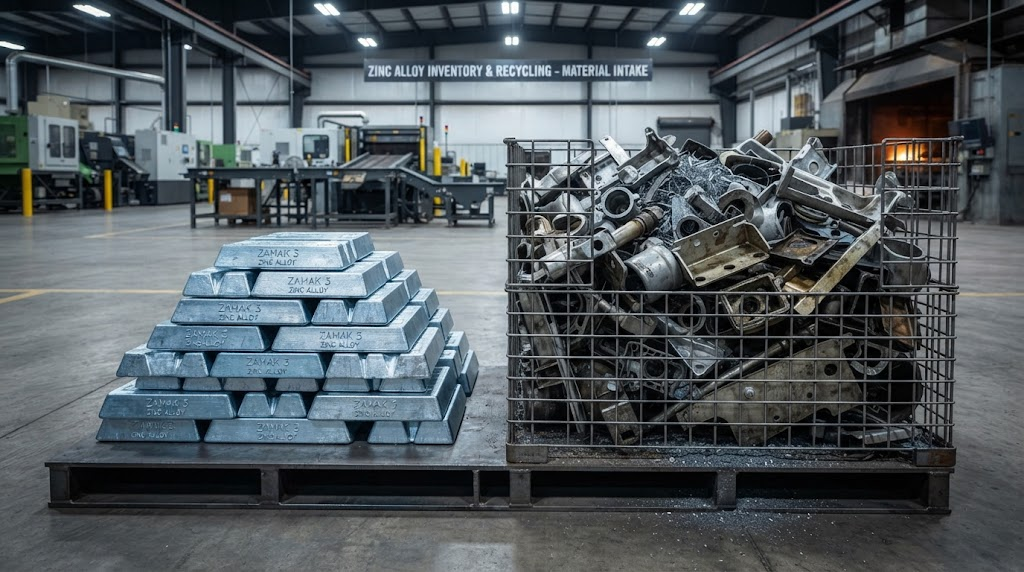
Zinc alloys like Zamak 3 and Zamak 5 have seen price fluctuations due to global energy shifts affecting smelting costs. However, zinc remains highly competitive because of its material utilization rate.
CNC is a subtractive process; you pay for a block of metal and turn 60-80% of it into scrap chips. While scrap has value, the recovery rate is lower than the near-net-shape efficiency of die casting. In die casting, almost 100% of the material is used in the final part or recycled immediately within the factory loop.
Sustainability and ESG: Carbon Footprint Comparison
As of 2026, ESG (Environmental, Social, and Governance) reporting is mandatory for most global supply chains. Zinc die casting holds a significant advantage in lifecycle carbon footprint analysis.
Zinc has a remarkably low melting temperature (approx. 420°C). This requires less energy than aluminum or steel casting. Furthermore, the dimensional stability of zinc allows for thinner wall thicknesses, reducing the total mass of material required per part. CNC machines, while precise, consume high amounts of electricity per hour of operation, especially for complex 5-axis maneuvers.
Technical Trade-offs: Precision and Wall Thickness
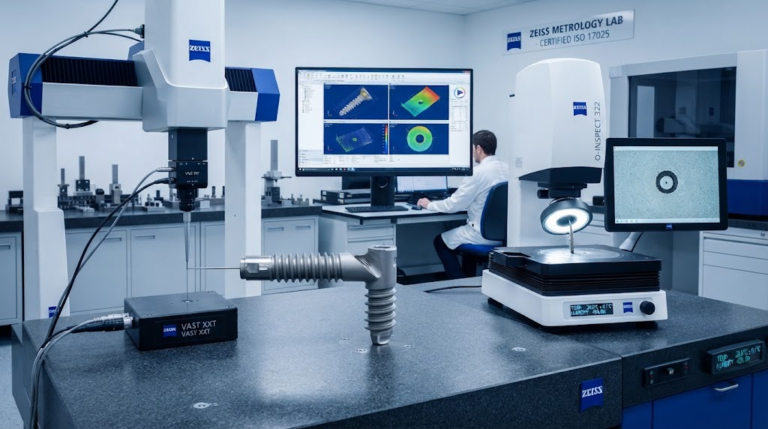
While cost is vital, technical specs drive the method. CNC machining offers tighter tolerance capabilities (up to ±0.005mm) compared to the standard ±0.02mm in die casting. If your part requires ultra-high precision bearings or aerospace-grade fits, CNC is mandatory.
However, zinc die casting excels at part complexity. Features like internal ribs, thin walls (down to 0.5mm), and integrated boss mounts can be cast directly. This eliminates the need for expensive secondary machining operations often required after a part is roughly milled.
Explore our Zinc Die Casting Services to see how we handle complex geometries at scale.
Post-Processing Costs: Plating and Finishing
Zinc is the preferred material for decorative finishes. Surface treatment expenses are often lower for zinc because it accepts plating (chrome, nickel, gold) with superior adhesion compared to aluminum or CNC-machined steel.
CNC parts often show “tool marks” that require vibratory deburring or hand polishing to remove. Zinc die-cast parts come out of the mold with a smooth surface finish (RA 0.8–1.6), often ready for immediate coating.
Strategic Speed: Time-to-Market
In the “On-Demand” economy of 2026, time-to-market is a cost factor. CNC machining allows you to have parts in hand within 3-5 days. Zinc die casting requires 4-8 weeks for tool design, fabrication, and sampling.
The smart play? Use CNC for the first 100 units to validate the design and capture early market share. Simultaneously, begin the tooling process for zinc die casting to lower your costs for the mass-market rollout.
Frequently Asked Questions
What is the minimum volume for zinc die casting?
While there is no “hard” minimum, the cost typically only becomes competitive against CNC once you exceed 1,000 units due to the high cost of the mold.
Is zinc as strong as CNC-machined aluminum?
Zinc alloys like Zamak 3 have a higher yield strength and hardness than many 6000-series aluminum alloys. However, zinc is heavier, which may impact cost in logistics and shipping.
Can I modify a die casting mold?
Molds are made of hardened steel. Minor modifications (removing metal) are possible, but adding metal back is extremely difficult and expensive. Design validation via CNC is recommended first.
About the Author
Written by Marcus Vane, PE, a Senior Manufacturing Engineer with over 18 years of experience in high-pressure die casting and precision subtractive manufacturing. Marcus specializes in TCO optimization for Fortune 500 consumer electronics and automotive supply chains.
References and Industry Citations
- ASTM B86-24: Standard Specification for Zinc and Zinc-Aluminum Alloy Die Castings
- U.S. Department of Energy: 2026 Manufacturing Energy Intensity Reports
- International Zinc Association (IZA): Economic Impact of Secondary Zinc Recyclability in Global Supply Chains (2025 Study).
Ready to Optimize Your Production Costs?
Whether you need rapid CNC prototypes or high-volume zinc die casting, our engineering team provides the data-driven insights you need to scale profitably.