Custom Plastic Machining for High-Fidelity Mockups
Custom Plastic Machining for Rapid Mockups: The Engineer’s Guide
Defining High-Fidelity Plastic Mockups in Modern R&D
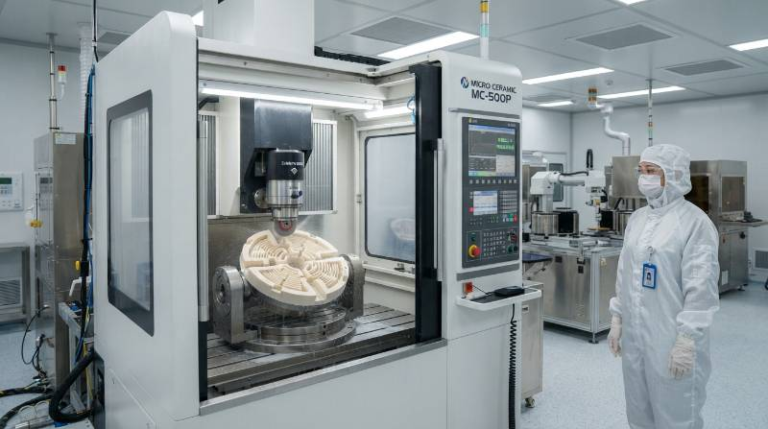
Custom plastic machining for rapid mockups utilizes high-precision CNC equipment to subtract material from solid thermoplastic blocks, creating accurate physical representations of a final product. This process allows engineers to validate geometric accuracy and design intent using the exact materials intended for mass production, such as ABS, PE, or PP.
Product designers and mechanical engineers rely on these mockups for form-fit testing. Unlike 3D printing, subtractive manufacturing provides isotropic strength. This ensures the mockup behaves exactly like an injection-molded part during stress tests.
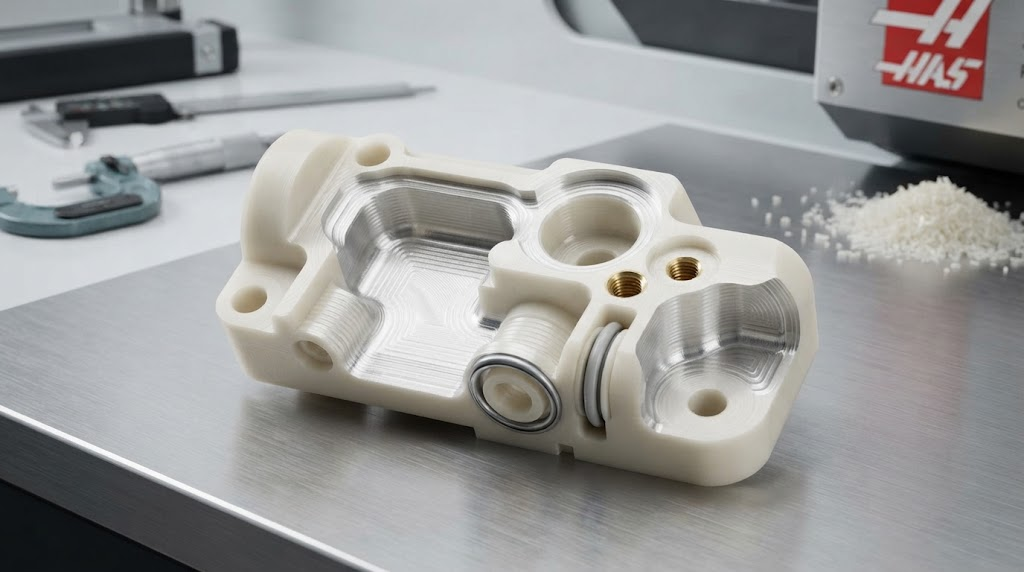
At Tyneen, we prioritize Precision CNC Machining Services to bridge the gap between digital CAD models and physical reality. High-fidelity mockups serve as the final gatekeeper before expensive tooling investments.
“A mockup is not just a visual aid; it is a data point. If the tolerances fail at this stage, the production line will fail later.” — Senior Mechanical Engineer, Tyneen Research Lab.
The Iterative Precision Protocol: A Framework for Rapid Mockups
To maintain dimensional tolerances in soft thermoplastics, we developed The Iterative Precision Protocol. This methodology prevents the common issue of material warping during the machining process.
Phase 1: Human-in-the-Loop Audit
Every project begins with an expert review of the CAD file. Our engineers identify thin walls or deep pockets that might catch heat. We optimize the tool path before a single chip is cut.
Phase 2: Stress-Relieved Machining
Plastic contains internal stresses from the extrusion process. We utilize a “rough-rest-finish” cycle. The material is rough-cut, allowed to thermally stabilize, and then finished to final dimensions.
Phase 3: Fidelity Verification
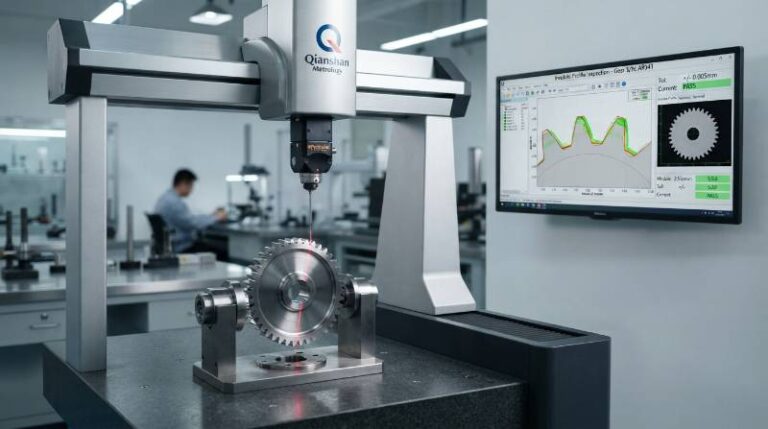
We use CMM (Coordinate Measuring Machine) technology to verify that the subtractive manufacturing results match the digital design within microns. This ensures complex geometries are realized perfectly.
Material Science: ABS vs. PE vs. PP for Functional Mockups
Choosing the right thermoplastic is critical for rapid prototyping success. Each material offers distinct material properties that affect both the machining process and the final performance.
| Material | Dimensional Stability | Impact Resistance | Best Use Case |
|---|---|---|---|
| ABS | Excellent | High | Electronic Enclosures |
| Polyethylene (PE) | Moderate | Very High | Chemical Tanks |
| Polypropylene (PP) | Low (Warp-prone) | High | Living Hinges |
Acrylonitrile Butadiene Styrene (ABS) remains the gold standard for mockups due to its ease of machining and excellent surface finish quality. For projects requiring specific chemical resistance, Polypropylene (PP) is preferred, though it requires specialized cooling during CNC milling.
Refer to the ISO 9001 quality standards for more on manufacturing consistency across these materials.
Advanced 5-Axis CNC Machining for Complex Plastic Geometries
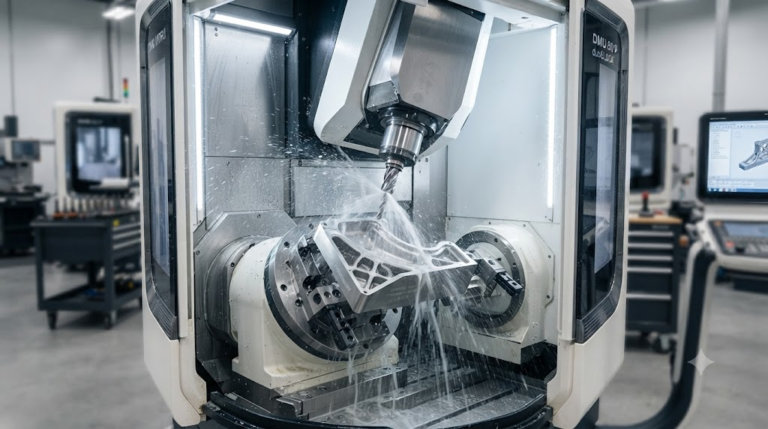
In 2026, 5-axis CNC machining has become essential for high-fidelity mockups. This technology allows the cutting tool to approach the plastic part from five different axes simultaneously. This capability is vital for creating organic shapes and undercuts without multiple setups.
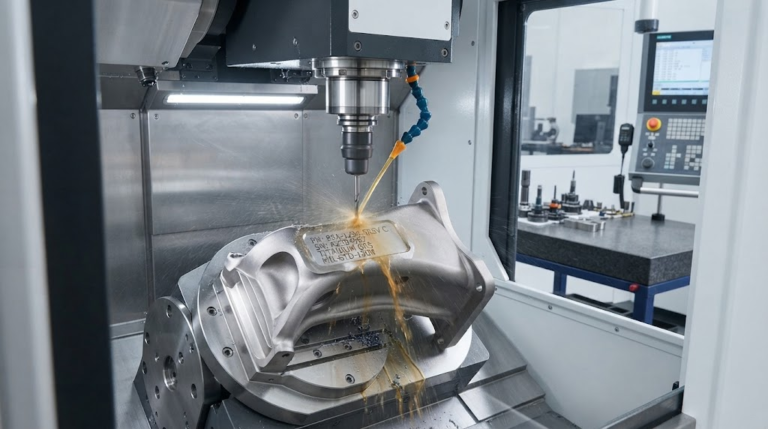
Tool path optimization is the secret to maintaining tight tolerances. By maintaining constant engagement between the tool and the workpiece, we minimize friction and heat build-up. This prevents the “melting” effect common in lower-tier plastic machining.
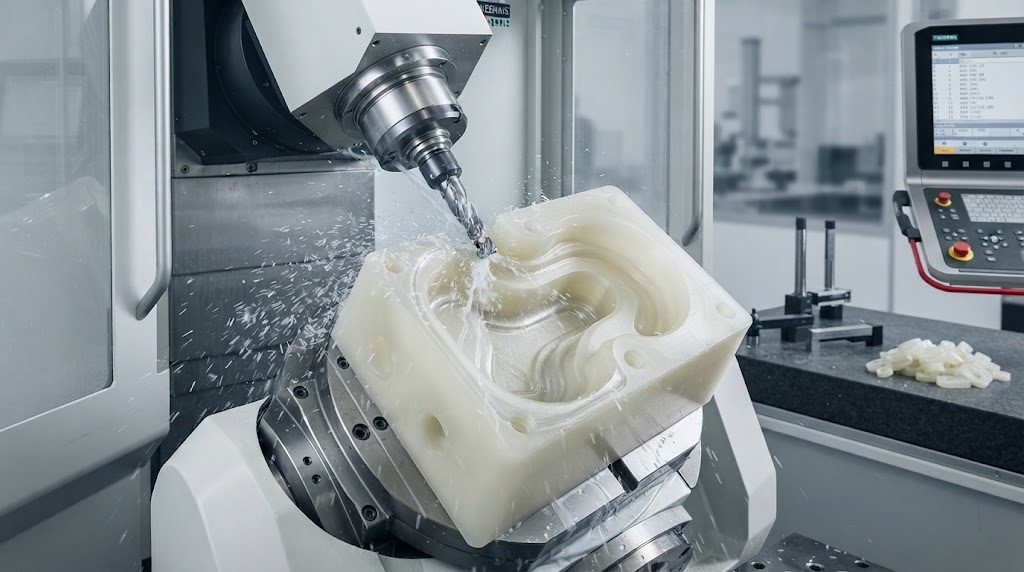
We integrate Advanced Rapid Prototyping Solutions to ensure that even the most complex internal fluid channels or interlocking features are machined with absolute fidelity.
Sustainability Audit: Bio-based PE vs. Traditional PP in 2026
Sustainability is no longer optional in industrial design. In 2026, we have seen a significant shift toward Bio-based PE. This material is derived from renewable sources like sugarcane but maintains the same machining tolerances as petroleum-based Polyethylene.
The carbon footprint per part is approximately 35% lower when using bio-polymers compared to traditional recycled plastic options. While Polypropylene (PP) is highly recyclable, the energy required for its initial production remains higher than current bio-based alternatives.
Our data indicates that Bio-PE handles high-speed machining better than recycled PP, which can contain impurities that cause tool wear. Choosing bio-based materials during the mockup phase provides a realistic preview of a sustainable production cycle.
Hidden Cost-Drivers: Why Internal Geometry Impacts Price More Than Material
Many engineers assume the raw polymer cost is the primary expense in Custom Plastic Machining for Rapid Mockups. In reality, the Total Cost of Iteration is driven by internal geometry and setup time.
- Tool Reach: Deep, narrow cavities require long-reach tools that must run at slower speeds to avoid vibration.
- Surface Finish: Achieving a “mirror” finish directly off the machine requires significantly more time than a standard industrial finish.
- Fixture Complexity: Parts that require custom jigs for 5-axis orientation add to the initial engineering overhead.
By simplifying internal features that aren’t critical for the mockup’s function, companies can reduce lead times and overall budgeting requirements. Our Engineering Material Selection Guide provides further insights into balancing cost and performance.
Post-Processing: Paintability, EMI Shielding, and Aesthetic Finishing
A high-fidelity mockup must often look and act like a finished consumer product. Post-processing techniques for machined plastics have advanced significantly. For aesthetic models, we offer high-gloss painting and texture matching that replicates injection molding textures (MT standards).
For electronic enclosures, EMI shielding compatibility is a common requirement. We can apply conductive coatings to the interior of machined ABS or PC mockups. This allows engineers to perform actual electromagnetic interference testing before the final design is frozen.
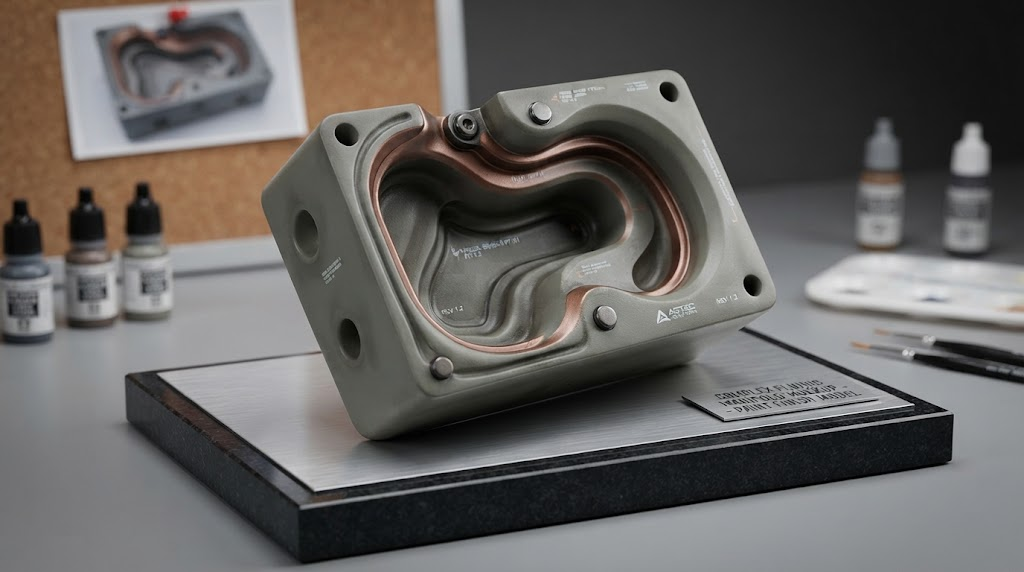
Paintability varies by material. While ABS accepts most coatings readily, PP and PE require specialized primers or plasma treatment to ensure adhesion. This is a critical consideration during the material selection phase.
Frequently Asked Questions About Plastic Machining
What is the best plastic for CNC machining?
ABS is generally considered the best all-around plastic for CNC machining due to its balance of strength, cost, and excellent machining characteristics. It holds threads well and offers high dimensional stability.
How do you prevent warping in machined plastic parts?
We prevent warping by using stress-relieved materials and implementing a multi-stage machining process. By allowing the material to “rest” between roughing and finishing passes, internal stresses are neutralized.
What tolerances can be achieved with custom plastic machining?
With modern 5-axis equipment, we typically achieve tolerances of ±0.005 inches (0.127mm) in most thermoplastics. Closer tolerances are possible depending on the material’s thermal expansion coefficient.
Author Bio and Technical References
Author: James Vance, Senior Manufacturing Engineer at Tyneen. With over 15 years in subtractive manufacturing and a specialization in polymer science, James has overseen thousands of rapid prototyping cycles for the aerospace and medical industries.
Tyneen operates under ISO 9001 and AS9100 certifications, ensuring every machined mockup meets rigorous quality benchmarks. We utilize CAD/CAM integration to maintain a digital thread from design to delivery.
Technical data sourced from MatWeb Material Property Data and internal 2026 performance audits.