Mill-Turn CNC Machining: Precision Multi-Tasking Services
What is Multi-Tasking CNC? The Done-in-One Advantage
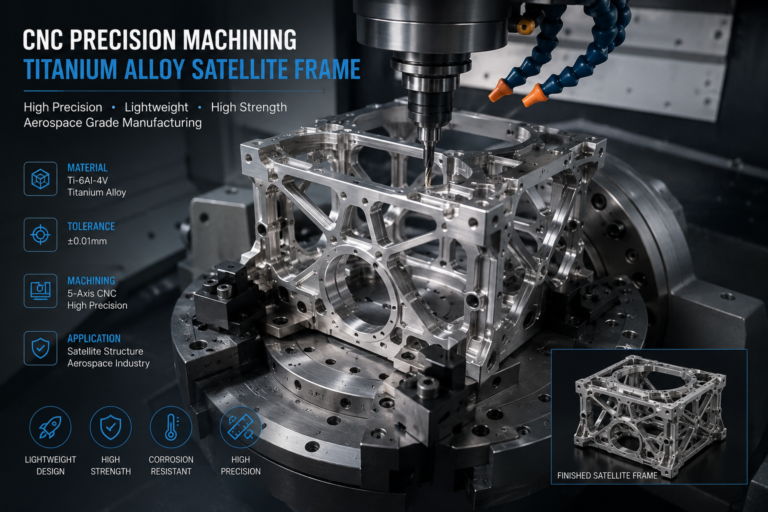
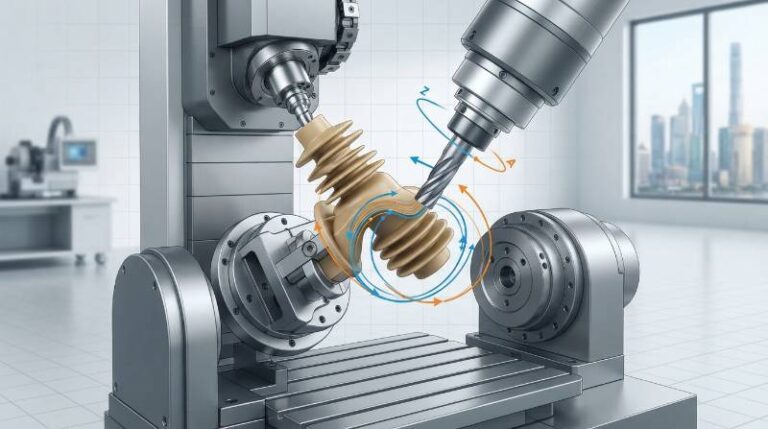
Mill-turn CNC machining is a hybrid manufacturing process that integrates lathe turning and milling capabilities into a single, high-performance machine tool. By combining these operations, engineers can produce complex cylindrical parts with radial holes, slots, and flat faces without transferring the workpiece between different machines.
In the high-stakes world of B2B procurement, traditional multi-step manufacturing often leads to accumulated tolerances and extended wait times. Our “Done-in-One” philosophy eliminates these bottlenecks. By completing the part in a single setup, we remove the risk of human error during manual handling and ensure every feature is perfectly aligned with the primary axis.
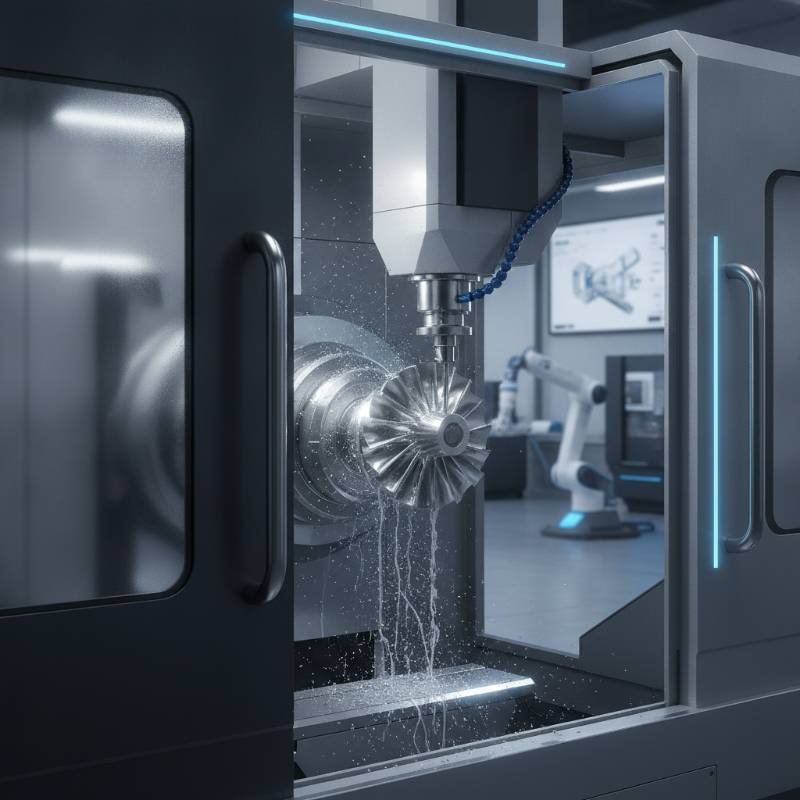
Modern engineering demands more than just basic production. Utilizing advanced CNC Machining Services allows for the creation of intricate geometries that were previously impossible or prohibitively expensive to manufacture.
Technical Excellence: Live Tooling, Y-Axis, and Sub-Spindles
The core of a high-tier turn-mill center lies in its ability to perform “multi-tasking.” Unlike a standard lathe, a live tooling CNC lathe features a turret equipped with its own motors. This enables the machine to rotate drill bits and end mills while the workpiece remains stationary or indexed to a specific angle.
The addition of Y-axis milling capabilities allows for off-center machining. This is critical for milling flats or drilling radial holes that do not pass directly through the center of the part. Without Y-axis travel, these features would require a secondary operation on a separate mill, increasing costs and lead times.
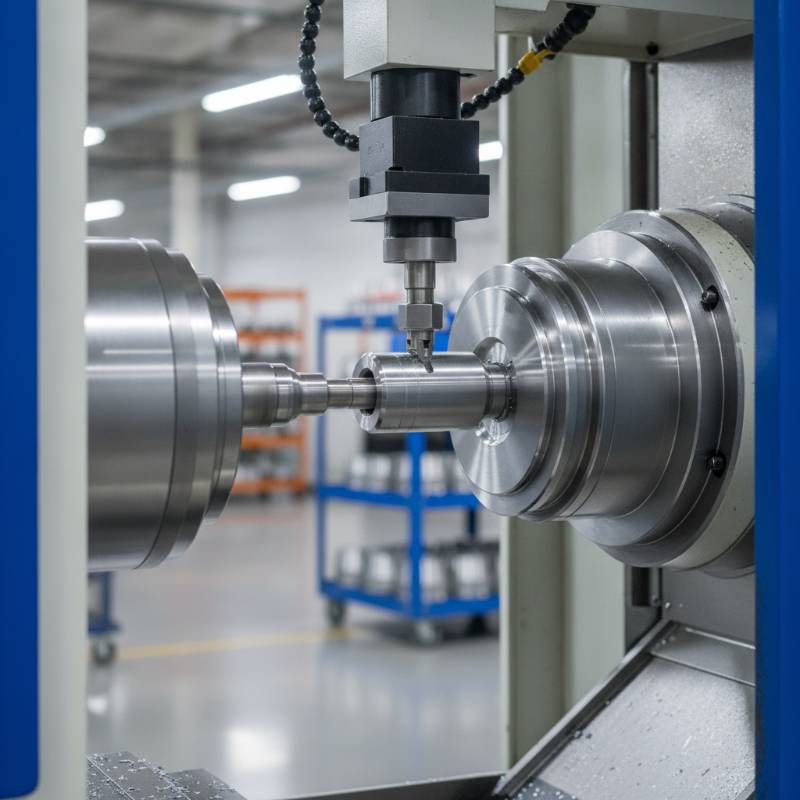
Furthermore, sub-spindle machining allows the machine to automatically transfer the part from the main spindle to a second spindle. This facilitates “back-working,” enabling the machine to finish the rear face of the part simultaneously. This seamless transition ensures that complex components, including those with intricate internal bores, are finished entirely within the machine envelope.
The Precision-Sync™ Protocol: Our Proprietary Framework
To master the complexity of multi-tasking, Tyneen has developed the Precision-Sync™ Protocol. This methodology synchronizes advanced CAD/CAM toolpathing with real-time sensor feedback. It ensures that turning and milling operations are perfectly harmonized, maintaining absolute concentricity even when switching between high-speed rotation and precision indexing.
“Precision in 2026 is no longer just about the rigidity of the machine; it is about the digital synchronization of data across every axis simultaneously. Our Precision-Sync™ Protocol allows us to treat complex multi-axis movements as a single, fluid operation.”
— Chief Engineering Officer, Tyneen
This framework is essential for industries like aerospace and medical device manufacturing, where AS9100 standards and extreme dimensional accuracy are non-negotiable. By locking in the process through digital twinning, we drastically reduce the “first-article” rejection rate.
Quantifiable Efficiency: Reducing Lead Times by 60%
Integrating processes doesn’t just improve quality; it transforms the bottom line. Based on our 2026 production data, moving from traditional multi-machine setups to integrated mill-turn centers reduces total manufacturing lead times from an industry average of 12 days down to just 5 days.
| Metric | Traditional (Multi-Setup) | Mill-Turn (Single-Setup) |
|---|---|---|
| Avg. Lead Time | 12 Days | 5 Days |
| Concentricity Tolerance | 0.025mm | 0.005mm |
| Manual Touches | 4-6 Transfers | 0-1 Transfer |
| Risk of Scrap | Moderate | Minimal |
Maintaining a 0.005mm tolerance for cylindricity is standard for our Precision Turning Services. This level of accuracy is achieved by keeping the part chucked in a single reference frame throughout the entire machining cycle.
Quality Assurance: Lean Manufacturing and Six Sigma Standards
Our facility operates on Lean Manufacturing principles to eliminate waste in every form—whether it’s idle machine time or unnecessary movement of materials. We utilize Six Sigma methodologies to reduce variation, ensuring that the 1,000th part is identical to the first.
Stability is the foundation of trust. Our ISO 9001:2015 certification is not just a badge; it is a commitment to a rigorous quality management system. We employ automated bar feeding and in-process probing to maintain surface finish optimization and dimensional integrity 24/7.
When selecting materials for these high-precision tasks, refer to our Material Selection Guide to understand how different alloys—from Titanium to Inconel—behave under the intense pressures of multi-tasking machining.
For more on international standards, you can review the ISO 9001 Guidelines for manufacturing stability.
Mill-Turn vs. 5-Axis: A Cost-Effectiveness Comparison
Engineers often face a dilemma: should they use a mill-turn center or 5-Axis Milling Solutions? The decision typically rests on the part’s geometry. If the part is primarily rotational with secondary features like cross-holes or keyways, mill-turn is almost always the more cost-effective choice.
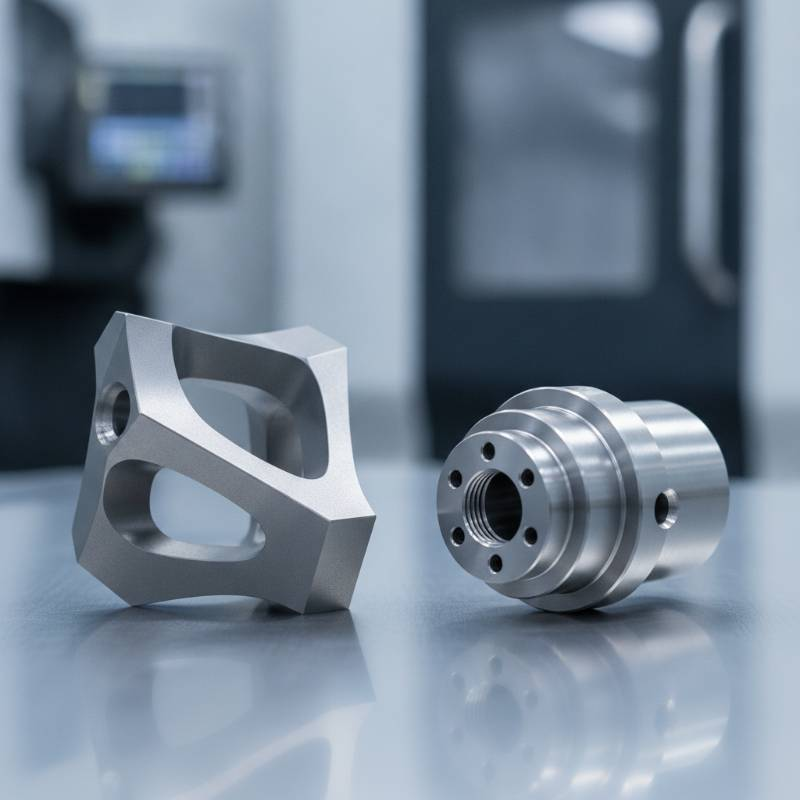
Mill-turn machines excel at manufacturing throughput for parts that require high-speed turning. 5-axis mills, while versatile, may have longer cycle times for cylindrical shapes. To help you decide, we provide a Design for Manufacturing (DfM) assessment. Upload your complex drawings (including those with radial holes and keyways) to our portal for a comprehensive cost-reduction evaluation.
Frequently Asked Questions About Mill-Turn Services
What materials are compatible with mill-turn machining?
We work with a wide range of materials, including aluminum, stainless steel, titanium, and high-nickel alloys like Inconel. The rigidity of our turn-mill centers allows for aggressive material removal while maintaining excellent surface finishes on hardened metals.
What are the maximum part dimensions for your services?
While specific capacities vary by machine, our standard mill-turn envelope accommodates parts up to 300mm in diameter and 600mm in length. For larger components, we offer specialized heavy-duty turning solutions.
Do you provide sustainability reporting?
Yes. In 2026, we integrated a real-time carbon footprint calculator into our quoting process. This allows B2B partners to report the environmental impact of their precision components accurately for ESG compliance.
Ready to Streamline Your Production?
Get expert DfM feedback and a precision quote for your complex parts within 24 hours.