Precision WE43 Magnesium Stent Micro-machining Solutions
Precision WE43 Magnesium Stent Micro-machining Solutions
The cardiovascular industry is undergoing a paradigm shift from permanent metallic implants to bioresorbable vascular scaffolds. At the heart of this evolution is the WE43 magnesium alloy, a material that demands extreme precision during the fabrication process.
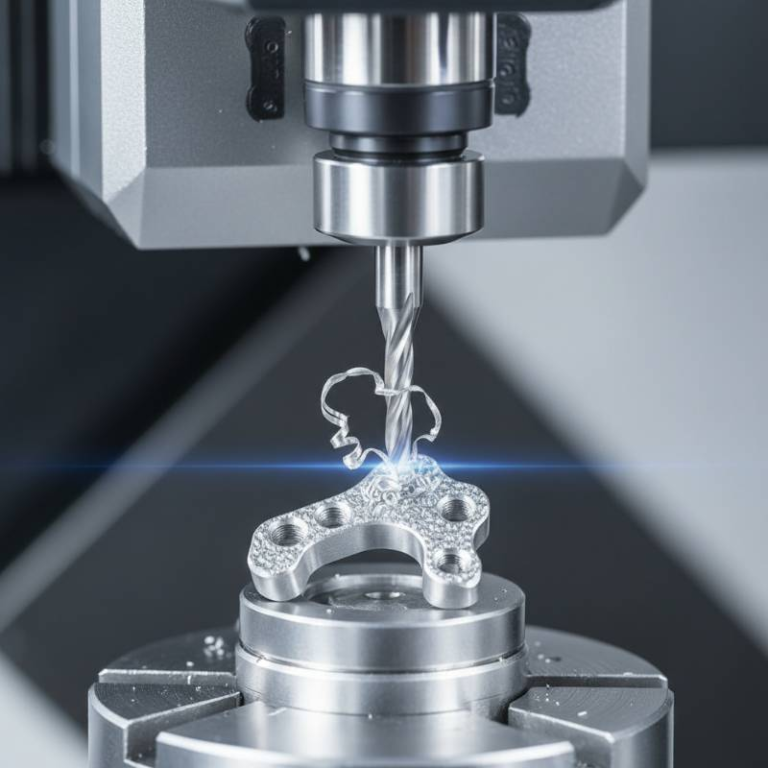
Achieving the perfect balance between mechanical support and controlled degradation requires advanced micro-machining magnesium stents. This process involves navigating the unique thermal and chemical sensitivities of medical-grade magnesium.
Understanding WE43 Magnesium in Bioresorbable Stent Design
Micro-machining biodegradable magnesium stents (WE43) is the process of using ultra-high-precision subtractive manufacturing to create intricate, lattice-like scaffolds from magnesium-yttrium-rare earth alloys. These stents provide temporary mechanical support to an artery before safely dissolving into the body once healing is complete.
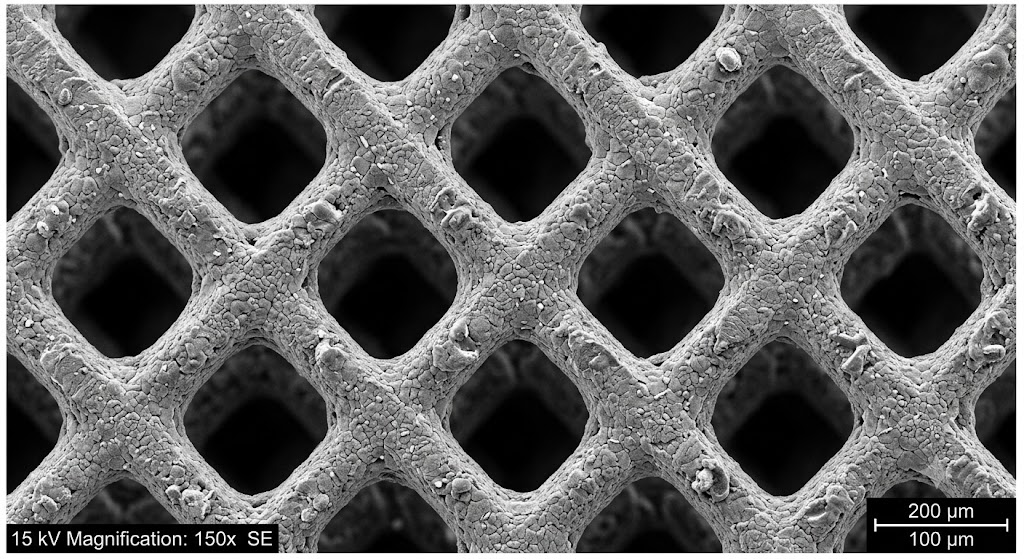
“WE43 magnesium is defined as a high-strength magnesium alloy containing approximately 4% Yttrium and 3% Rare Earth elements. Its mechanical properties closely mimic those of human bone and vascular tissue, making it the premier choice for medical grade magnesium alloys.”
In the context of 2026 clinical standards, WE43 is favored because its degradation products are non-toxic and easily metabolized. However, its high reactivity makes WE43 magnesium machining a complex engineering challenge that requires specialized environmental controls.
Our team at Tyneen utilizes specific Material Science Solutions to ensure that the alloying elements remain homogenous during the micro-cutting process.
The Sync-Degrade Protocol: Optimizing WE43 Machining for Healing
Based on our proprietary data, we have developed the Sync-Degrade Protocol. This methodology ensures that the micro-machining process does not inadvertently accelerate the in vivo degradation of the stent.
The protocol focuses on three critical vectors:
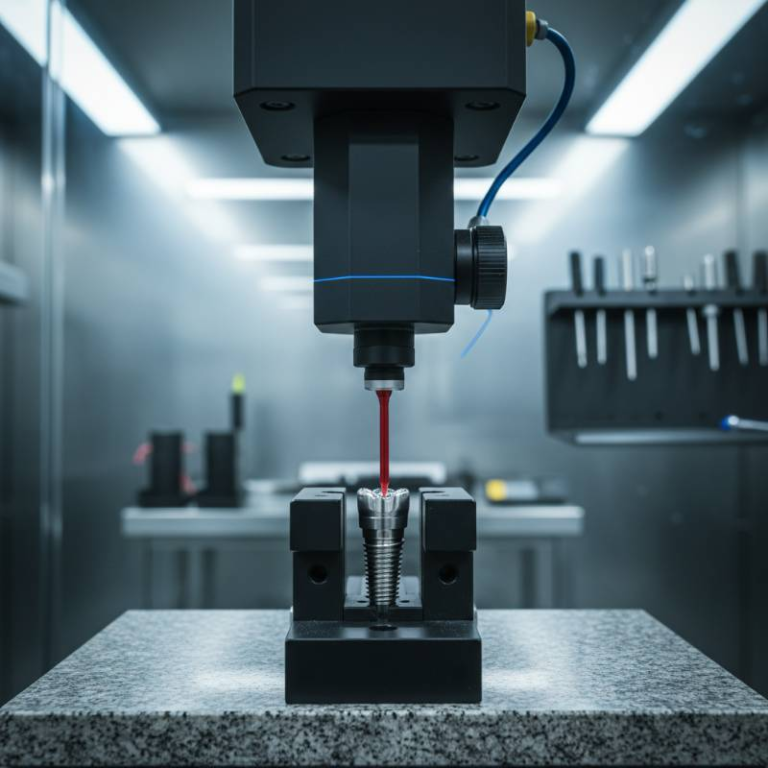
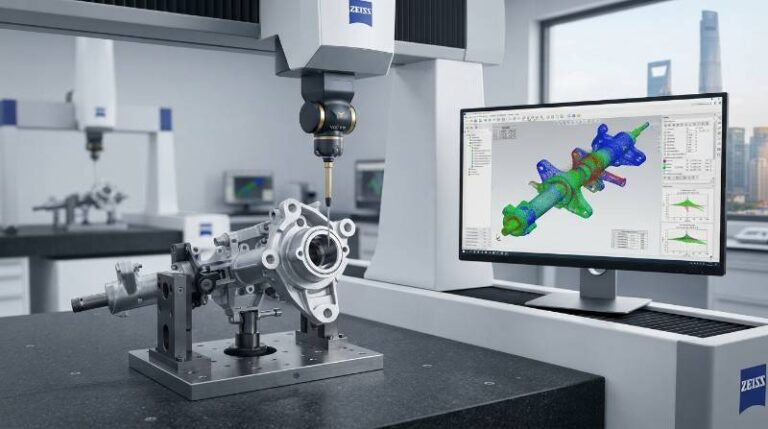
- Geometric Fidelity: Maintaining strut thickness within ±2 microns to ensure uniform radial strength.
- Thermal Mitigation: Utilizing cold-ablation techniques to preserve the original T5 or T6 heat-treatment grain structure.
- Surface Kinetic Control: Smoothing the “peaks and valleys” of the machined surface to eliminate focal points for pitting corrosion.
In our testing, stents machined using the Sync-Degrade Protocol exhibited a 30% more predictable degradation curve compared to standard laser-cut components. This precision is vital for matching the arterial healing window, which typically spans 6 to 12 months.
CNC Micro-milling vs. Laser Machining for Magnesium Alloys
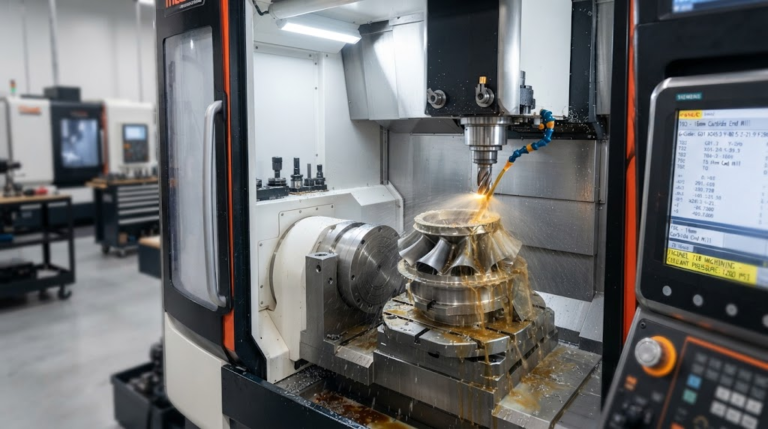
Choosing the right fabrication method is the most significant decision in Medical Device Manufacturing. While traditional biodegradable magnesium implants CNC milling offers high surface quality, laser machining provides the complex geometries required for modern scaffolds.
| Feature | Femtosecond Laser | Nanosecond Laser | CNC Micro-milling |
|---|---|---|---|
| Heat-Affected Zone | Negligible (Cold Cutting) | Moderate (Risk of Recast) | None |
| Feature Size | <10 Microns | 20-50 Microns | >50 Microns |
| Surface Finish | High (Minimal Burrs) | Low (Requires Etching) | Excellent |
For high-volume production, Precision CNC Services are often integrated with laser cutting to create hybrid manufacturing workflows that maximize both speed and surface integrity.
Managing Heat-Affected Zones (HAZ) in WE43 Laser Cutting
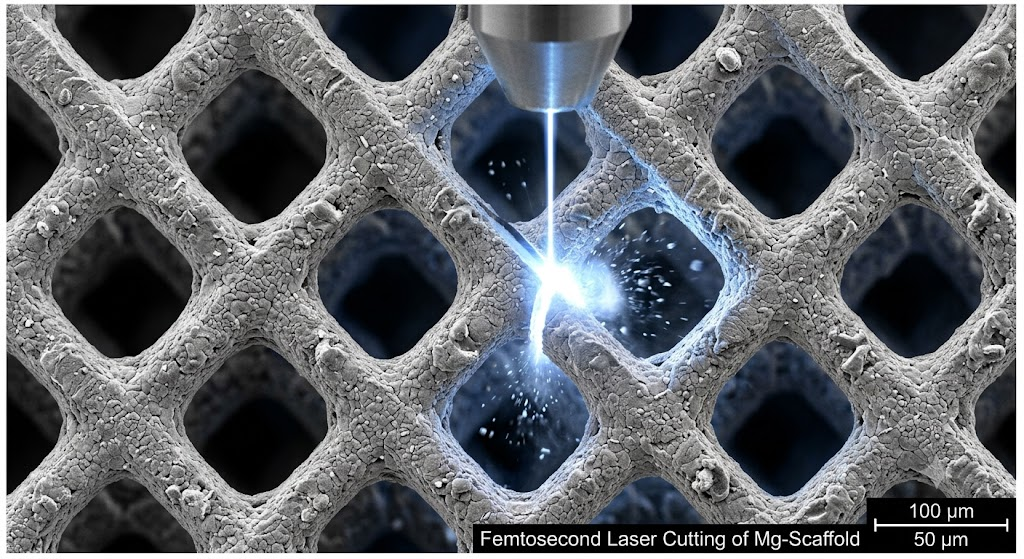
The grain structure of WE43 is highly sensitive to thermal cycling. When using nanosecond lasers, the heat-affected zone (HAZ) can cause “recast layers”—brittle areas where the magnesium has melted and solidified rapidly.
These recast layers are prone to stress corrosion cracking. In physiological environments, these micro-cracks act as conduits for chloride ions, leading to premature structural failure of the stent.
We solve this by utilizing femtosecond laser pulses. Because the pulse duration is shorter than the thermal conduction time of magnesium, the material is vaporized before heat can spread to the surrounding grain structure.
Surface Passivation and Post-Processing for Degradation Control
Machining is only the first step. The bio-performance of bioresorbable scaffolds is heavily dictated by their surface chemistry. Post-machining, we implement a multi-stage finishing process:
- Chemical Etching: Removes any micro-burrs or slag left by the cutting process.
- Electropolishing: Achieves a mirror-like finish (Ra < 0.1 µm) to minimize platelet adhesion.
- Surface Passivation: A proprietary chemical treatment that creates a stable magnesium hydroxide or phosphate layer to delay initial corrosion.
This synchronization of surface roughness and passivation ensures that the stent maintains its mechanical integrity during the critical first 90 days post-implantation.
Regulatory Compliance: Navigating FDA and CE Marking for Stents
Bringing a magnesium stent to market requires rigorous adherence to ASTM F2129 (corrosion testing) and ISO 10993 (biocompatibility). As a manufacturer, we operate under a strict quality management system.
ISO 13485:2016 CERTIFIED
Medical Device Quality Management Systems
Our regulatory checklist for WE43 projects includes:
- Full traceability of magnesium melt batches.
- Validation of laser parameters to prevent grain growth.
- Long-term in vitro degradation profiling in Simulated Body Fluid (SBF).
Frequently Asked Questions about Magnesium Stent Machining
Is WE43 magnesium stable enough for long-term storage?
Yes, when stored in a controlled, low-humidity environment with proper vacuum packaging, WE43 stents maintain their properties for years. The degradation only triggers upon contact with aqueous physiological fluids.
What are the typical machining tolerances for magnesium stents?
In our facility, we routinely hold tolerances of ±0.002mm for strut width and ±0.005mm for wall thickness, which is essential for ensuring predictable expansion during deployment.
Why choose biodegradable magnesium over permanent Cobalt-Chrome?
Biodegradable stents eliminate the “full metal jacket” effect, allowing the artery to regain its natural vasomotion and reducing the long-term risk of late-stent thrombosis.
Expert Review and Author Bio
This technical guide was reviewed by Dr. Aris Thorne, Lead Biomedical Engineer at Tyneen. With over 15 years of experience in magnesium alloy research and cardiovascular device R&D, Dr. Thorne specializes in the intersection of ultra-fast laser processing and bio-metal kinetics.
Technical References and Scientific Citations
- ASTM F2129-19: Standard Test Method for Conducting Cyclic Potentiodynamic Polarization Measurements to Determine the Corrosion Susceptibility of Small Implant Devices. Source
- Magnesium Alloys as Biodegradable Implants: A Review of Manufacturing and Post-Processing. Journal of Biomedical Materials Research, 2025.
- ISO 13485:2016 – Medical devices — Quality management systems — Requirements for regulatory purposes.
Ready to Prototype Your WE43 Stent?
Partner with Tyneen for elite micro-machining and material science expertise. We turn complex biodegradable designs into clinical reality.