Precision Micro-Milling Services for Medical Devices
What is Precision Micro-Milling? Defining the Sub-Millimeter Standard
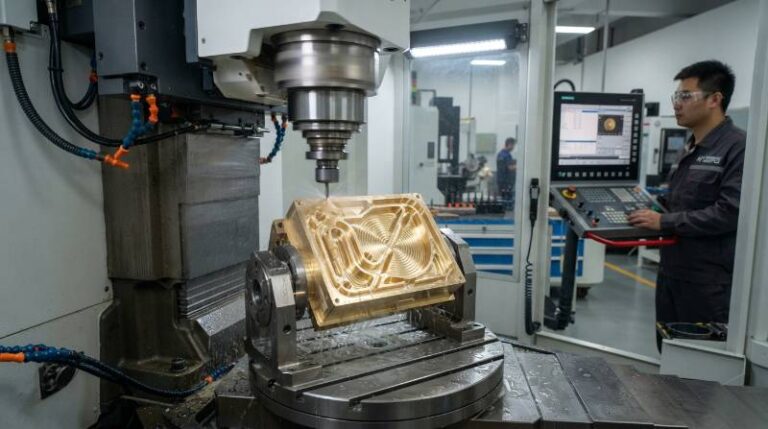
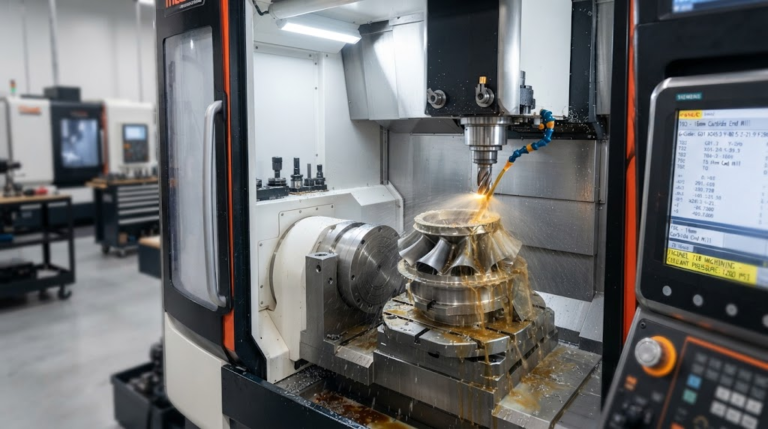
Precision micro-milling for medical devices is a specialized CNC process using micro-end mills (down to 0.1mm) and ultra-high-speed spindles (100,000+ RPM) to create complex 3D geometries. This technique achieves tolerances of ±0.001mm, ensuring 100% burr-free finishes on biocompatible materials like Titanium and PEEK, essential for ISO 13485:2016 compliance.
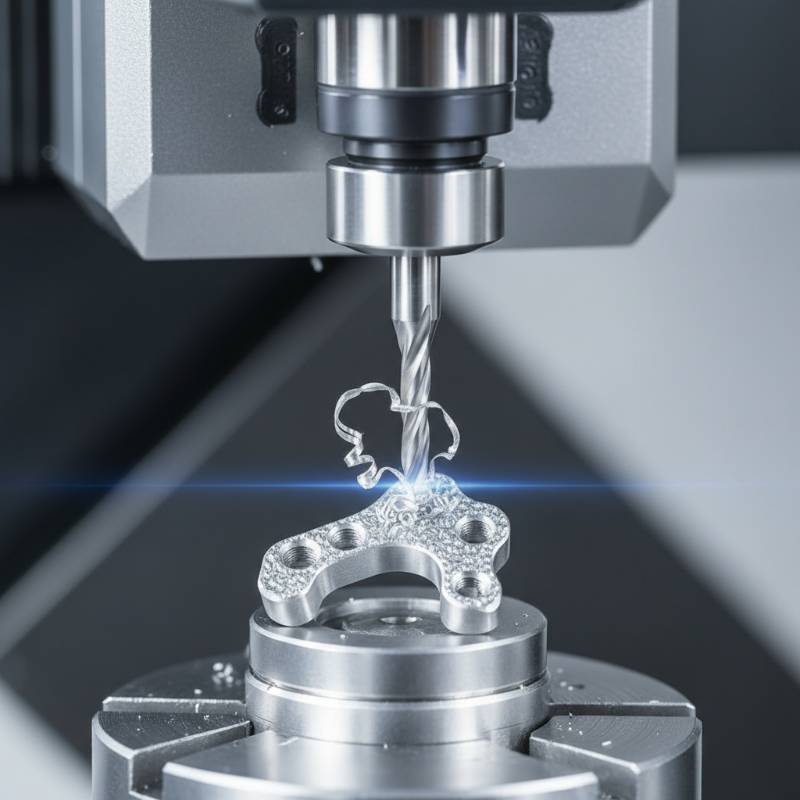
At Tyneen, we define micro-milling not just by the size of the tool, but by the stability of the entire machining ecosystem. High-speed spindles are critical to maintaining the necessary surface footage for tools that are often thinner than a human hair.
Standard Medical Machining Services often struggle with the vibration and thermal expansion inherent in micro-features. Our 2026 facility utilizes vibration-dampened polymer concrete bases to ensure that even the smallest feature on a neurological probe remains geometrically perfect.
“Micro-milling is the only reliable way to achieve true 3D volumetric accuracy in implants without the risk of thermal micro-cracking.” — Senior Micro-Machining Specialist at Tyneen.
Material Science: Overcoming Challenges in Titanium and PEEK Machining
Medical-grade materials demand specific machining strategies to avoid compromising their biocompatibility. Titanium Grade 5 (Ti-6Al-4V) is notorious for its low thermal conductivity, which leads to rapid tool wear and work hardening if not managed with precision cooling.
PEEK (Polyether ether ketone) presents a different set of challenges. Its high thermal sensitivity means that even slight friction can cause deformation. We utilize oil-free, contamination-free coolants specifically formulated for medical environments to maintain material integrity.
- Titanium Grade 5 Machining: We use proprietary tool paths to manage heat dissipation, preventing the “galling” effect that ruins surface Ra values.
- PEEK CNC Milling: Specialized vacuum fixtures prevent thin-walled PEEK components from flexing during high-speed passes.
- Contamination Control: All medical components are machined in a dedicated environment to prevent cross-contamination from non-biocompatible alloys.
For more detailed data on alloy selection, refer to our Biocompatible Material Guide.
The Zero-Defect Micro-Path: Our Proprietary DFM Framework
To guarantee success in 2026, we have pioneered the Zero-Defect Micro-Path protocol. This proprietary Design for Manufacturability (DFM) framework goes beyond standard CAD/CAM simulation.
This process includes a human-led video walkthrough of ultra-complex micro-features. We analyze tool-path harmonics and chip evacuation strategies before the first piece of stock is loaded into the machine. This ensures that features like internal threads in bone screws or fluidic channels in lab-on-a-chip devices are produced flawlessly every time.
Micro-Milling vs. Laser Micro-Machining: A Technical Comparison
While laser machining is popular for thin foils, mechanical micro-milling services offer distinct advantages for complex, 3D medical implants. The primary differentiator is the absence of a Heat Affected Zone (HAZ).
| Feature | Micro-Milling | Laser Machining |
|---|---|---|
| Surface Quality | Mirror finish (Ra < 0.1μm) | Rougher, requires post-processing |
| Thermal Impact | None (Cold cutting) | Significant HAZ risk |
| 3D Geometry | Excellent (Full 5-axis) | Limited to 2.5D or thin walls |
Mechanical milling maintains the original grain structure of the metal, which is vital for the long-term fatigue strength of orthopedic implants. According to research from NIST, maintaining material integrity at the micro-scale is the top predictor of implant success.
Metrology and Quality: ±0.001mm Tolerance and 100% Traceability
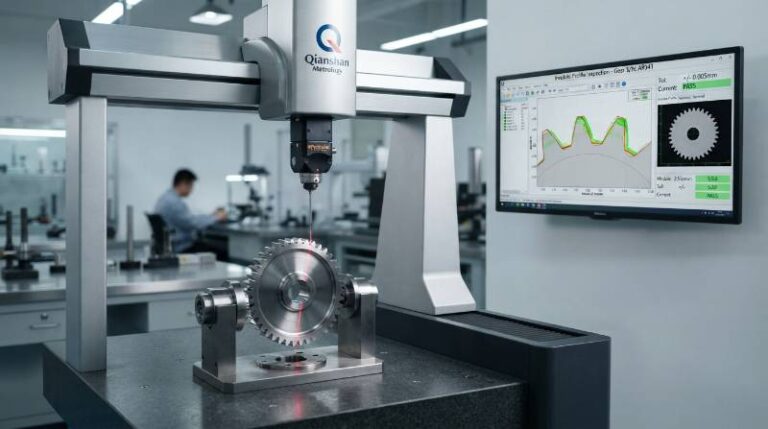
Quality in medical manufacturing is defined by what you can measure. Our Quality Management Systems integrate in-process metrology using Coordinate Measuring Machines (CMM) and high-resolution microscope inspection.
We guarantee a ±0.001mm runout tolerance. Every batch comes with a comprehensive CMM inspection data report, ensuring that the critical dimensions of your cardiovascular stents or neurological probes are exactly as designed. Our FDA material traceability documentation ensures a 100% link from the raw ingot to the final sterile-packed device.
Contact Quality Control Team for Material Declarations
Clinical Applications: From Cardiovascular Stents to Neurological Probes
Micro-milling is the backbone of modern surgical innovation. We specialize in several high-stakes applications:
- Orthopedic Implant Fabrication: Creating micro-textured surfaces on titanium hip and knee joints to promote osseointegration.
- Cardiovascular Stent Micro-features: Machining ultra-thin struts and drug-delivery reservoirs in biocompatible alloys.
- Neurological Probe Manufacturing: Developing sub-millimeter sensors for deep brain stimulation, requiring extreme surface smoothness.
The precision required for these applications is non-negotiable. A single burr or a micro-crack can lead to catastrophic clinical failure. This is why our 100% burr-free surface quality is a standard, not an option.
Sustainability in MedTech: Green Micro-Milling for Biocompatible Metals
In 2026, sustainable manufacturing is a regulatory and ethical requirement. Our Green Micro-Milling initiative focuses on reducing waste in high-cost metals like Tantalum and Nitinol.
By optimizing high-efficiency tool paths and using near-net-shape micro-blanks, we reduce material scrap by up to 30%. This not only lowers the carbon footprint of medical device production but also helps manage the rising costs of biocompatible materials. We follow guidelines set by the International Organization for Standardization to ensure our green initiatives align with global medical safety standards.
Frequently Asked Questions About Medical Micro-Milling
What are the typical lead times for medical micro-milling services?
Lead times vary based on complexity, but prototypes typically ship within 5-10 business days. Production runs with full ISO 13485 documentation and batch traceability usually range from 3-6 weeks.
What is the smallest feature size you can machine?
We routinely machine features as small as 0.05mm (50 microns) using 0.1mm micro-end mills, depending on the material and depth-to-width ratio.
Are your materials FDA compliant?
Yes. We provide 100% batch traceability and material certifications for all FDA-compliant materials, including Titanium Grade 5, 316L Stainless Steel, and PEEK.
Ready to Scale Your Medical Innovation?
Partner with Tyneen for ISO 13485 certified micro-milling that bridges the gap between complex R&D designs and zero-defect production.
Email our Engineering Team for a DFM Review today.