MIL-DTL-38999 Series III: High-Performance Aero Connectors
MIL-DTL-38999 Series III: The Defense Interconnect Standard
Modern aerospace demands more than just a connection. In 2026, as sub-orbital flight profiles and high-altitude defense systems become more frequent, the hardware must endure extreme G-loads and thermal shifts.
The MIL-DTL-38999 Series III remains the backbone of Aerospace Interconnect Solutions. It provides the mechanical stability and electrical integrity required for mission-critical avionics.
What is a MIL-DTL-38999 Series III Connector?
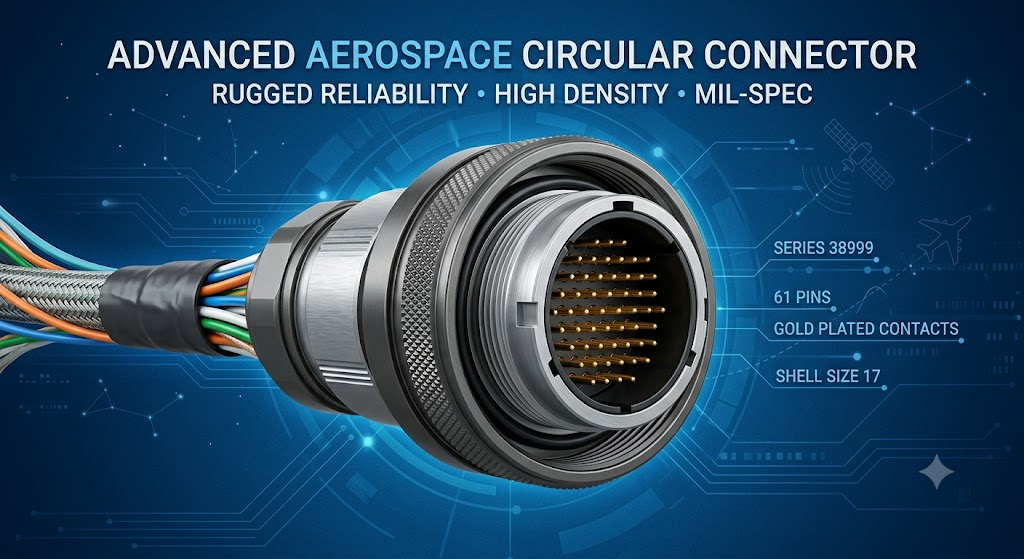
A MIL-DTL-38999 Series III connector is a high-density, circular interconnect featuring a tri-start thread coupling mechanism designed for rapid mating and superior vibration resistance. These connectors are “scoop-proof,” meaning the pins are recessed to prevent damage during blind mating in tight airframe compartments.
“We define the Series III as the gold standard for high-vibration circular connectors due to its anti-decoupling mechanism and 360-degree EMI shielding effectiveness.”
Whether you are sourcing from Amphenol, TE Connectivity, or ITT Cannon, these components must meet strict MIL-SPEC requirements. This ensures interoperability across different manufacturers and aircraft platforms.
The Vibe-Shield™ 4-Step Integrity Protocol
To address the rigors of modern flight, we utilize the Vibe-Shield™ 4-Step Integrity Protocol. This methodology ensures every Ruggedized Cable Assembly survives beyond the laboratory.
- Resonance Mapping: We analyze the specific vibration profile of the airframe to select the optimal shell material.
- Torque Verification: Implementing precision-calibrated coupling to engage the anti-decoupling ratchet effectively.
- Contact Retention Testing: Ensuring SAE AS39029 contacts are seated to withstand 50G+ shock events.
- Environmental Sealing: Validating IP67/IP68 ratings through thermal shock cycling.
Technical Specifications: Shells, Plating, and Inserts
Choosing the right shell size and contact arrangement is only the first step. You must also consider the plating for corrosion resistance and conductivity.
| Material | Plating Type | Durability (Mating Cycles) | EMI Shielding |
|---|---|---|---|
| Aluminum | Electroless Nickel | 500 | Excellent |
| Composite | Cadmium/Nickel | 1500+ | Very Good |
| Stainless Steel | Passivated | 500 | Good |
2026 Performance Analysis: Composite vs. Aluminum Shells
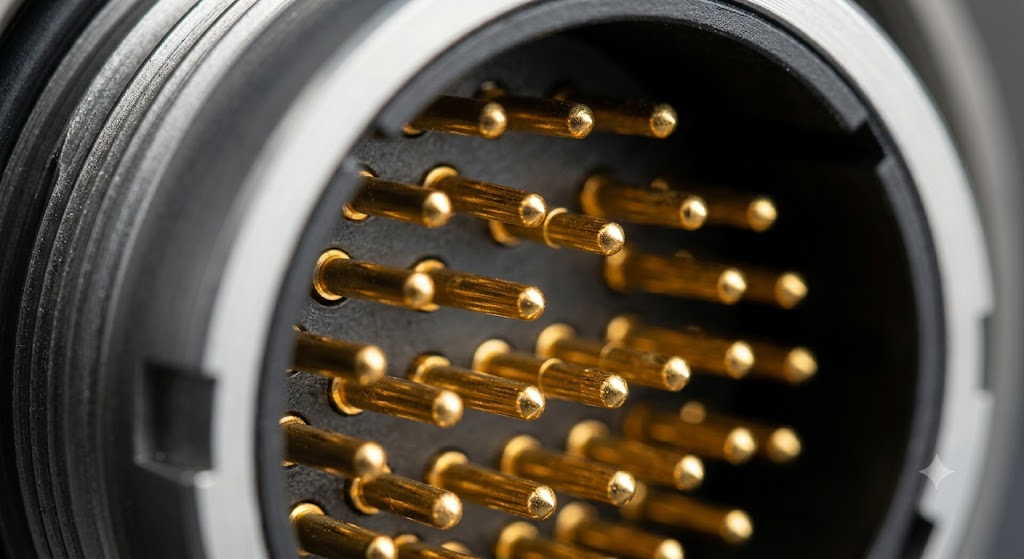
In 2026, the shift toward composite shell performance has accelerated. While aluminum is the traditional choice for thermal management, composites offer a 17% to 40% weight reduction.
In high-G environments, lower mass reduces the mechanical stress on the mounting bulkhead. Our data shows that composite Series III shells exhibit superior damping characteristics, which can extend the life of sensitive internal electronics by reducing transmitted vibration.
Rugged Cable Assemblies for Defense EMI Shielding
A connector is only as strong as the cable it terminates. Aerospace EMI shielding cables must maintain 360-degree coverage from the backshell to the braid.
We recommend using overmolded connectors for applications exposed to hydraulic fluids or de-icing agents. This provides a permanent environmental seal that surpasses traditional heat-shrink boots. For more details, consult our Military Specification Guide.
Fiber Optic Integration in High-Vibration Data Links
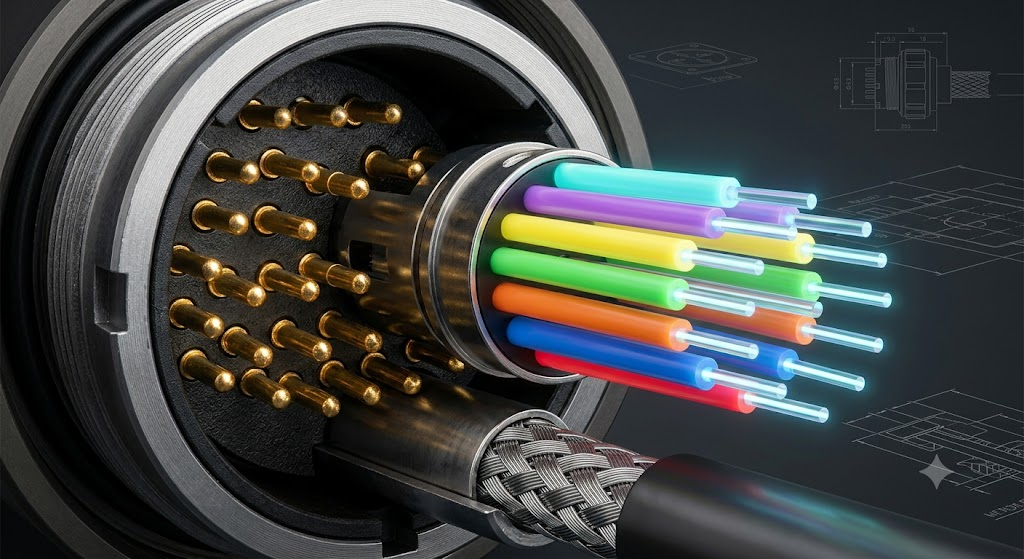
The 2026 sub-orbital flight profiles require massive data throughput. We are seeing a surge in fiber optic termini integration within standard D38999 Series III shells.
By using ARINC 801 or MIL-PRF-29504 termini, engineers can achieve high-bandwidth data links without the weight of copper. These optical interconnects are immune to EMI, making them ideal for placement near high-power radar or propulsion systems.
Compliance, QPL, and Counterfeit Mitigation
Procurement for defense must prioritize the Qualified Products List (QPL). Sourcing from non-certified vendors risks the introduction of counterfeit parts, which can lead to catastrophic system failure.
“Quality is not an option in avionics. Our facility maintains AS9100 compliance and works directly with the Defense Logistics Agency (DLA) to ensure every component has a full pedigree of traceability.”
— Senior Avionics Engineer, Tyneen Aerospace
To verify current certifications, you can visit the official DLA QPL Database. Always check for the latest 2026 revisions to the MIL-DTL-38999 specification.
Frequently Asked Questions
What are the typical MIL-DTL-38999 lead times in 2026?
Standard configurations usually ship within 4-6 weeks. However, specialized plating or custom insert arrangements may extend to 12+ weeks due to high demand in the defense sector.
How many mating cycles can a Series III connector handle?
Aluminum shells are rated for 500 cycles. Composite shells, due to their advanced material properties, can often exceed 1,500 mating cycles while maintaining electrical continuity.
What is the difference between IP67 and IP68 for these connectors?
IP67 protects against temporary immersion, while IP68 is rated for continuous submersion. Most 38999 Series III connectors exceed these standards when properly mated and used with a sealed backshell.
Ready to Secure Your Aerospace Interconnects?
Don’t leave your mission-critical systems to chance. Partner with experts who understand the nuances of high-vibration aerospace environments.