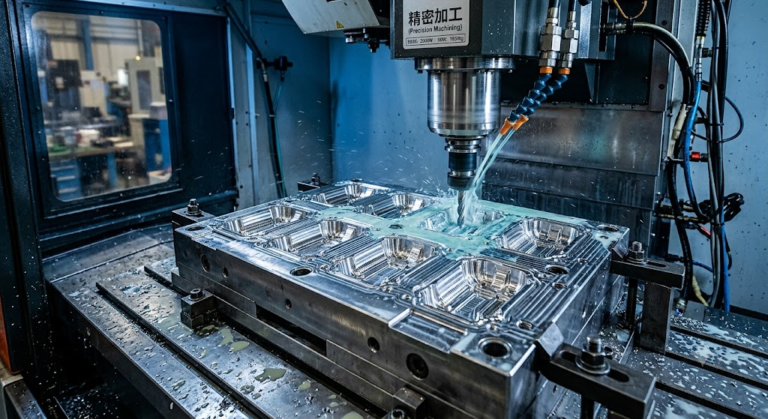
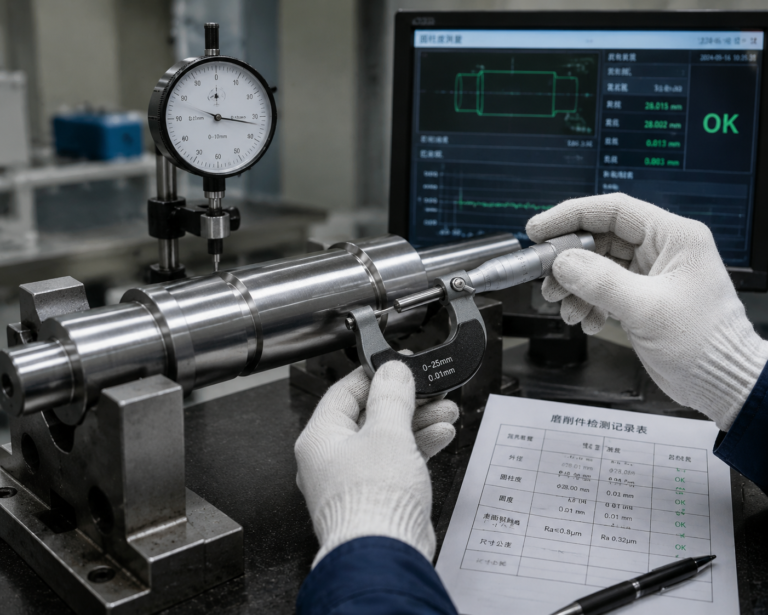
Precision High-Volume CNC Turning for Global Manufacturing
High-Volume CNC Turning: Engineering Scalable Production
What is High-Volume CNC Turning?
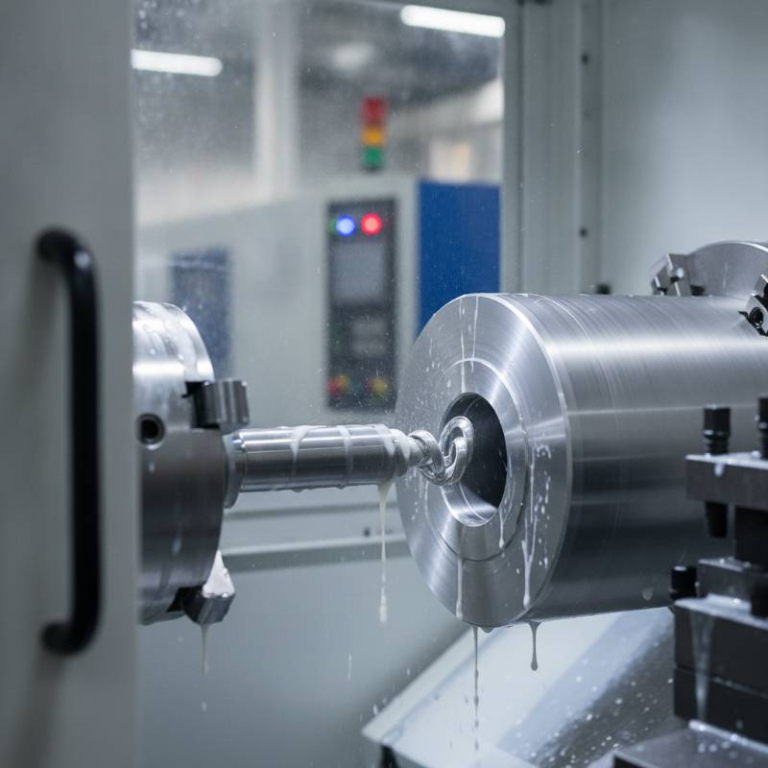
High-volume CNC turning is the industrial-scale production of precision cylindrical components, typically exceeding 10,000 units per run, using automated lathe technology. By leveraging multi-axis synchronization and continuous bar feeding, manufacturers achieve maximum throughput and minimal unit costs while maintaining strict dimensional tolerances.
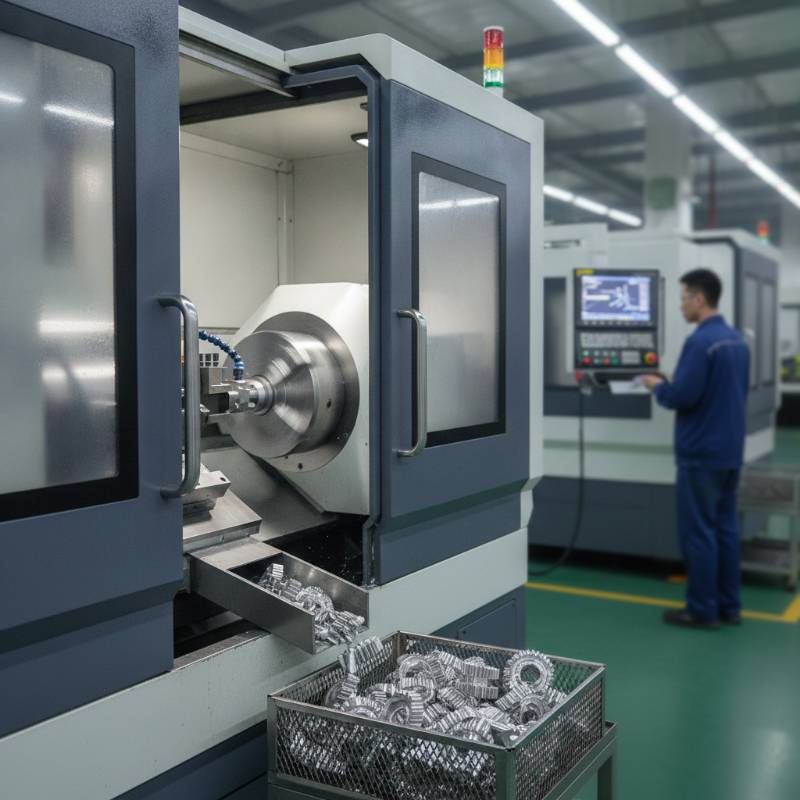
Moving from prototyping to mass production requires a fundamental shift in strategy. While small batches focus on flexibility, high-volume production prioritizes cycle time reduction and repeatable accuracy.
Modern OEMs rely on these services to fuel supply chains in automotive, aerospace, and medical sectors. At Tyneen, we bridge the gap between engineering design and massive-scale execution.
“In 2026, high-volume production is no longer just about speed; it’s about the predictive synchronization of tool-wear algorithms and material thermodynamics,” says our Chief Manufacturing Engineer.
The Precision-Scale Protocol: Our Proprietary Framework
To dominate the 2026 manufacturing landscape, we developed the Precision-Scale Protocol. This methodology ensures that quality does not degrade as quantity increases.
The Four Phases of Execution
- AI-Optimized Tooling: We use predictive modeling to select inserts that withstand long-duration runs without thermal deformation.
- Automated Cycle Calibration: Real-time adjustments to feed rates based on material density variations.
- Human-in-the-Loop Oversight: Expert machinists monitor automated cells via augmented reality (AR) interfaces.
- Real-time Carbon Tracking: Every part produced includes a digital twin documenting its energy consumption.
This framework allows us to maintain Quality Assurance Standards that exceed traditional Six Sigma benchmarks.
Advanced Turning Technologies: Multi-Spindle and Swiss-Type Lathes
The machinery used for production turning defines the limits of what can be built. In 2026, we utilize a hybrid fleet of multi-spindle and Swiss-type lathes to handle diverse geometries.
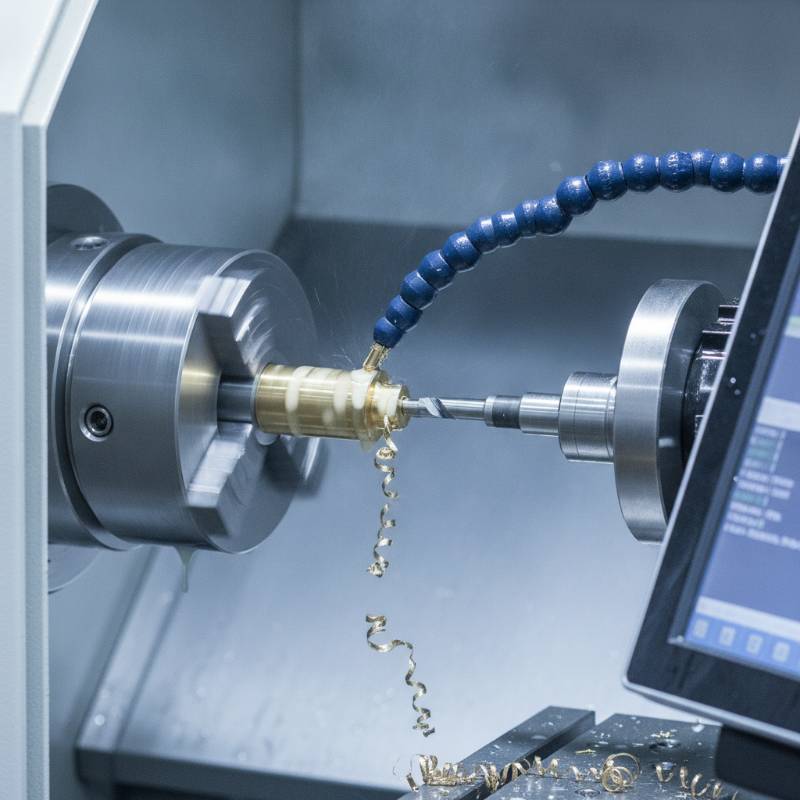
Swiss Machining for Complexity
Swiss machining is the gold standard for small-diameter, complex parts. By supporting the workpiece close to the cutting tool, we eliminate deflection and achieve superior surface finish optimization.
Multi-Spindle Lathes for Speed
For simpler geometries at extreme volumes, multi-spindle machines perform multiple operations simultaneously. This slashes cycle times by up to 300% compared to traditional single-spindle lathes.
| Feature | Swiss-Type | Multi-Spindle |
|---|---|---|
| Max Diameter | Up to 38mm | Up to 150mm |
| Complexity | Extreme (Live Tooling) | Moderate to High |
| Best For | Medical Implants | Automotive Fasteners |
Automated CNC Lathe Capabilities: Lights-Out Manufacturing
True contract manufacturing efficiency is found in automation. We operate “lights-out,” meaning our facility continues production 24/7 without constant human presence.
Bar feeder turning systems automatically load raw stock into the machine, while robotic arms unload finished parts. This integration reduces labor costs and eliminates the “human error” variable in repetitive tasks.
By implementing CNC Machining Services driven by Industry 4.0 principles, we ensure that every part—from the 1st to the 1,000,000th—meets your exact tolerance specifications.
Material Expertise: Machining Specialized Alloys at Scale
High-volume turning is not limited to aluminum or brass. Our facility specializes in subtractive manufacturing using difficult-to-machine materials.
- Titanium Turning: Critical for aerospace-grade alloys and medical device components.
- Stainless Steel: Utilizing 316L and 17-4 PH for corrosion resistance.
- Inconel & Superalloys: Managed through our heat-dissipation protocols to prevent work hardening.
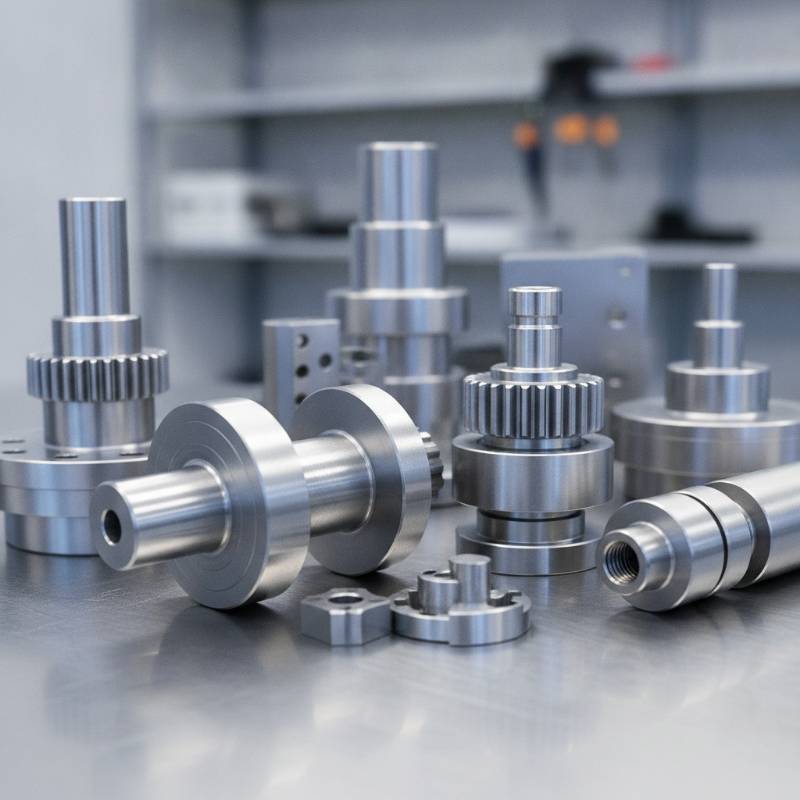
Explore our Advanced Material Capabilities to see how we handle specialized stock according to NIST precision standards.
Total Cost of Ownership (TCO) and Regional Reshoring Logic
Procurement officers in 2026 are looking beyond the “price per part.” Logistics volatility and carbon taxes have made regional Contract Manufacturing Solutions more cost-effective than offshore alternatives.
Case Study: 30% TCO Reduction for Aerospace OEM
By switching to our automated turning cells, a major aerospace client reduced their inventory carrying costs and eliminated overseas shipping delays, resulting in a 30% reduction in their Total Cost of Ownership.
Our integrated Real-time Carbon Footprint Calculator provides the data needed to satisfy ESG (Environmental, Social, and Governance) requirements, a critical factor for modern global manufacturing compliance.
Frequently Asked Questions
What is the typical MOQ for high-volume turning?
While we handle smaller batches for specialized aerospace needs, our high-volume lines are optimized for orders starting at 5,000 to 10,000 units to ensure maximum cost-efficiency.
What are your production lead times?
Standard lead times range from 2 to 4 weeks depending on material availability. However, our automated CNC lathe setups often allow for expedited delivery on recurring contract orders.
Are you ISO 9001:2026 certified?
Yes. We have successfully completed the ISO 9001:2026 Certification Verification, ensuring our Quality Management System (QMS) meets the latest global standards for subtractive manufacturing.
Ready to Scale Your Production?
Partner with Tyneen for precision high-volume CNC turning that integrates seamlessly into your 2026 supply chain.