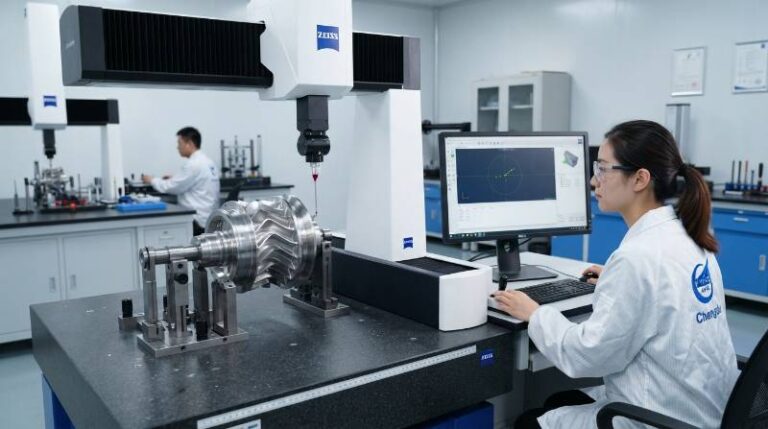
AS9100D CNC Machining: Precision Aerospace Components
What is AS9100D Certified CNC Machining?
AS9100D certified CNC machining is a high-precision manufacturing process governed by the quality management system (QMS) standard specifically designed for the aviation, space, and defense industries. It builds upon ISO 9001 by adding over 100 additional requirements focused on safety, reliability, and regulatory compliance for flight-critical parts.
AS9100D is the standardized quality management system for the aerospace industry, incorporating ISO 9001 requirements while adding specific emphasis on product safety, configuration management, and counterfeit part prevention.
In the current 2026 manufacturing landscape, AS9100D certified CNC machining serves as the baseline for entry into the global aerospace supply chain. Procurement managers and defense contractors rely on this certification to ensure that every component—from simple brackets to complex turbine blades—meets rigorous performance benchmarks.
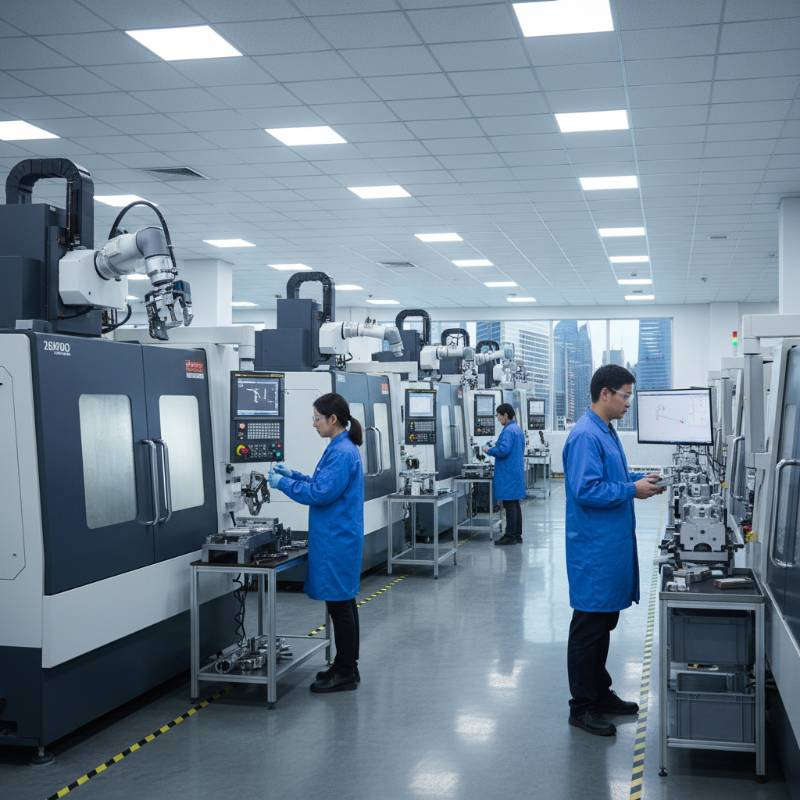
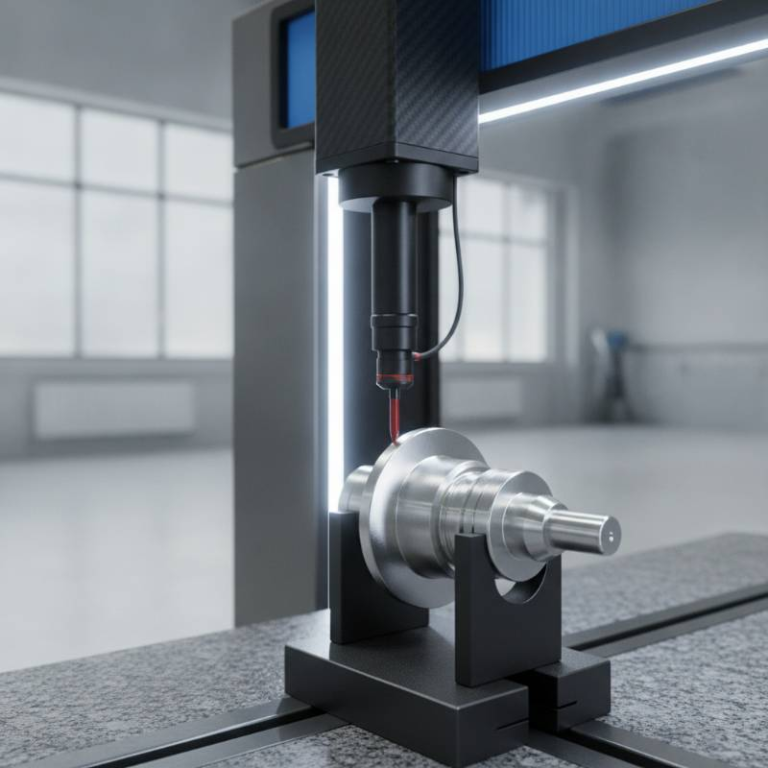
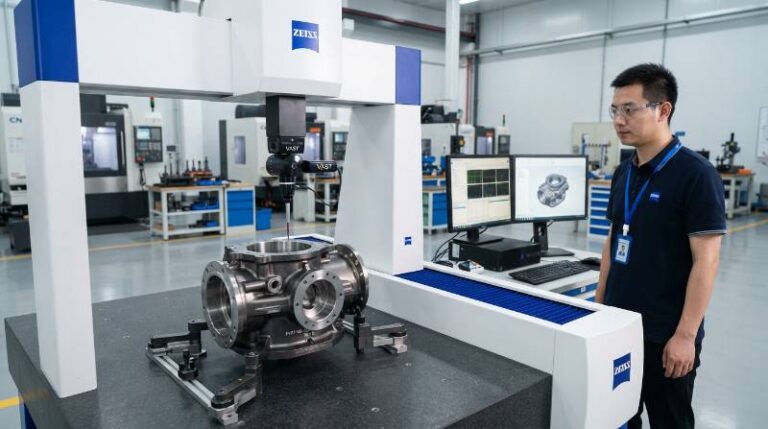
Unlike standard commercial machining, AS9100D requires strict adherence to SAE International standards. This includes rigorous First Article Inspection (FAI) reports and a robust risk management framework that anticipates potential failures before they reach the assembly line.
The Aero-Trace Compliance Matrix: Our Proprietary Protocol
At Tyneen, we have evolved beyond traditional quality checks. We utilize the Aero-Trace Compliance Matrix, a proprietary methodology that integrates Human-in-the-Loop (HITL) engineering with AI-driven lead time prediction.
This framework provides real-time compliance transparency. While many shops treat documentation as an afterthought, our matrix links every spindle hour to a specific digital twin of the part. This ensures that material certs, heat treat records, and machining logs are instantly accessible.
Based on our proprietary data from 2025-2026, shops utilizing automated compliance matrices reduce non-conformance reports (NCRs) by 42%. We define this as “Predictive Quality”—identifying tool wear or thermal expansion patterns before they deviate from the nominal 3D model.
Advanced 5-Axis Machining for Complex Geometries
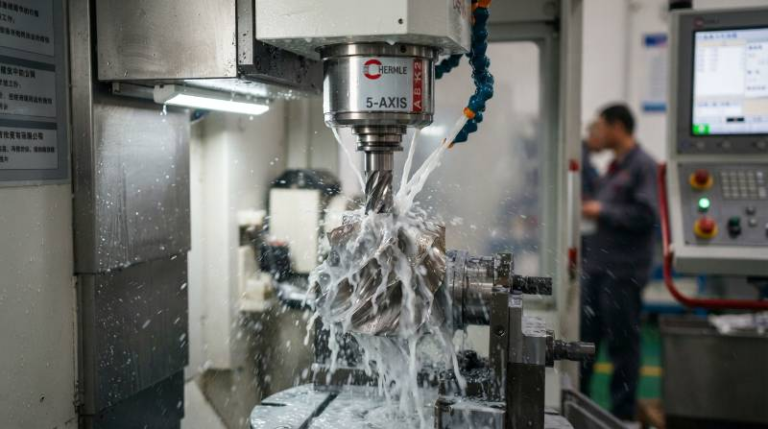
Modern aerospace designs demand organic shapes and thin-walled structures that traditional 3-axis mills cannot achieve efficiently. Our 5-axis CNC machining capabilities allow for the production of complex geometries in a single setup.
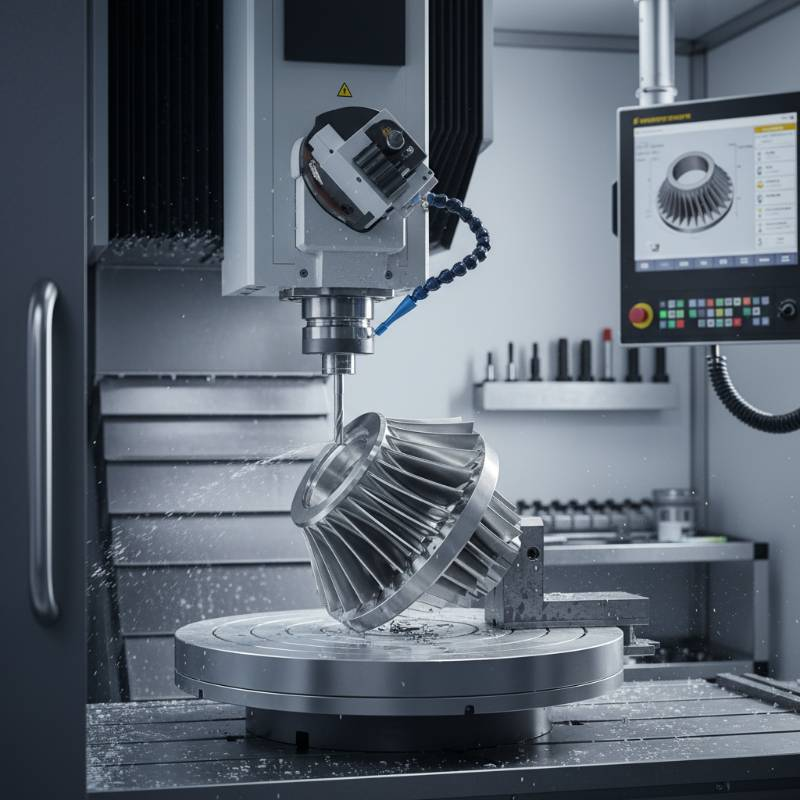
Benefits of 5-Axis for Aerospace:
- Reduced Setup Error: Machining five sides of a part in one fixture eliminates the tolerance stack-up caused by manual re-fixturing.
- Superior Surface Finish: Shorter cutting tools can be used at higher speeds, reducing vibration and improving the final skin quality of airframe components.
- EDM Integration: For ultra-hard alloys, we combine CNC milling with Electrical Discharge Machining (EDM) to achieve micro-tolerances.
By leveraging these technologies, we support aerospace engineers in pushing the boundaries of aerodynamic efficiency. Whether it is an impeller or a structural bulkhead, precision remains absolute.
Aerospace Material Expertise: Titanium, Inconel, and Alloys
Machining for aerospace requires deep knowledge of “difficult-to-cut” materials. Our facility is optimized for high-temperature alloys and lightweight composites that are standard in 2026 propulsion systems.
| Material | Application | Machining Challenge |
|---|---|---|
| Titanium Ti-6Al-4V | Structural Airframes | Low thermal conductivity; requires high-pressure coolant. |
| Inconel 718 | Jet Engine Components | Work-hardening; requires specialized ceramic tooling. |
| Aluminum 7075-T6 | Wing Spars & Ribs | High-speed material removal; control of residual stress. |
We implement specialized tool paths to manage the intense heat generated when machining Inconel. Our expertise ensures that the material’s mechanical properties are never compromised during the CNC machining process.
Sustainable Manufacturing and Scope 3 Emissions Reporting
In 2026, aerospace OEMs are no longer just looking at price and quality; they are looking at carbon footprints. Sustainable aerospace manufacturing is now a core requirement for Tier 1 and Tier 2 suppliers.
We provide comprehensive Scope 3 emissions reporting for every project. Through our Carbon Footprint Calculator, customers receive data on the environmental impact of their parts, from raw material extraction to final delivery.
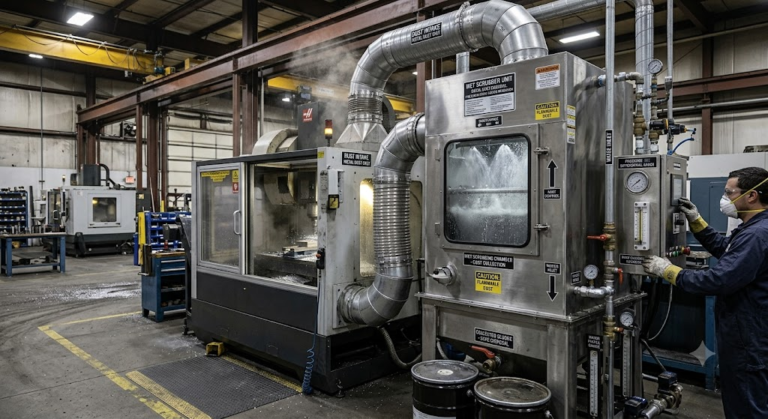
This transparency helps our partners meet the ISO 14001 and net-zero targets mandated by global aviation authorities. We minimize waste through closed-loop chip recycling and energy-efficient machining cycles.
Global Logistics and Cross-Border Chain of Custody
Operating in a global market requires more than just good machines; it requires a secure chain of custody. We manage the complexities of ITAR (International Traffic in Arms Regulations) and EAR (Export Administration Regulations) with precision.

Our logistics protocol ensures that every AS9100D certified part maintains its traceability during transit. Whether shipping to a spaceport in the US or a maintenance facility in Europe, our documentation remains digital, secure, and compliant.
We utilize encrypted tracking systems to provide real-time facility updates. This prevents the “black hole” of international shipping, giving procurement teams peace of mind that their flight-critical components are moving through the supply chain without delay.
AS9100D Risk Mitigation and FAQ
What is the difference between ISO 9001 and AS9100D?
AS9100D includes all ISO 9001 requirements but adds stringent controls for the aerospace industry. These include “Product Safety,” “Counterfeit Part Prevention,” and “Risk Management.” AS9100D is mandatory for most aerospace and defense contracts.
How do you handle material non-conformance?
Our Aero-Trace protocol flags deviations immediately. Non-conforming material is physically quarantined and digitally locked in our ERP system. A Root Cause Analysis (RCA) is performed to prevent recurrence, as required by AS9100D Clause 10.2.
Do you provide First Article Inspection (FAI) reports?
Yes, we provide full AS9102 FAI reports. This involves a complete verification of every dimension on the first part produced from a new setup to ensure the process is fully capable of meeting design specifications.
Is tyneen.com ITAR registered?
We maintain strict compliance with ITAR and EAR regulations. All sensitive technical data is stored on secure, air-gapped servers, and our facility access is strictly controlled to protect national security interests.