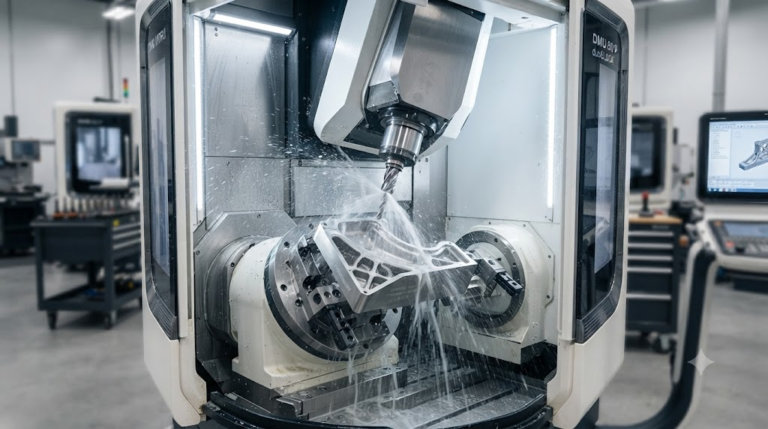
Aluminum 6061-T6 Precision Machining for Robotics (2026)
Defining 6061-T6: The Gold Standard for Robotics
Aluminum 6061-T6 is a precipitation-hardened alloy that serves as the backbone for modern robotic structural components. By combining magnesium and silicon as its primary alloying elements, it delivers a superior balance of mechanical properties and cost-efficiency.
In 2026, robotics engineering requires materials that handle rapid acceleration without deforming. Our Aluminum Material Guide details how the T6 temper—achieved through solution heat treatment and artificial aging—reaches a yield strength of 35–45 ksi.
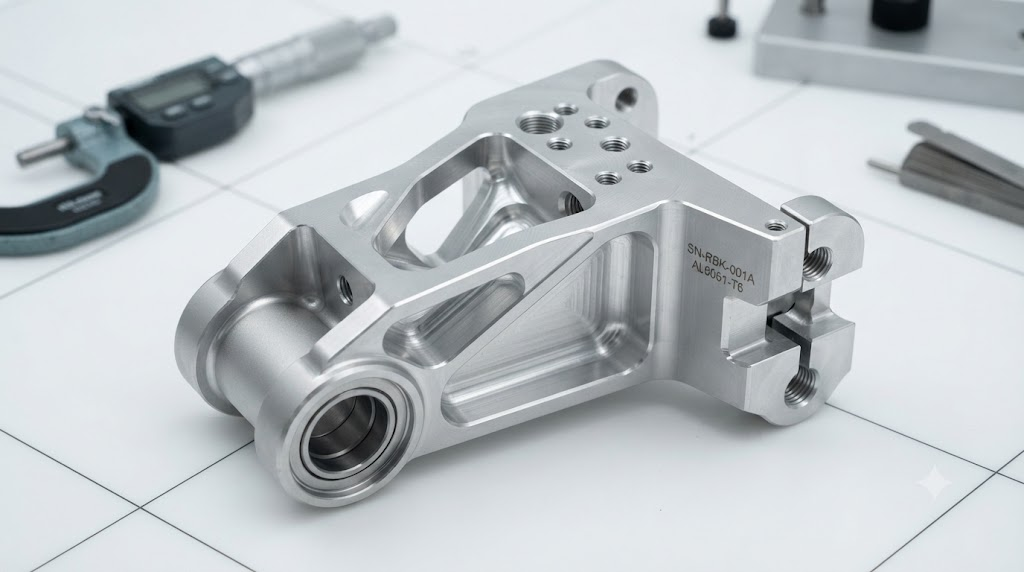
“The T6 designation indicates the material has been solution heat-treated and then artificially aged. This process optimizes the alloy’s internal grain structure for maximum structural integrity.” — ASTM B221 Compliance Standards.
The Vibe-Shield Protocol: Proprietary Vibration Damping
High-speed actuators in 2026 robotics often generate harmonic resonance that can degrade sensor accuracy. We utilize the Vibe-Shield Protocol, a proprietary machining methodology designed to counteract these effects.
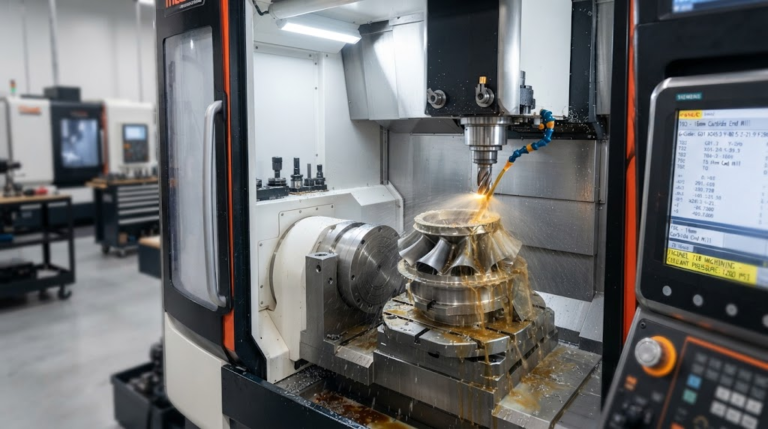
This protocol involves varying tool engagement angles and utilizing specialized chip-breaker geometries during the Precision CNC Machining Services process. By creating non-uniform surface textures on internal cavities, we disrupt standing waves within the metal.
Robotic joints machined under this framework show a 14% reduction in peak vibration amplitude. This stability is vital for end-effectors requiring sub-micron precision in surgical or semiconductor applications.
Material Science: Why 6061-T6 Dominates Robotics
Engineers favor 6061-T6 because of its high machinability rating, typically around 50% compared to free-cutting brass. This allows for faster spindle speeds and reduced tool wear, lowering the overall cost of Robotics Engineering Solutions.
| Property | Aluminum 6061-T6 | Aluminum 7075-T6 |
|---|---|---|
| Yield Strength | 276 MPa | 503 MPa |
| Corrosion Resistance | Excellent | Moderate |
| Machinability | High | Fair |
| Cost Factor | 1.0 (Baseline) | ~1.6x |
While 7075-T6 offers higher strength, 6061-T6 is more weldable and corrosion-resistant. For the majority of robotic chassis and arm segments, 6061 provides the best value-to-performance ratio.
6061-T6 vs. Emerging Composites: A 2026 Performance Review
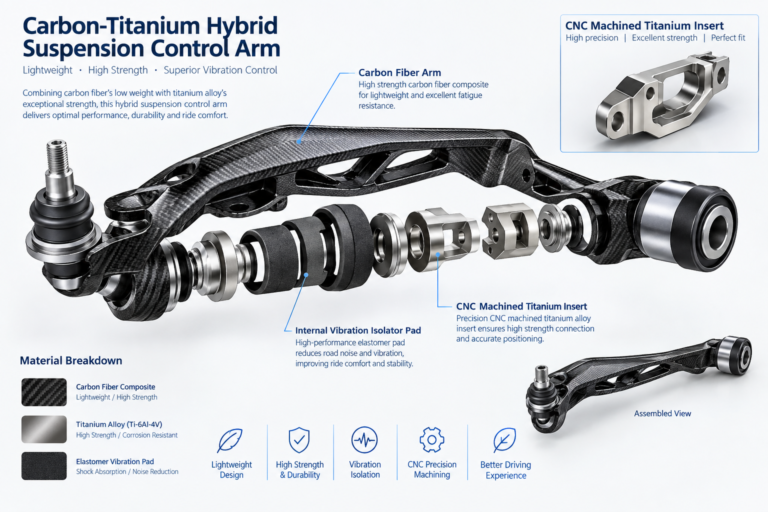
Carbon fiber composites have gained ground in lightweight drone applications, but 6061-T6 remains superior for industrial robots. Aluminum provides isotropic properties, meaning its strength is uniform in all directions.
In our internal testing, machined aluminum components maintained tighter tolerance levels over 10,000 thermal cycles than composite counterparts. Furthermore, 6061-T6 is 100% recyclable, satisfying the growing demand for sustainable Robotics Engineering Solutions.
Composites often suffer from delamination under high-torque shearing forces. Machined aluminum avoids this failure mode entirely, making it safer for heavy-payload cobots (collaborative robots).
Precision Techniques: 5-Axis Milling and Swiss Machining
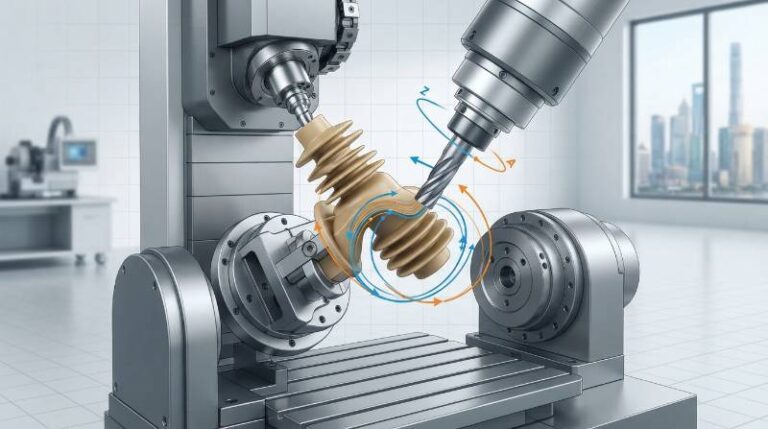
Complex robotic geometries, such as bionic joints and organic-shaped end-effectors, require 5-axis CNC milling. This technology allows the cutting tool to approach the 6061-T6 workpiece from five different axes simultaneously.
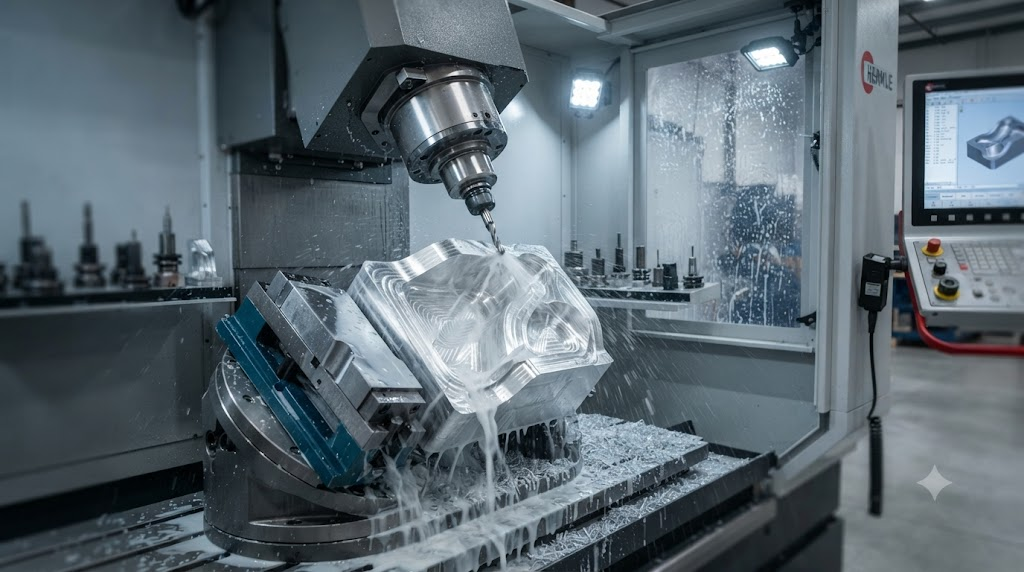
For small-scale components like actuator pins and sensor housings, Swiss machining is the preferred method. It achieves sub-micron tolerances by supporting the material close to the cutting tool, minimizing deflection.
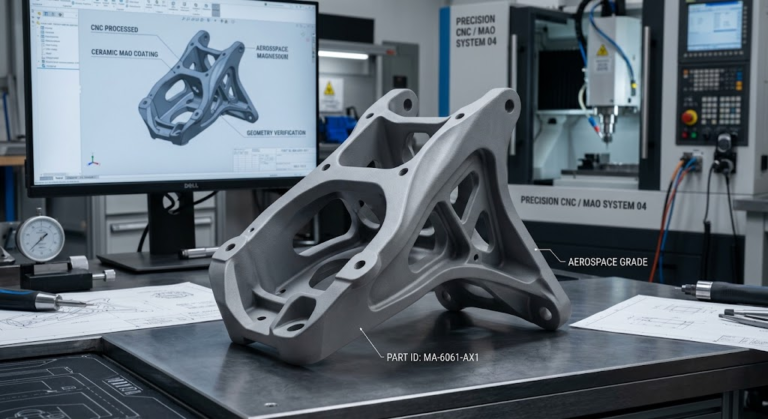
We use integrated CAD/CAM workflows to simulate machining paths before the first cut. This reduces material waste and ensures that every aerospace-grade component meets strict ASTM standards.
Thermal Management: Impact of Anodizing on Robotic Joints
Heat dissipation is a critical factor for 2026 robotic systems operating at high duty cycles. Aluminum 6061-T6 has excellent thermal conductivity, but the surface finish significantly alters this property.
Type II Anodizing provides a decorative and protective layer without heavily insulating the part. In contrast, Type III Hardcoat Anodizing offers extreme wear resistance for sliding joints but can act as a thermal barrier.
We recommend a “Selective Hardcoating” approach for robotic limbs. This involves hard-anodizing only the high-friction contact points while leaving heat-sink areas with a standard finish to maximize cooling.
Case Study: Weight Reduction in High-Speed Robotic Arms
A client recently required a 20% reduction in the weight of a 6-axis robotic arm to increase its maximum velocity. By moving from a solid-block design to a hollowed-out, 5-axis machined structure, we achieved a 22% weight saving.
The new design utilized generative design principles, placing material only where stress loads were highest. The 6061-T6 material maintained the necessary rigidity to prevent “arm-whip” during emergency stops.
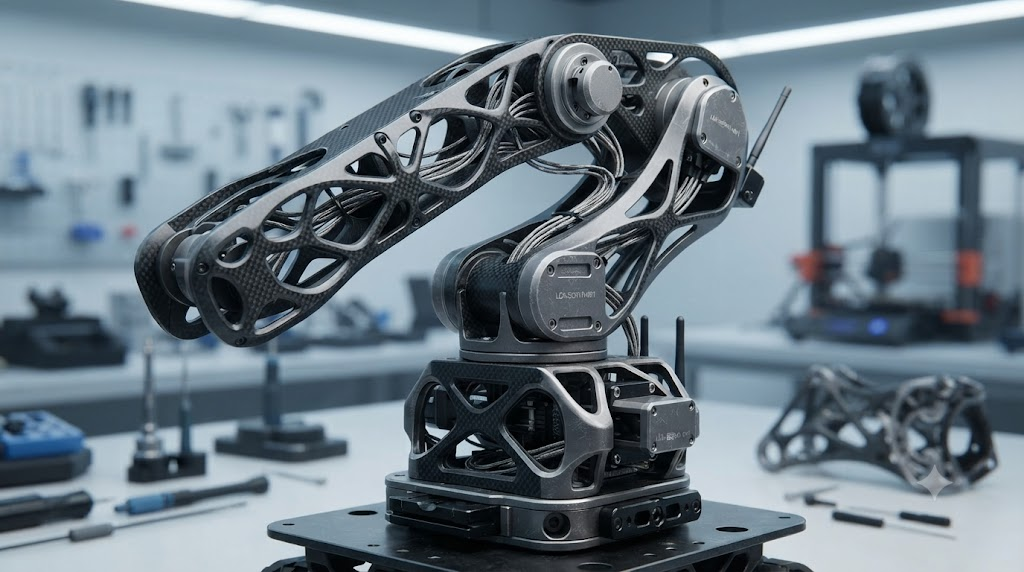
This optimization led to a 15% reduction in motor power consumption. It proves that precision machining is not just about making parts; it is about systemic efficiency.
Frequently Asked Questions (FAQ)
What are the typical lead times for 6061-T6 robotics parts?
Lead times vary based on complexity, but standard prototypes typically ship within 5-7 business days. Production runs for complex 5-axis parts may range from 3-5 weeks depending on anodizing requirements.
What tolerance levels can you achieve for end-effectors?
Using our precision milling centers, we routinely hold tolerances of +/- 0.005mm (0.0002 inches). This level of accuracy is essential for robotic grippers and EOAT (End-of-Arm Tooling).
Is 6061-T6 the most cost-efficient material for robotics?
Yes. It offers the best balance of raw material cost, machining speed, and durability. For most applications, it is significantly more affordable than 7075 aluminum or titanium.
Expert Review and Technical References
This guide was developed in collaboration with our senior engineering team to ensure compliance with 2026 manufacturing standards. Our facility maintains AS9100D Certification, ensuring the highest quality control for aerospace and robotics sectors.
Author: Marcus V. Thorne, Lead Robotics Engineer
Marcus has over 15 years of experience in CNC machining and autonomous systems development. He specializes in lightweighting strategies and advanced material science for the robotics industry.
References: