Stainless Steel 304 CNC Milling for Food Processing Gear
Material Compliance & Properties: SS 304 in Sanitary Machinery
Stainless Steel 304 CNC milling for food processing gear components yields durable, corrosion-resistant drive systems capable of withstanding aggressive daily clean-in-place (CIP) washdowns. Utilizing AISI 304 austenitic alloy delivers an optimal balance between yield strength, impact toughness, and regulatory compliance under strict hygienic operating standards.
AISI 304 (UNS S30400) contains a balanced 18% chromium and 8% nickel metallurgical matrix. This specific composition forms an inert, self-healing chromium oxide (Cr2O3) passive film that prevents pitting and oxidation caused by organic acids, fatty acids, and chlorinated alkaline sanitizers.
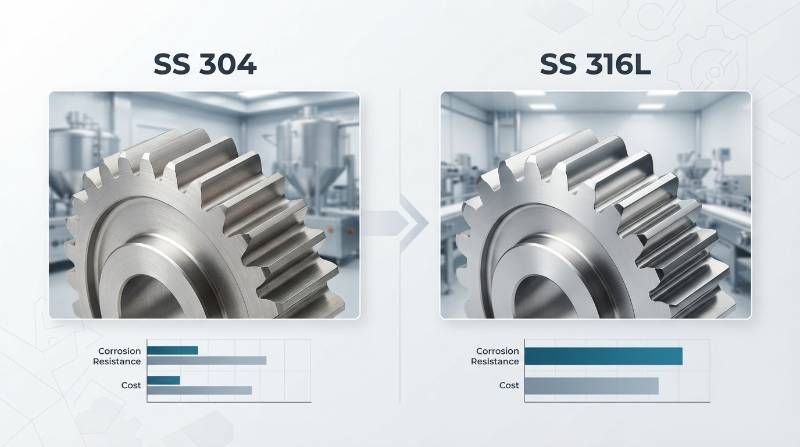
In high-torque hygienic applications, selecting the right grade from standard food-grade CNC machining materials dictates operational lifespan and wear performance.
| Property / Specification | AISI 304 (1.4301) | AISI 316L (1.4404) |
|---|---|---|
| Chromium (Cr) Content | 18.0 – 20.0% | 16.0 – 18.0% |
| Nickel (Ni) Content | 8.0 – 10.5% | 10.0 – 14.0% |
| Molybdenum (Mo) Content | None (Traces < 0.1%) | 2.0 – 3.0% |
| Tensile Strength (Yield / Ultimate) | 215 MPa / 505 MPa | 200 MPa / 485 MPa |
| Hardness (HRB / HV) | 88 HRB / 175 HV | 79 HRB / 150 HV |
| Primary Food Application | Dry goods, dairy, bottling drives, conveyors | High-chloride brines, acidic citrus processing |
Our raw billets comply directly with FDA 21 CFR 174.5 regulations for indirect and direct food contact surfaces, satisfying both 3-A Sanitary Standards (Standard 84-02 for dynamic gear drive components) and EHEDG Doc 8 hygiene design mandates.
Sanitary DFM Guidelines: Designing Gears for Washdown and Cleanability
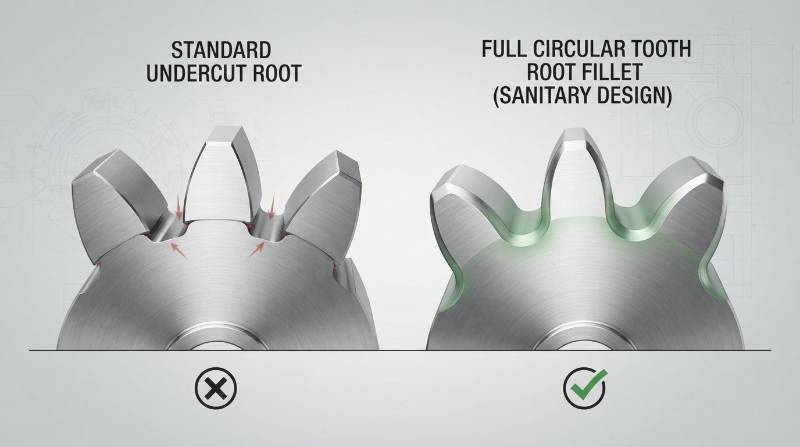
Standard industrial gear profiles frequently feature sharp root radii and tight tooth gaps that trap biological residue. Sanitary Design for Manufacturability (DFM) modifies classical involute geometry to ensure comprehensive chemical penetration and drainage during washdowns.
1. Full-Radius Tooth Root Geometry
Conventional gear hobs often leave an undercut step at the dedendum. In hygienic gear milling, we program multi-axis end mills to cut a continuous, full trochoidal root fillet (radius ≥ 0.25 × module).
This design eliminates stress concentrations and prevents microbial entrapment zones that resist spray-ball sanitation.
2. Washdown Backlash and Drainage Channels
Standard gearing utilizes minimal operational clearance (AGMA Class 10 to 12). In food washdown environments, thermal cycling from 185°F (85°C) caustic cleaning solutions causes uneven thermal expansion of the stainless drive assembly.
We configure baseline gear tooth thinning to provide an extra 0.03 mm to 0.06 mm backlash allowance. This prevents binding during high-temperature sanitization cycles while maintaining tooth engagement accuracy.
3. Crevice-Free Hub and Bore Transitions
Set-screw attachments and standard split-collar keyways create microscopic voids. Food machinery gearing should integrate radiused keyways (minimum radius 0.8 mm) or blind internal splines with self-draining face reliefs.
Overcoming SS 304 Machinability Challenges in Gear Milling
AISI 304 exhibits low thermal conductivity (16.2 W/m·K at 100°C) and a high strain-hardening exponent (n ≈ 0.45). When generating involute tooth forms, localized heat can quickly work-harden the cut zone up to 38-42 HRC if cutting parameters fluctuate.
Engineering Insight: Work-hardening in SS 304 occurs instantly when a cutting edge rubs instead of shearing. In gear milling, maintaining a chip load above 0.04 mm per tooth (IPT ≥ 0.0016) prevents the tool from traversing the work-hardened shear zone created by the preceding pass.
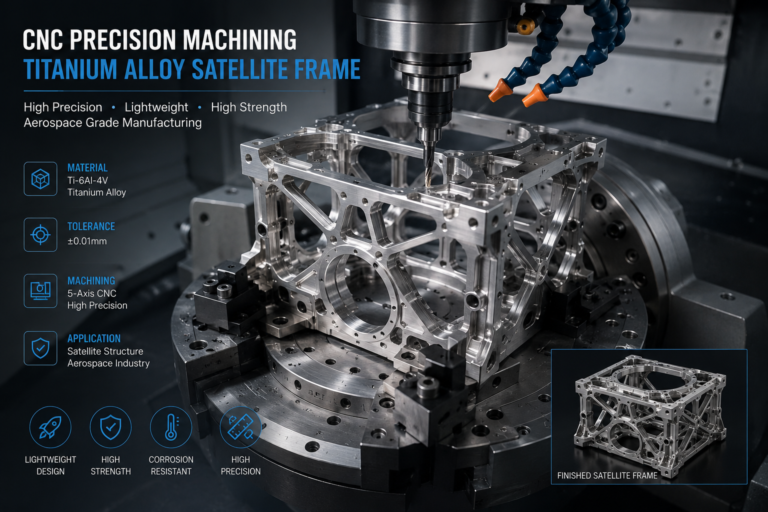
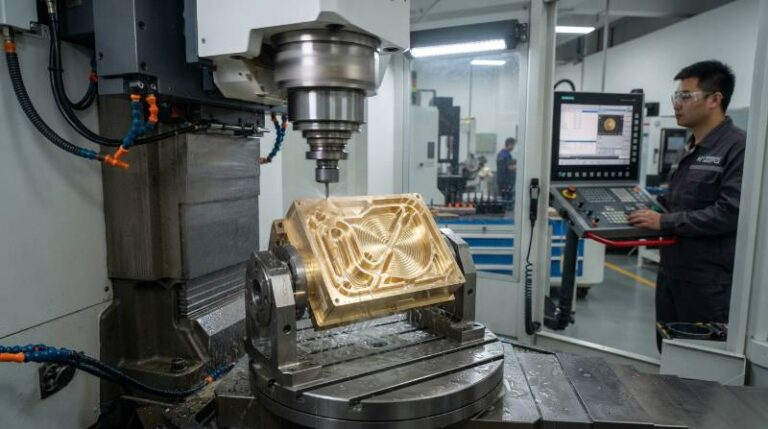
To machine custom high-precision bevel and spur gears without dimensional distortion or thermal deflection, we employ dedicated advanced 5-axis machining solutions running calibrated high-efficiency toolpaths.
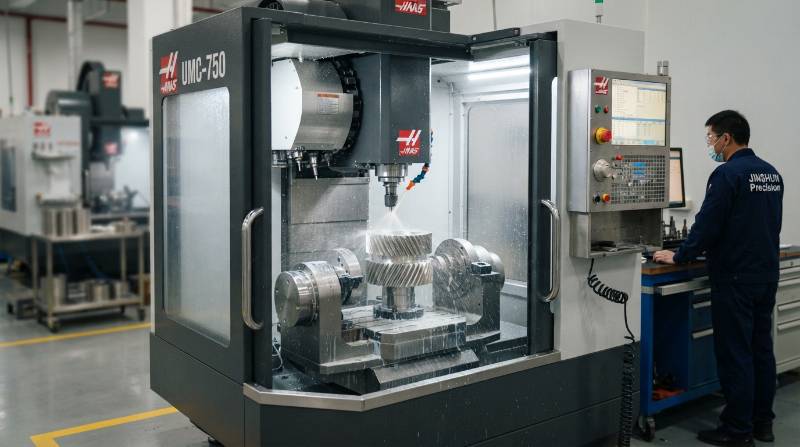
- Cutting Speeds: Maintain 55 to 80 m/min (180–260 SFM) for sub-micron carbide end mills to control tool interface temperature.
- Feed Strategy: Utilize constant climb milling (down-milling) to generate maximum chip thickness at initial contact and exit with zero chip thickness.
- Tool Coating: Deploy solid micro-grain carbide coated with Aluminum Chromium Nitride (AlCrN) or Titanium Aluminum Nitride (TiAlN), stable up to 900°C.
- High-Pressure Coolant (HPC): Direct filtered synthetic emulsion through the spindle at ≥ 70 bar (1000 PSI) straight into the cut zone to evacuate stringy chips and prevent built-up edge (BUE).
The Tyneen UltraClean™ Sanitary Gear Machining Protocol
To eliminate micro-burrs and surface defects on hygienic gear components, Tyneen uses a proprietary four-phase manufacturing methodology designed specifically for food-grade dynamic parts.
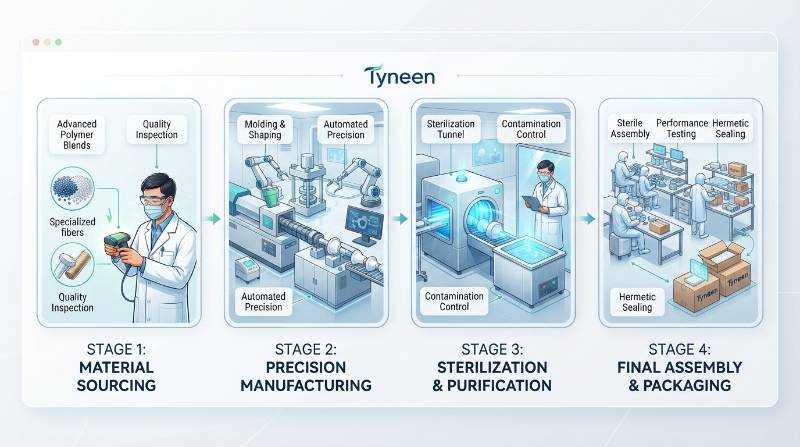
- Stage 1: Raw Stock Cryo-Stabilization
Forged and annealed SS 304 rounds undergo controlled thermal stabilization down to -80°C. This relieves residual rolling stresses, preventing gear core warping during aggressive roughing. - Stage 2: Multi-Axis Involute Profiling
Dynamic profile milling on simultaneous 5-axis CNC platforms generates the tooth form using specialized form tools or 3D point-milling for irregular sanitary tooth profiles. - Stage 3: Subtractive Ra Attenuation
Fine-pitch finishing passes execute with high step-over densities, utilizing wiper geometry inserts to reduce peak-to-valley tooth flank variations to below 0.8 μm Ra. - Stage 4: Ultrasonic Chemical Passivation
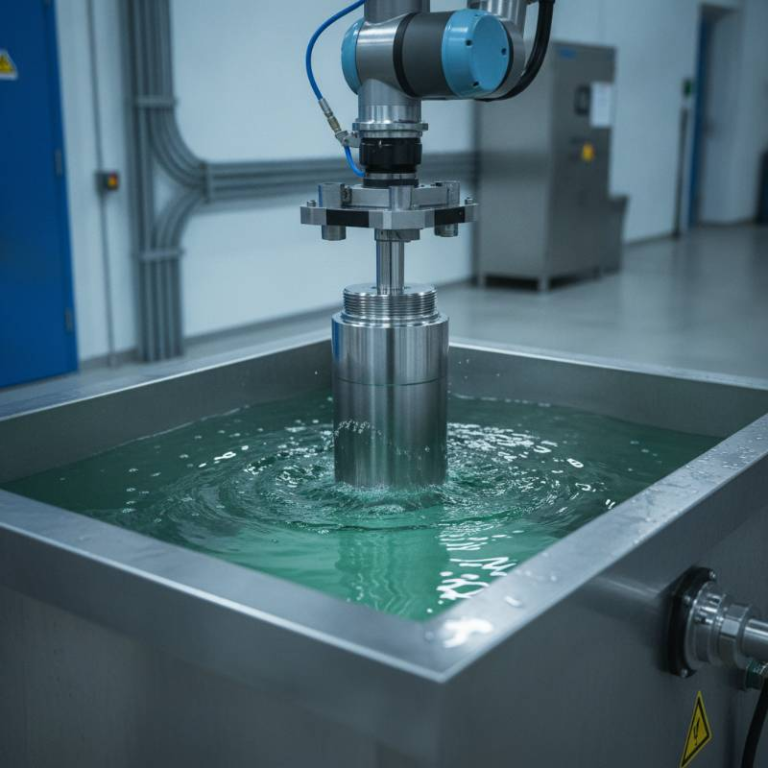
Finished gears enter multi-stage ultrasonic degreasing followed by ASTM-compliant chemical baths to purge embedded free iron and restore the chromium passive layer.
Surface Integrity & Hygiene: Achieving Strict Ra Roughness Thresholds
Surface roughness directly impacts cleanability. Microscopic fissures and tooling ridges harbor bacterial pathogens like Listeria monocytogenes and Salmonella. Standard ASME B46.1 surface texture ratings define strict limits for food machine surfaces.
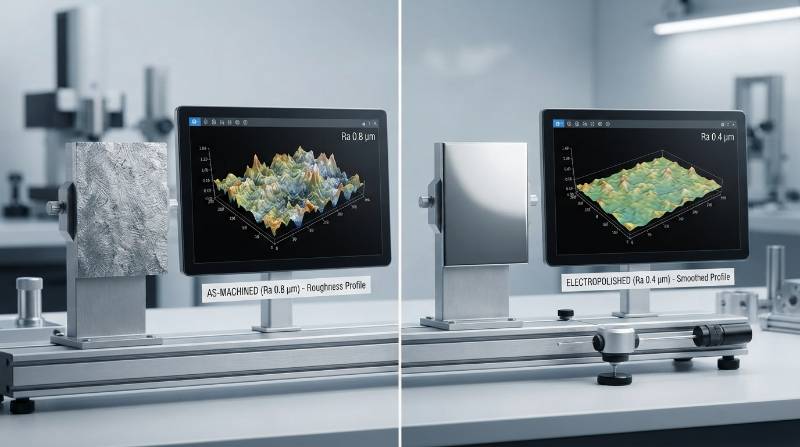
| Finishing Method | Surface Roughness (Ra) | Sanitary Compliance | Bacterial Resistance Performance |
|---|---|---|---|
| Standard CNC Milled | 1.6 μm (63 μin) | Non-sanitary drive enclosures | Poor (High risk of biofilm adhesion) |
| Precision CNC Finish-Milled | ≤ 0.8 μm (32 μin) | FDA Base Food Contact | Acceptable for dry processing lines |
| Micro-Polished / Ground | ≤ 0.5 μm (20 μin) | 3-A Sanitary Class I | High (Resists wet biofilm colonization) |
| Electropolished + Passivated | ≤ 0.2–0.4 μm (8–16 μin) | 3-A / EHEDG Aseptic Systems | Superior (Near-zero mechanical entrapment) |
Chemical Passivation Verification
Machining stainless steel with carbide tooling can transfer microscopic free iron particles onto the part surface. Left untreated, this iron oxidizes into rust spots during washdowns.
We passivate all finished components per ASTM A967 (Citric Acid Formulations 4 or Nitric Acid Bath 2). We verify passivation using High-Humidity Testing (ASTM A380) and Water Immersion tests to confirm a complete chromium-oxide passive layer across all tooth flanks.
Quality Verification: CMM Metrology and Traceability Certifications
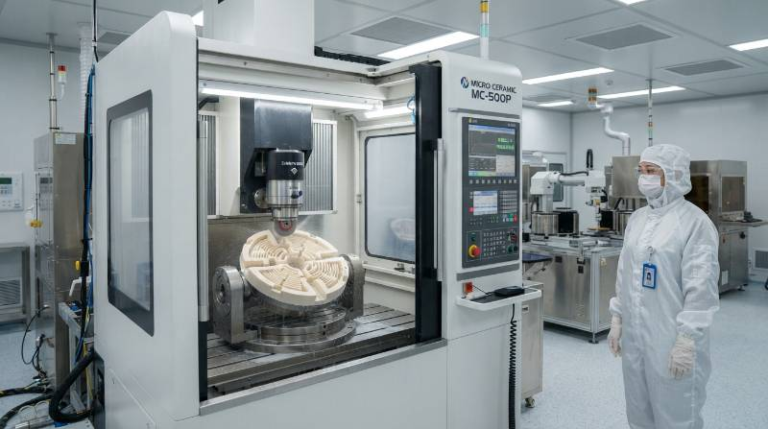
Sanitary gear trains require precision tooth-to-tooth indexing to minimize friction, vibration, and mechanical heat generation. Our cleanroom inspection laboratory validates every production run using advanced metrology equipment.
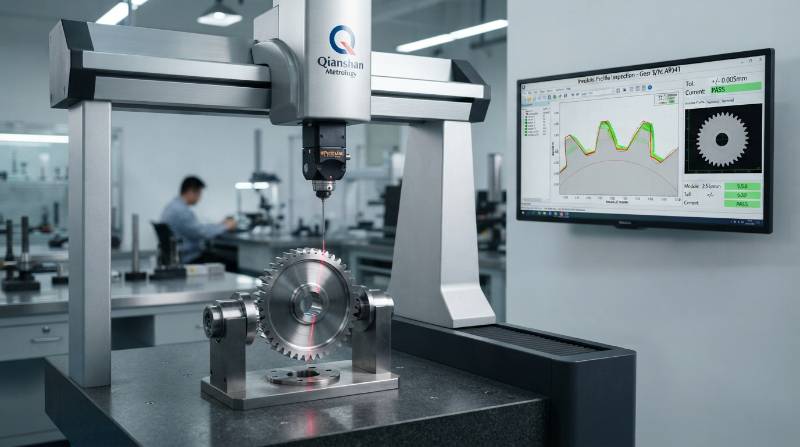
- Involute Profile and Lead Inspection: Multi-axis Coordinate Measuring Machines (CMM) analyze gear tooth profile accuracy, pitch variation, and radial runout to AGMA Class 11+ standards.
- Non-Contact Optical Profilometry: White-light interferometry verifies surface roughness parameters ($Ra$, $Rz$, and $Rsk$) across the dedendum and active flank.
- Material Traceability: Every gear shipment includes complete EN 10204 Type 3.1 Material Test Reports (MTRs), certifying heat numbers, chemical composition, and mechanical properties.
- Passivation Certification: Comprehensive test documentation accompanies finished lots, detailing bath temperatures, immersion dwell times, and free-iron wipe verification results.
Custom Food Gear Production with Tyneen: Prototyping to High Volume
Developing reliable food processing machinery requires tight alignment between mechanical engineering and machining capabilities. Tyneen’s precision CNC milling services support food machinery OEMs from initial prototyping to high-volume production.
Whether you require custom spur gears, sanitary helical gearsets, bevel gear pairs, or hygienic internal splines, our facility delivers consistent dimensional accuracy and clean surface finishes.
Upgrade Your Food Processing Gearing to Sanitary Standards
Upload your CAD models for rapid DFM feedback, certified SS 304 material traceability, and precision gear milling support.
Frequently Asked Questions
When should I choose SS 316L over SS 304 for food gears?
Select SS 304 for standard dry food sorting, dairy packaging, and general washdown equipment. Choose SS 316L if the gears face direct exposure to marine environments, high-saline brines, or aggressive acidic washdowns (pH < 3.0), where 316L’s 2-3% molybdenum content prevents localized pitting.
What are typical lead times for custom stainless steel gear milling?
Rapid prototype gear runs typically ship in 3 to 7 business days depending on gear geometry and post-processing requirements (e.g., electropolishing). Production volumes generally ship in 2 to 3 weeks with complete MTR documentation.
What AGMA quality levels can Tyneen achieve on milled SS 304 gears?
Our multi-axis CNC milling setups routinely produce gears conforming to AGMA 2000-A88 Class 10 to 12 (equivalent to ISO 1328 Grade 5 to 7), providing smooth transmission, low gear chatter, and minimal thermal buildup under load.
How does Tyneen prevent gear distortion from SS 304 work-hardening?
We utilize multi-axis roughing cycles with constant engagement angles, high-pressure through-spindle synthetic coolant, and specialized solid carbide tooling with AlCrN physical vapor deposition (PVD) coatings. This setup prevents heat transfer into the gear core and keeps material properties stable.