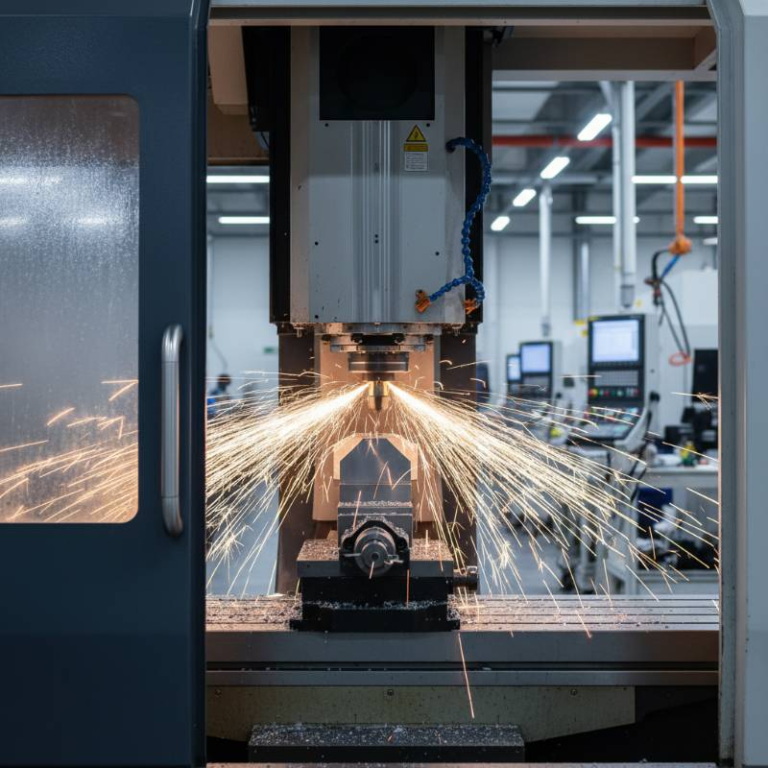
Guide to CNC Turned Part Finishes: Anodizing & Plating
The Essentials of Surface Finishing for CNC Turned Parts
A precision-turned component is only as good as its final surface state. While CNC Turning Services deliver exceptional dimensional accuracy, the raw “as-machined” finish often falls short for high-performance applications.
In 2026, the demand for components that survive extreme environments—from deep-sea sensors to aerospace actuators—requires more than just a smooth cut. Post-processing addresses three critical pillars: aesthetics, corrosion resistance, and mechanical performance.
By understanding how different finishes interact with rotational geometry, engineers can prevent premature part failure. This guide breaks down the technical specifics of modern metal finishing.
The 360-Degree Uniformity Protocol: Finishing Rotational Geometry
Surface finishing for CNC turned parts provides critical corrosion resistance, wear protection, and aesthetic value. By selecting specific treatments like Type III Hardcoat or Electroless Nickel, engineers can achieve Ra values below 0.8 μm while ensuring dimensional tolerances are maintained within microns.
At Tyneen, we utilize what we call The 360-Degree Uniformity Protocol. Unlike flat milled parts, turned components possess rotational symmetry that can lead to uneven coating thickness if not handled correctly during rack or barrel processing.
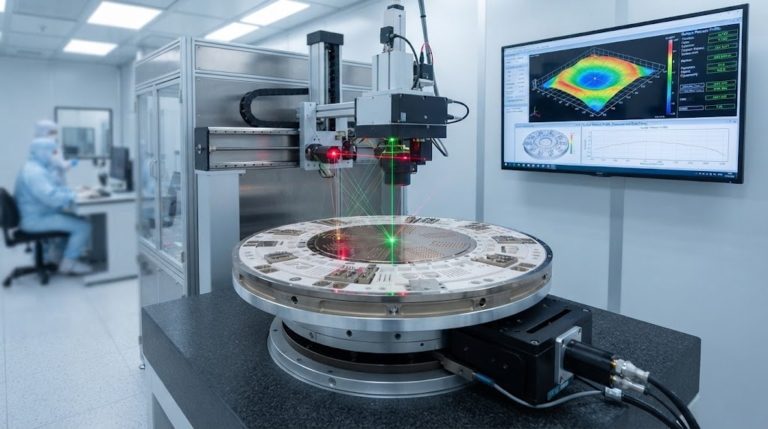
Our protocol focuses on Surface Metrology to ensure that coating thickness is identical at every degree of the cylinder. This prevents “out-of-round” issues that often plague high-precision shafts and bearings after plating.
“Precision in the lathe is only half the battle. The chemistry of the tank determines the lifespan of the component.”
— Marcus Vane, Lead Metallurgist at Tyneen
Anodizing Turned Parts: Type II and Type III Hardcoat
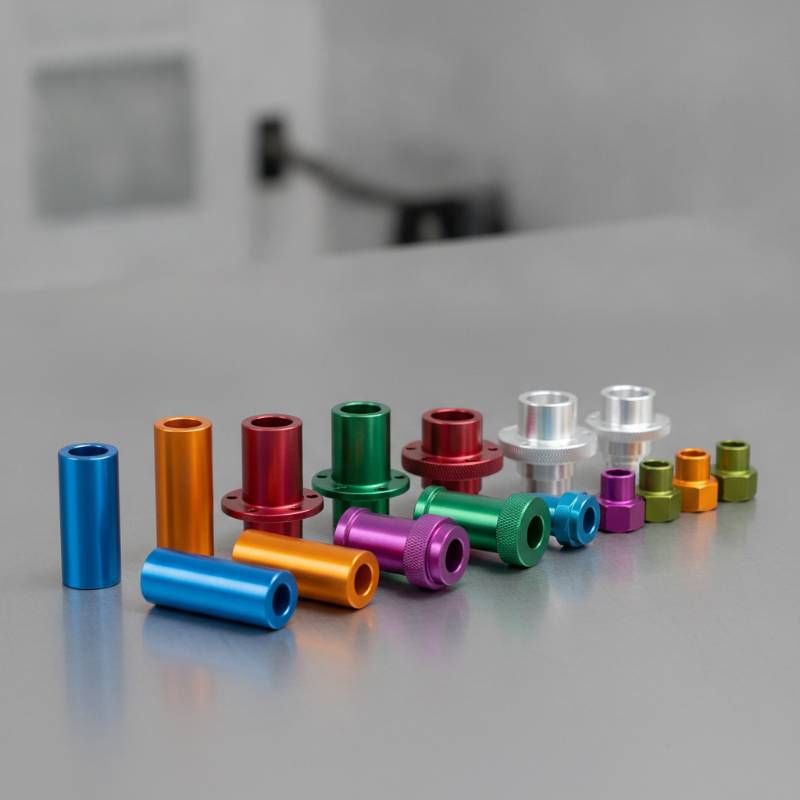
Anodizing is the go-to for aluminum components. It converts the surface into a durable aluminum oxide layer. This is particularly effective for turned parts with complex external threads or internal bores.
Type II vs. Type III Hardcoat
- Type II (Sulfuric Acid Anodizing): Primarily for aesthetics and moderate corrosion resistance. It allows for vibrant color dyes.
- Type III (Hardcoat): A much thicker, denser layer used for high-wear applications. It significantly increases surface hardness.
When specifying anodizing in your Material Selection Guide, remember that Hardcoat can add up to 0.002″ per side. This thickness must be calculated into your final machining tolerances.
Passivation and Heat Treatment for Stainless Steel
Stainless steel components are prized for their corrosion resistance, but machining can leave “free iron” on the surface. This leads to localized rusting if not treated.
Passivation (per ASTM A967) uses citric or nitric acid to remove these contaminants. It restores the protective chromium oxide layer without changing the part’s dimensions.
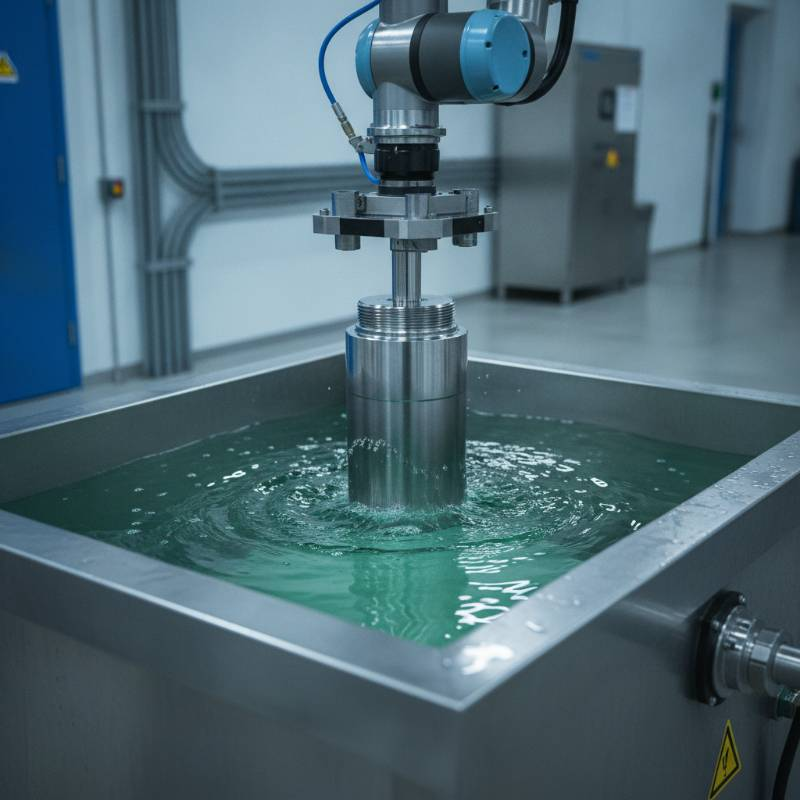
For structural integrity, heat treatment—specifically vacuum hardening—is often performed before the final grind. This ensures the dimensional tolerance remains stable during the part’s service life.
Advanced Plating for CNC Parts: Electroless Nickel
Plating CNC parts often involves complex internal diameters (IDs) that are difficult to reach with traditional electroplating. This is where Electroless Nickel (ENP) excels.
ENP uses a chemical reaction rather than an electric current. This results in a perfectly uniform coating, even inside deep holes or intricate grooves. It offers superior corrosion resistance and hardness compared to standard zinc plating.
| Method | Hardness (HV) | Uniformity | Best For |
|---|---|---|---|
| Electroless Nickel | 500 – 700 | Excellent | Internal Geometries |
| Zinc Plating | 100 – 200 | Moderate | Cost-efficiency |
| Hard Chrome | 800 – 1000 | Poor (Build-up) | Heavy Wear |
Black Oxide Turning: Precision and Aesthetics
Black oxide turning is a conversion coating that provides a sleek, matte black finish without altering the part’s dimensions. Unlike paint or powder coating, it does not add measurable thickness.
This is critical for optical components or precision assemblies where a 0.001″ change would cause a failure. While its corrosion resistance is lower than anodizing, it is often paired with oil or wax sealants to enhance protection.
Mechanical Finishing: Bead Blasting and Mirror Polishing
Sometimes the best finish is mechanical. Bead blasting uses fine glass or ceramic beads to create a uniform, non-reflective “satin” finish. This is excellent for hiding tool marks from the turning process.
For applications requiring low friction, mirror polishing or centerless grinding can achieve incredibly low surface roughness (Ra value). We routinely hit Ra 0.1 μm for medical-grade rotational shafts.
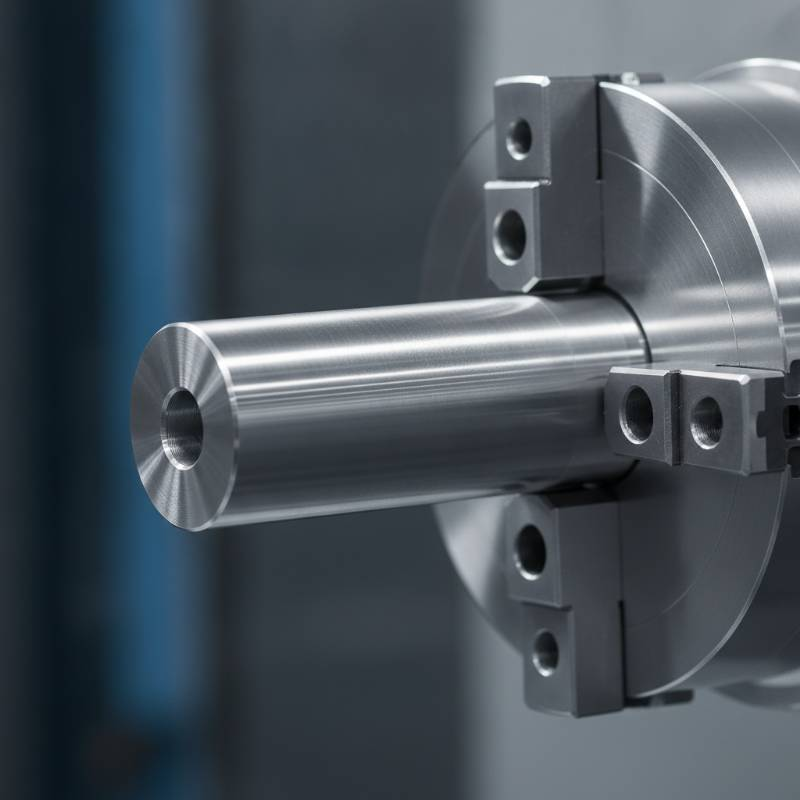
Deburring is the final essential step. Our vibratory tumbling process removes microscopic burrs from threads and edges, ensuring safety and assembly ease.
Sustainability and Environmental Metrics
In 2026, sustainable manufacturing is no longer optional. We adhere strictly to ISO 9001:2015 standards and ensure all post-processing is REACH and RoHS compliant.
Our facility utilizes closed-loop water filtration for chemical lines and prioritizes trivalent chromium over hexavalent chromium to minimize environmental impact while maintaining high performance.
Frequently Asked Questions
How do finishes affect lead times?
Standard finishes like clear anodizing or passivation usually add 3-5 business days. Specialized coatings like Hardcoat or Electroless Nickel may require 7-10 days depending on batch size.
What is the most cost-effective finish for steel?
Zinc plating or black oxide are typically the most budget-friendly options for providing basic corrosion resistance to carbon steel turned parts.
Should I machine my threads before or after finishing?
Always machine before. However, you must tell your machinist the expected coating thickness so they can “under-size” or “over-size” the threads accordingly.
Ready for Precision Finishing?
Get instant pricing for your CNC turned parts with professional post-processing included.