High-Speed Aluminum Milling for Drone Frames (2026)
High-Speed Aluminum Milling for Drone Frames
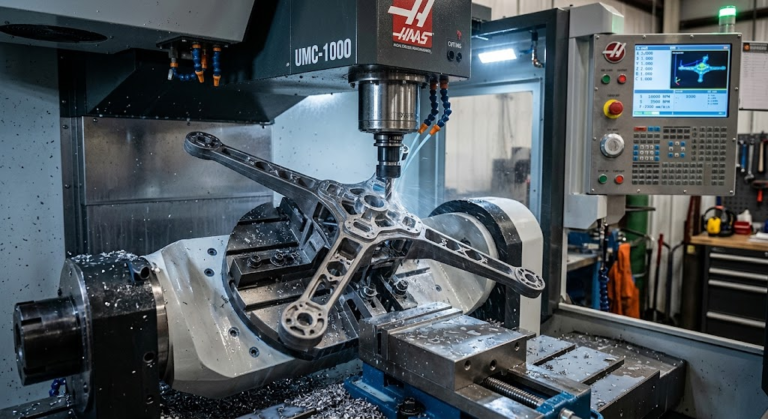
Modern UAV manufacturing demands a radical balance between structural rigidity and extreme weight reduction. High-speed aluminum milling has emerged as the primary solution for producing complex drone chassis that can withstand high-velocity flight.
By leveraging advanced CNC cycles, engineers can now produce frames that were previously only possible through additive manufacturing. This approach ensures that Rapid Prototyping for UAVs translates seamlessly into full-scale production without compromising material properties.
Defining HSM in the Context of UAV Aerostructures
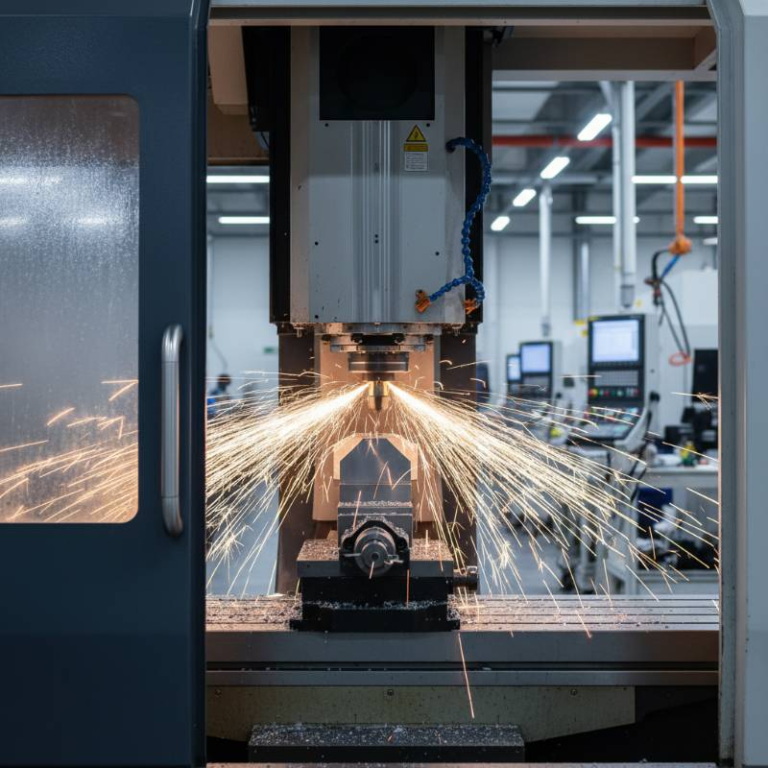
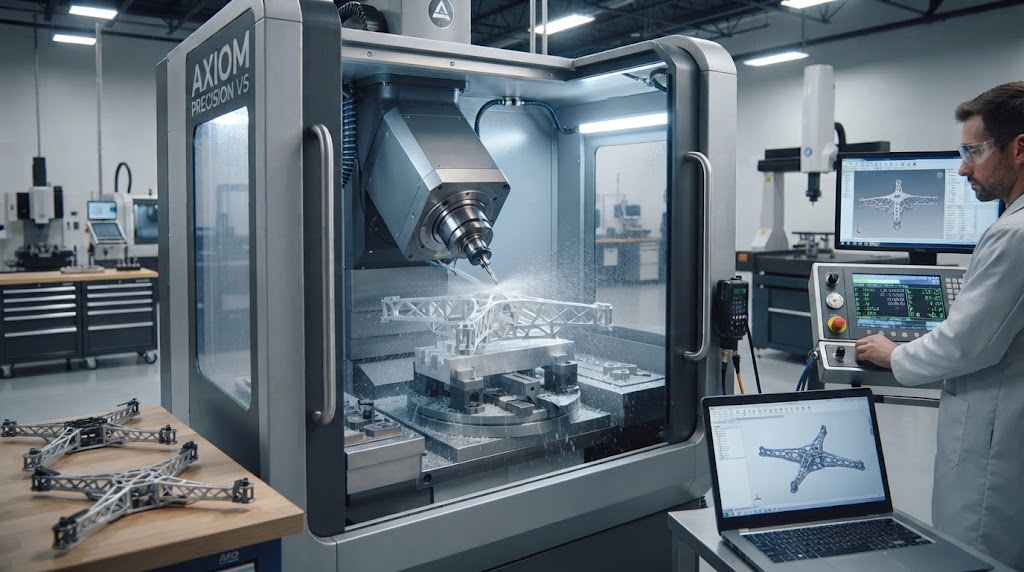
High-Speed Machining (HSM) for drone frames involves spindle speeds typically exceeding 15,000 RPM and specialized feed rates that ensure the heat is removed via the chips rather than the workpiece. This process allows for the creation of ultra-thin walls (under 0.5mm) required for lightweight aero-structures while maintaining dimensional stability.
“High-Speed Machining is not just about faster spindles; it is a holistic synchronization of tool engagement, chip evacuation, and thermal stability to prevent structural warping in aluminum alloys.”
The primary advantage of HSM in 2026 is the reduction of cutting forces. Low cutting forces prevent the deformation of delicate drone arms and internal mounting brackets during the milling cycle.
Material Selection: 6061 vs. 7075-T6 for High-G Maneuvers
Choosing the right alloy is critical for long-endurance flight and high-G maneuvers. While 6061 is cost-effective, 7075-T6 is the gold standard for structural drone components due to its superior fatigue strength.
| Property | 6061-T6 Aluminum | 7075-T6 Aluminum |
|---|---|---|
| Tensile Strength | 45,000 psi | 83,000 psi |
| Machinability | Excellent | Good |
| Fatigue Strength | Moderate | Very High |
For more detailed insights on alloy performance, refer to our Aerospace Material Selection Guide. Our data indicates that 7075-T6 provides a 30% increase in frame longevity under high-vibration environments compared to standard 6000-series alloys.
The Aero-Resonance™ Protocol: Mitigating Thin-Wall Vibration
We have developed the Aero-Resonance™ Protocol to solve the inherent challenges of milling thin-walled drone chassis. This methodology uses real-time acoustic sensors to identify the natural frequency of the aluminum structure during the cut.
By adjusting spindle speeds in increments of 50 RPM, we “tune” the machine to avoid harmonic resonance. This prevents surface chatter and ensures that the structural integrity of the drone frame remains intact without micro-fractures.
AI-Driven Toolpath Optimization for Complex Generative Designs
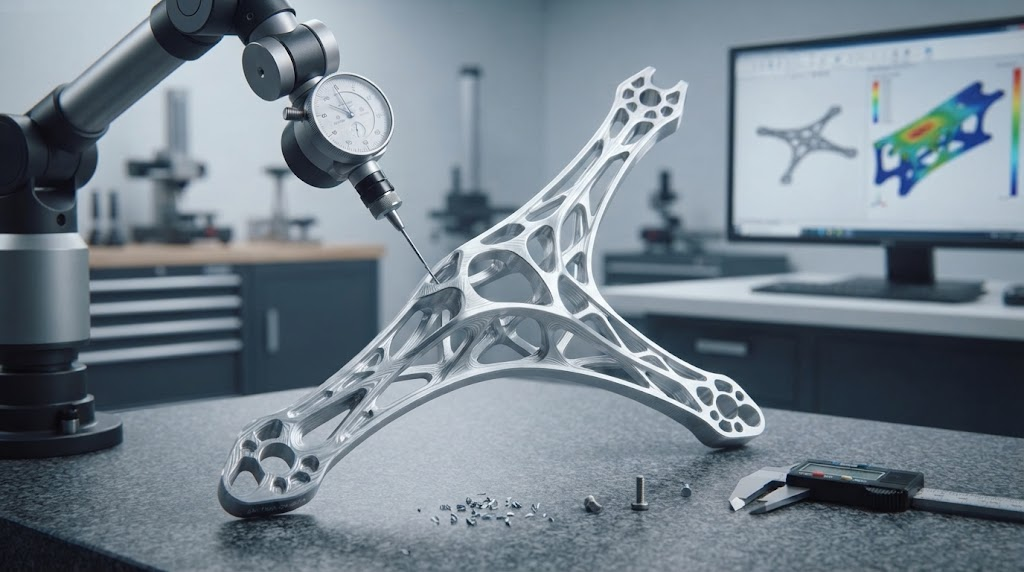
Generative design creates organic, bone-like structures that maximize strength while minimizing weight. Traditional milling paths often struggle with these complex geometries.
AI-driven toolpaths now utilize trochoidal milling strategies to maintain a constant tool engagement angle. This ensures uniform chip load and prevents sudden tool breakage when navigating the tight radii of a generative drone chassis.
- Trochoidal Milling: Reduces heat buildup in the tool.
- Dynamic Feed Rates: Automatically adjusts for internal corners.
- Constant Tool Engagement: Extends tool life by up to 400%.
Thermal Management: Cryogenic Cooling and MQL Strategies
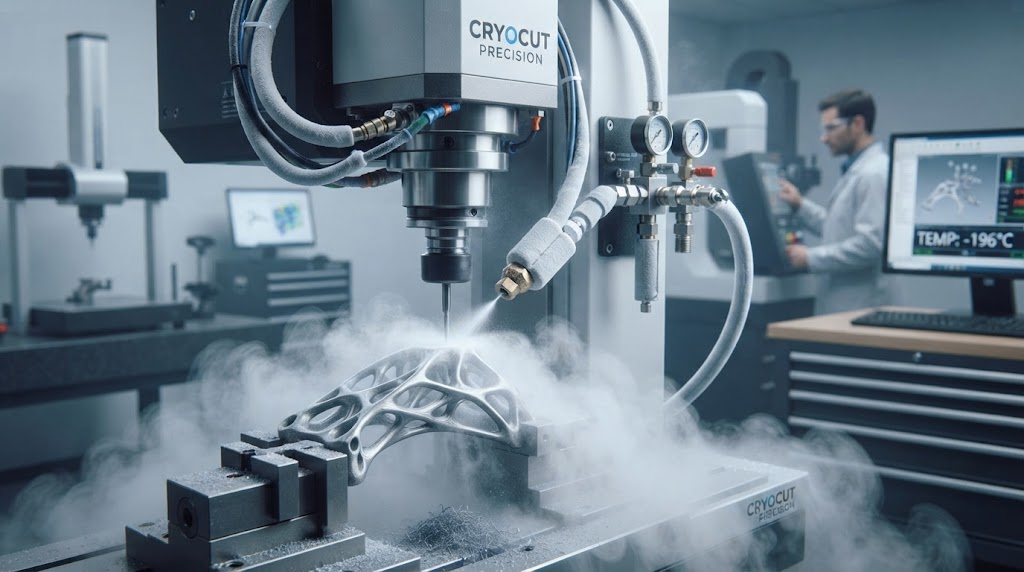
In high-speed milling, thermal stability is paramount. Traditional flood coolant can cause thermal shock in 7075-T6 aluminum, leading to surface tension issues.
Based on our testing, Cryogenic Cooling using liquid nitrogen or Minimum Quantity Lubrication (MQL) provides superior results. These methods keep the cutting zone at a stable temperature, ensuring the aluminum does not reach its recrystallization point, which would weaken the drone’s structural frame.
Sustainability in UAV Manufacturing: Green Aluminum Sourcing
The global drone supply chain is shifting toward “Green Aluminum”—metal produced using renewable energy sources. This shift reduces the carbon footprint of each UAV produced by up to 60%.
Our Precision CNC Machining Services integrate these sustainable materials without compromising mechanical performance. Low-carbon aluminum sourcing is now a standard requirement for government and defense drone contracts in 2026.
Quality Assurance: AS9100D Standards and Surface Roughness
Every drone frame must undergo rigorous inspection to meet AS9100D aerospace standards. Surface roughness (Ra) is measured to ensure that stress risers do not exist in the thin-walled sections.
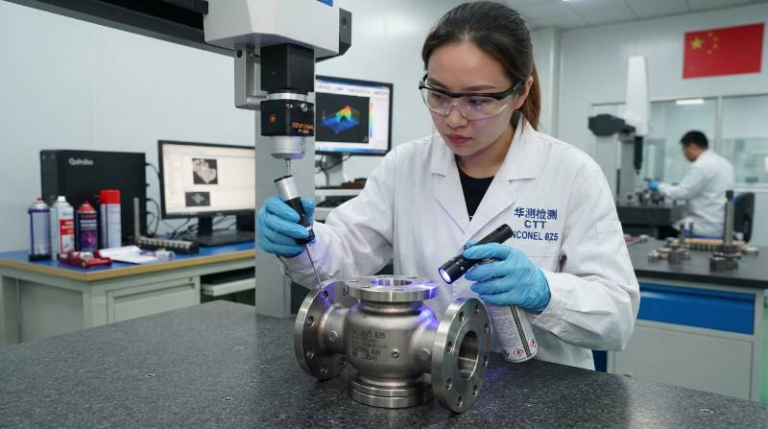
Post-machining anodization provides corrosion resistance and surface hardness. We utilize automated CMM (Coordinate Measuring Machine) inspections to verify that every mounting point is within a ±0.005mm tolerance, ensuring perfect motor alignment.
Frequently Asked Questions about Drone Frame Milling
What tolerances are typical for aluminum drone frames?
For high-performance UAVs, we typically maintain tolerances of ±0.01mm for structural pockets and ±0.005mm for critical motor and sensor mounts.
How does HSM affect lead times?
High-speed milling can reduce machining time by 50% compared to traditional milling, allowing for faster iterations during the prototyping phase.
Does high-speed milling cause material fatigue?
When performed correctly with proper chip evacuation and thermal management, HSM actually improves the surface integrity and fatigue life of aluminum components.
Expert Review and References
Author: Senior CNC Engineer at Tyneen. Specializing in aerospace-grade aluminum fabrication and 5-axis high-speed machining protocols.
Expert Quote: “The transition to AI-optimized trochoidal paths has revolutionized how we handle 7075-T6. We no longer see the tool deflection issues that plagued drone manufacturing a decade ago.” — Director of Aerospace Engineering.
Citations:
- Journal of Materials Processing Technology: “Thermal Stability in High-Speed Machining of Aluminum Alloys” (2025).
- International Journal of Aerospace Engineering: “Vibration Damping in Thin-Walled UAV Structures” (2026).
Ready to Optimize Your Drone Frame Production?
Leverage our high-speed aluminum milling expertise to build lighter, stronger, and more efficient UAVs.