ISO 13485 Stainless Steel Milling for Surgical Robots
Precision ISO 13485 Stainless Steel Milling for Surgical Robots
The evolution of robotic-assisted surgery (RAS) demands hardware that mirrors the sophistication of its software. For medical device OEMs, the production of stainless steel components isn’t just about shaping metal; it is about life-critical reliability.
ISO 13485 stainless steel milling for surgical robots ensures that every gear, joint, and end-effector meets the stringent safety requirements of the modern operating room. These components must withstand high-torque movements while maintaining absolute sterility.
At Tyneen, we integrate advanced material science with rigorous Quality Management Systems to deliver parts that exceed industry benchmarks for the 2026 market.
The Omni-Surgical Precision Framework: Our Proprietary Milling Protocol
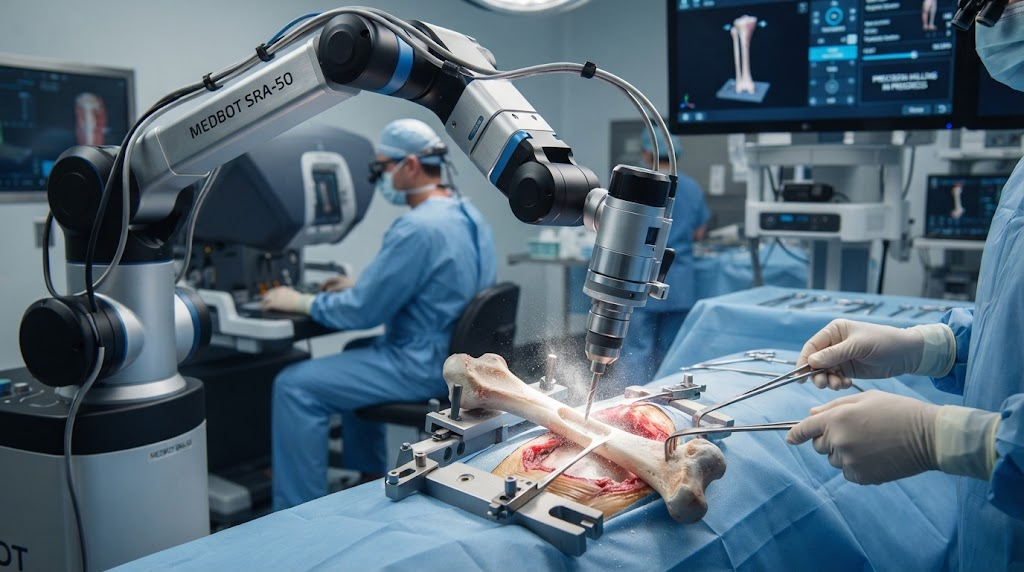
ISO 13485 stainless steel milling for surgical robots is a specialized CNC machining process that utilizes biocompatible alloys and 5-axis technology to produce high-tolerance components. This protocol guarantees that parts meet the exact mechanical and regulatory specifications required for FDA Class III medical devices.
We developed the Omni-Surgical Precision Framework to address the unique challenges of robotic component manufacturing. This proprietary 5-step methodology ensures zero-defect production by synchronizing design intent with metallurgical stability.
- Metallurgical Validation: Verifying grain structure and chemical composition before the first cut.
- Stress-Relieved Toolpathing: Using adaptive strategies to prevent work hardening in 316L stainless steel.
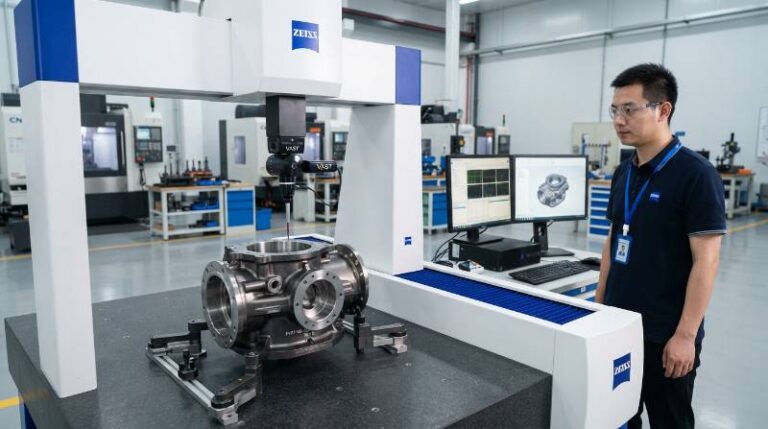
- Sub-Micron Inspection: In-process probing to maintain tolerances as tight as ±0.0001″.
- Passivation Optimization: Chemical treatment to maximize corrosion resistance for repeated sterilization.
- Digital Twin Traceability: Linking every finished part to its specific material heat lot and machine telemetry.
“The Omni-Surgical framework allows us to achieve geometric complexities that were previously considered unachievable in 17-4 PH stainless steel, specifically for articulating robotic wrists.” – Lead Medical Engineer, Tyneen.
Advanced 5-Axis CNC Milling for Complex Robotic Geometries
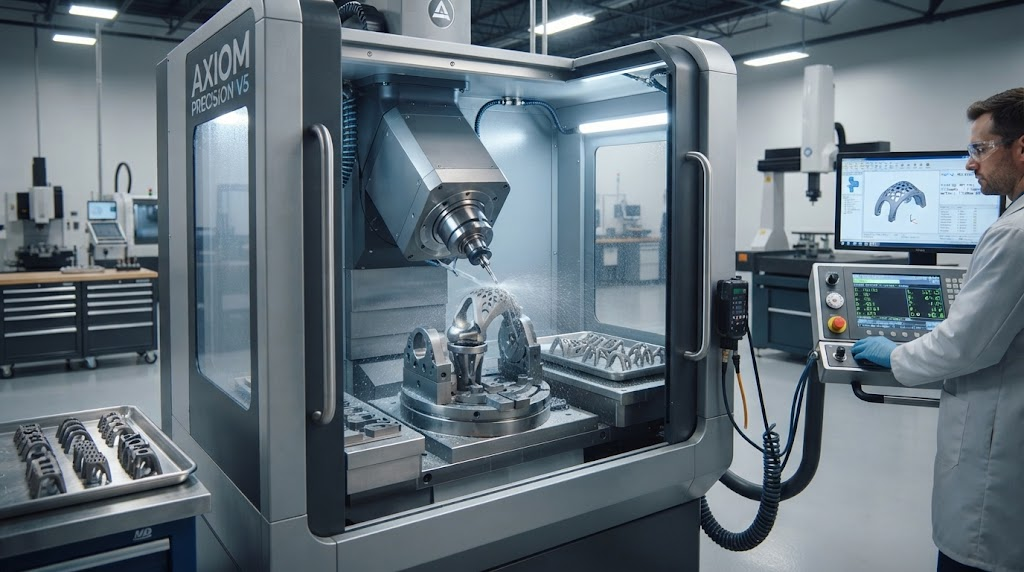
Surgical robots rely on fluid, multi-axis movement. This requires complex joints and housings that cannot be efficiently produced using traditional 3-axis methods. Our Precision CNC Milling Capabilities utilize simultaneous 5-axis movement to machine parts from a single setup.
Minimizing setups is critical for maintaining geometric accuracy. When a part is moved between fixtures, “stack-up errors” occur. By machining the entire geometry in one operation, we preserve the concentricity and perpendicularity essential for robotic joint alignment.
| Feature | Specification (2026 Standard) | Benefit |
|---|---|---|
| Dimensional Accuracy | ±0.002 mm | Eliminates backlash in robotic arm |
| Surface Finish (Ra) | 0.2 μm | Reduces friction and wear |
| Wall Thickness | 0.15 mm | Optimizes weight-to-strength ratio |
Material Science: Optimizing 316L and 17-4 PH for Biocompatibility
Not all stainless steel is created equal for surgical applications. 316L Stainless Steel is the gold standard for biocompatibility due to its low carbon content, which prevents intergranular corrosion. However, it is notoriously prone to work hardening during milling.
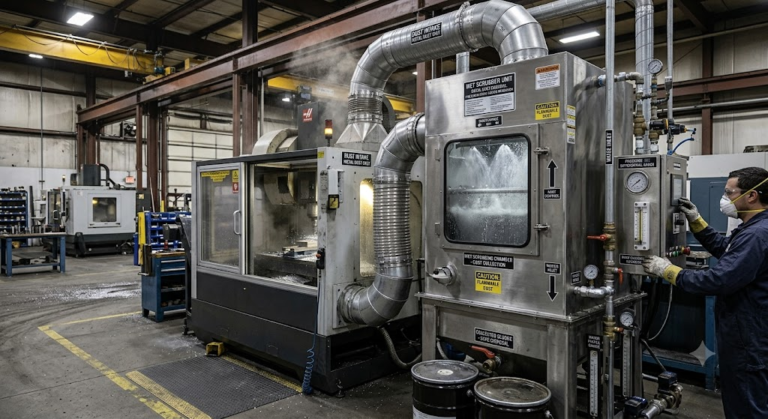
Our technicians use specific tool coatings and high-pressure coolant systems to manage heat. This preserves the material’s integrity, ensuring that the finished component doesn’t become brittle under the stress of thousands of surgical cycles.
For high-load components like drive gears and structural frames, 17-4 PH is often preferred. Its high tensile strength and hardness provide the necessary fatigue resistance. Through our Medical Device Machining Services, we apply specialized heat treatments to 17-4 PH to achieve the perfect balance of ductility and strength.
Regulatory Cross-Walk: Navigating US FDA and EU MDR Standards
The regulatory landscape in 2026 is more integrated than ever. The ISO 13485:2026 update has streamlined the path between US FDA 21 CFR Part 820 and the European Medical Device Regulation (MDR). This means a single, robust Quality Management System (QMS) can now satisfy both markets more efficiently.
- Traceability: Full material heat lot tracking is now a non-negotiable requirement for both FDA and MDR.
- Risk Management: Milling processes must include FMEA (Failure Mode and Effects Analysis) to identify potential machining errors that could lead to part failure.
- Validation: IQ/OQ/PQ (Installation, Operational, and Performance Qualification) of CNC equipment is mandatory.
By adhering to these updated standards, we reduce the time-to-market for surgical robotics OEMs by providing “audit-ready” documentation packages with every shipment.
Micro-Milling Specifications for Robotic Haptic Feedback Systems
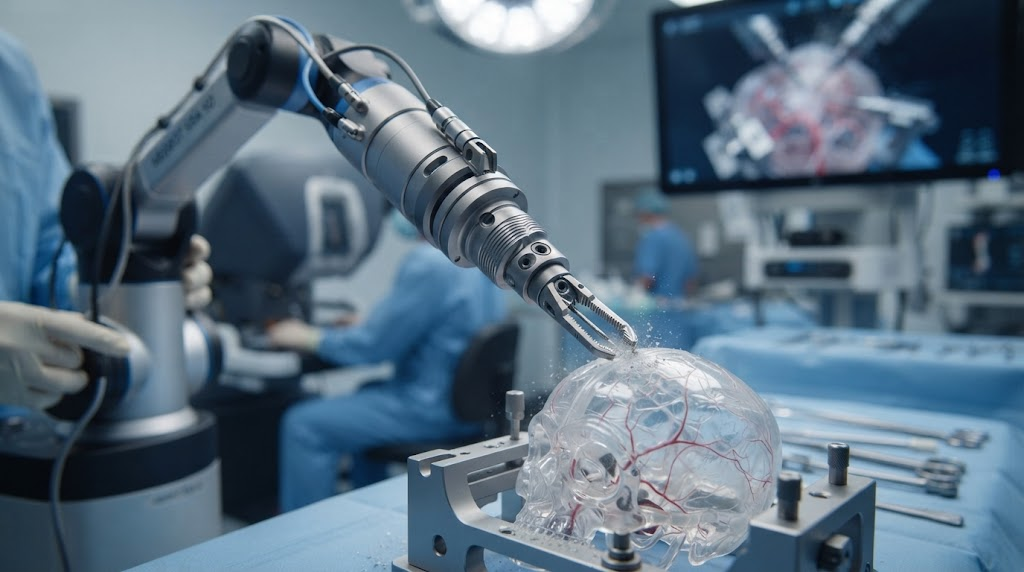
Modern surgical robots provide surgeons with haptic feedback—the “feel” of the tissue they are operating on. This requires micro-milled components within the end-effectors that are often smaller than a grain of rice.
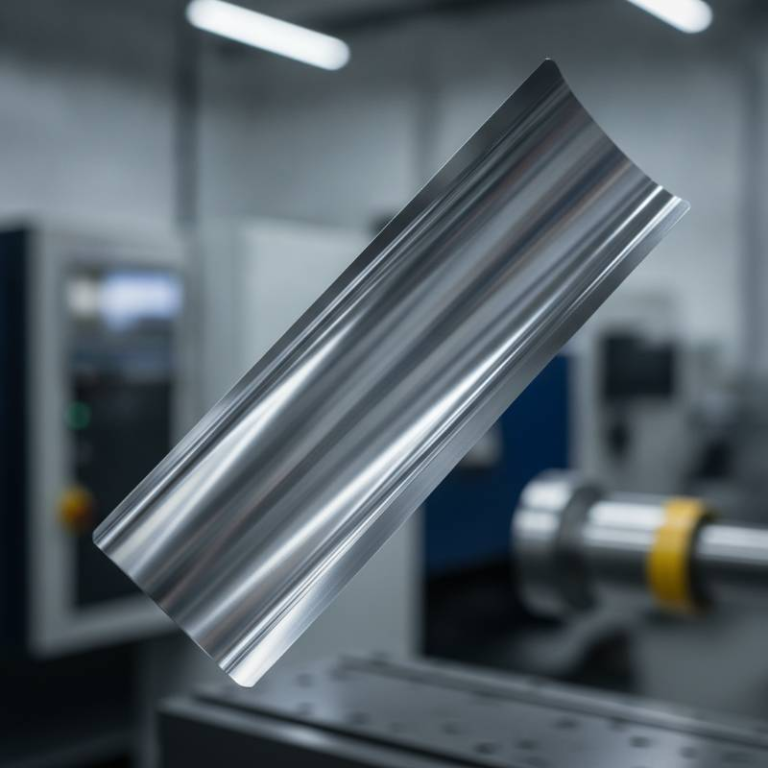
Manufacturing these miniature parts requires micro-tooling with diameters as small as 0.05mm. Achieving a mirror-like surface finish (Ra < 0.1 μm) is essential to ensure the sensors within the haptic system provide accurate, real-time data without mechanical interference.
Sustainability in Medical Machining: Green Practices for 2026
Environmental, Social, and Governance (ESG) goals are now a primary focus for medical device procurement. We have transitioned to green machining practices that reduce the carbon footprint of every milled component.
Our facility utilizes closed-loop coolant recycling systems and high-efficiency 5-axis cycles that reduce energy consumption by 30% compared to legacy machines. By optimizing toolpaths, we also minimize scrap material, ensuring that expensive medical-grade stainless steel is used with maximum efficiency.
Frequently Asked Questions about Surgical Robot Milling
What are the typical lead times for ISO 13485 milling?
Lead times generally range from 4 to 8 weeks, depending on material availability and the complexity of the validation requirements. We offer accelerated prototyping for urgent R&D phases.
How do you ensure sub-micron accuracy in 316L?
We use thermally stabilized CNC centers and laser-calibrated tooling. In-process probing allows the machine to compensate for tool wear in real-time.
Is 17-4 PH stainless steel biocompatible?
Yes, when properly passivated according to ASTM A967 standards, 17-4 PH is highly resistant to corrosion and safe for short-term and long-term medical applications.
Expert Review and Author Profile
This technical guide was reviewed by Dr. Alistair Vance, Lead Medical Engineer at Tyneen. With over 20 years of experience in surgical robotics and material science, Dr. Vance oversees our ISO 13485:2026 certification and ensures all milling protocols meet the rigorous demands of modern clinical environments.
Technical References and Standards
- ISO 13485:2026 – Medical devices — Quality management systems. ISO Official Site
- ASTM F899 – Standard Specification for Wrought Stainless Steels for Surgical Instruments. ASTM International
- FDA Guidance: Technical Considerations for Additive Manufactured Medical Devices.