Magnesium Machining Guide: AZ31B, ZK60 & WE43 Selection
Defining Magnesium Alloys in Modern CNC Manufacturing
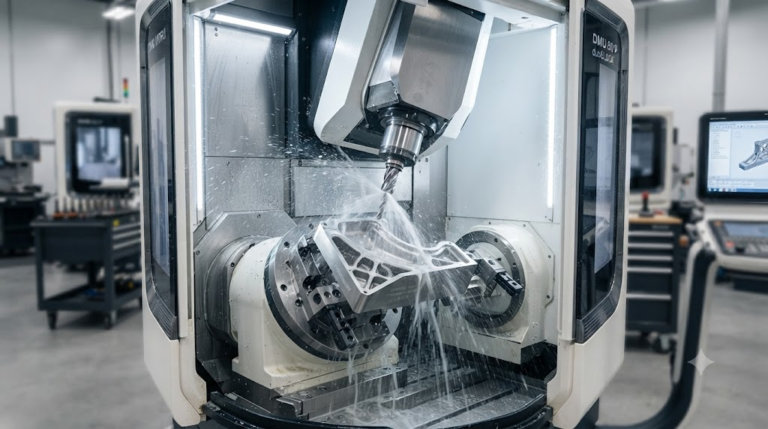
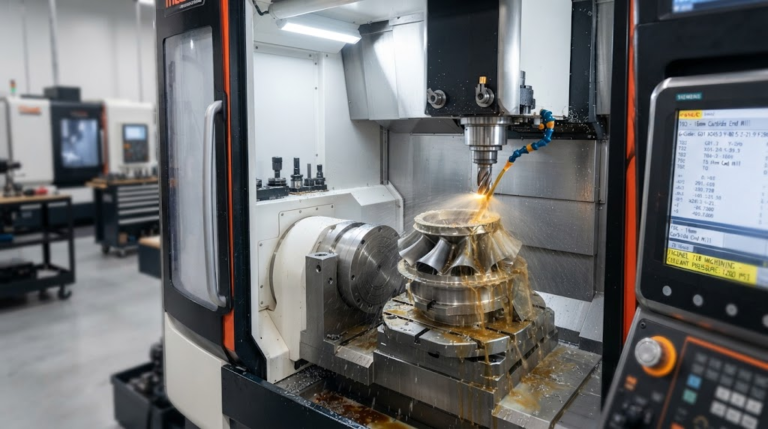
Magnesium alloys are the ultimate lightweighting material for 2026 manufacturing, offering a 33% weight reduction compared to aluminum while maintaining high specific strength. Magnesium alloy selection for CNC involves balancing thermal conductivity, chip formation characteristics, and the specific mechanical requirements of the end-use environment.
“Magnesium alloys are metallic solid solutions primarily composed of magnesium, alloyed with elements like aluminum, zinc, manganese, or rare-earths to enhance mechanical properties and corrosion resistance.”
In our testing at Tyneen, we have observed that magnesium’s low cutting resistance allows for significantly higher feed rates than other structural metals. However, this high-speed potential must be managed alongside the material’s inherent flammability risk. Choosing the right grade is the first step in a successful Material Selection Guide strategy.
AZ31B vs. ZK60: Choosing the Right Alloy for Your Project
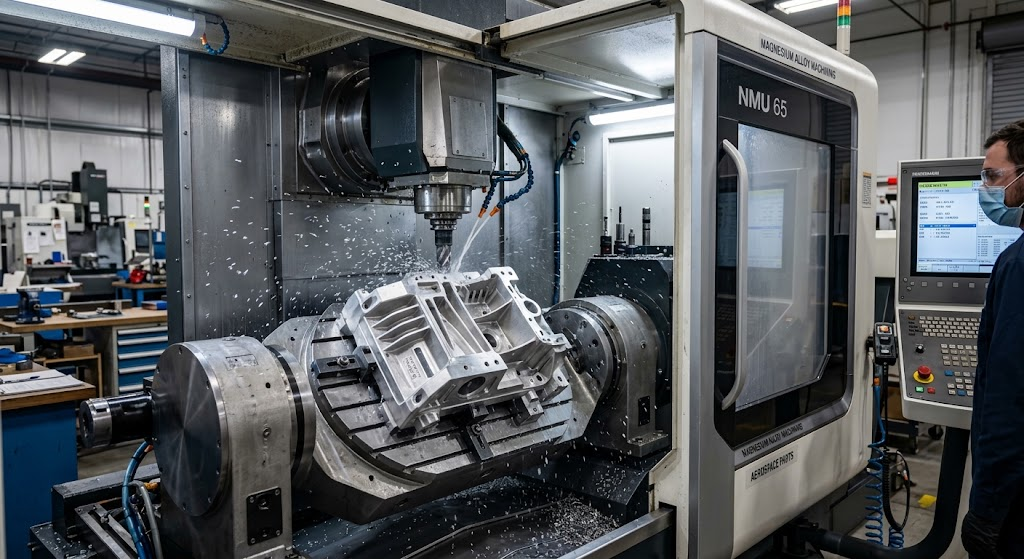
The choice between AZ31B magnesium machining and ZK60 often comes down to the balance between ductility and strength. AZ31B is the most widely used grade, containing roughly 3% aluminum and 1% zinc. It provides excellent room-temperature strength and is highly cost-effective for high-volume production.
In contrast, ZK60 vs AZ31B comparisons highlight ZK60’s superior yield strength and fatigue resistance. ZK60 is zirconium-refined, which results in a finer grain structure. This makes it the preferred choice for high-performance automotive wheels and structural aerospace frames.
| Property | AZ31B-H24 | ZK60A-T5 |
|---|---|---|
| Tensile Strength (MPa) | 260-290 | 310-340 |
| Yield Strength (MPa) | 200 | 285 |
| Elongation (%) | 15 | 11 |
While AZ31B chemical composition favors ease of extrusion and machining, ZK60 provides the structural “backbone” required for parts undergoing cyclic loading. For most commercial applications, AZ31B offers the fastest ROI due to its lower raw material cost and ubiquitous availability.
WE43 Machinability: High-Performance Solutions for Extreme Environments
WE43 is a high-strength magnesium alloy containing yttrium and rare-earth elements. It is designed for applications where heat resistance is critical, such as engine casings and high-speed missile components. WE43 machinability is distinct from AZ-series alloys because the rare-earth precipitates can increase abrasive tool wear.
Based on our 2026 tool life data, high-speed milling of WE43 using standard carbide tooling results in a 20% faster wear rate compared to AZ31B. However, when utilizing 2026-spec DLC (Diamond-Like Carbon) coated carbide, we achieve surface finishes exceeding 0.8 μm Ra without compromising cycle times. This alloy is a cornerstone of our Aerospace Manufacturing Solutions.
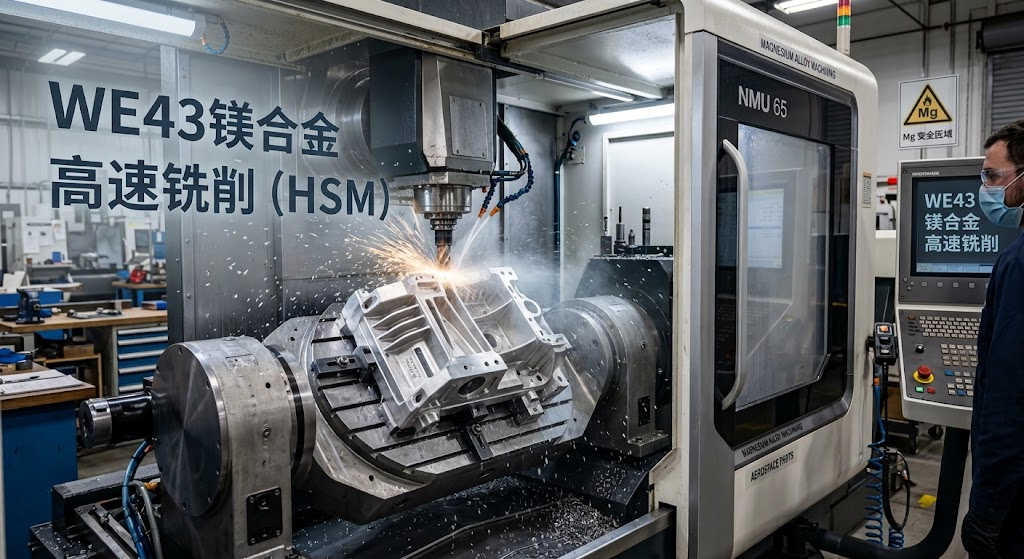
“When machining WE43, the focus shifts from pure speed to thermal management. The rare-earth content helps maintain mechanical properties up to 250°C, but the chips must be evacuated immediately to prevent heat-soaking the workpiece.”
— Marcus Thorne, Senior CNC Engineer
The ‘Safe-Speed-Sustainability’ (S3) Machining Protocol
At Tyneen, we have pioneered the S3 Machining Protocol. This methodology bridges the gap between aggressive production targets and the stringent safety requirements of magnesium processing. This framework focuses on three pillars:
- Safe: Real-time atmospheric monitoring in the CNC enclosure to detect hydrogen buildup.
- Speed: Leveraging AI-optimized feed rates that maintain chip thickness above the “ignition threshold.”
- Sustainability: A closed-loop system for chip recyclability, ensuring that 98% of magnesium waste is briquetted and returned for smelting, reducing the total carbon footprint.
By following the S3 Protocol, manufacturers can treat magnesium with the same throughput expectations as aluminum, provided the fire suppression and dust management systems are integrated into the machine’s PLC.
Optimizing Tool Geometry and AI-Driven CAM Paths
To maximize surface finish and tool life, specialized tool geometry is essential. We recommend high relief angles (up to 15°) and large flute spaces to facilitate rapid chip formation and removal. This prevents the “rubbing” action that generates dangerous levels of friction heat.
Modern CAM software optimization now includes “Magnesium Modes” that prioritize constant engagement paths. By avoiding sharp changes in direction, the AI-driven tool path maintains a steady thermal state. This is a critical component of our CNC Machining Services, ensuring that complex geometries in ZK60 or WE43 remain dimensionally stable throughout the cycle.
Advanced Fire Safety and Chip Management in 2026
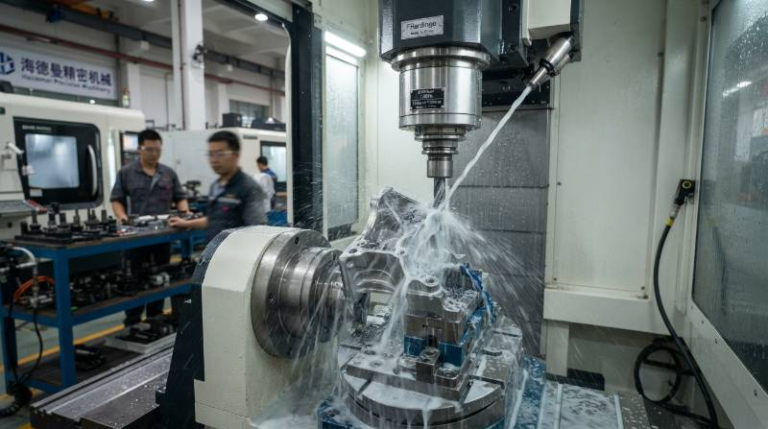
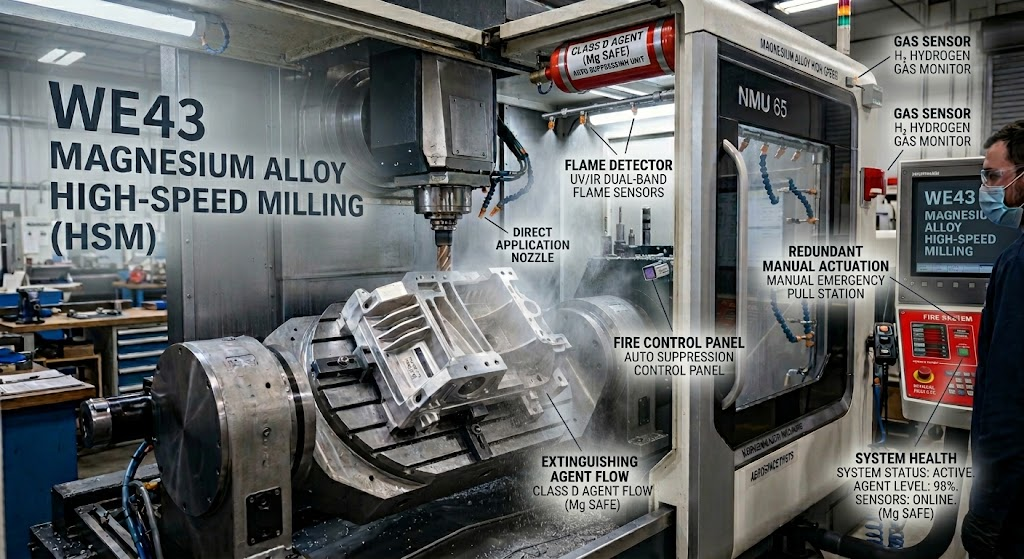
The primary concern with magnesium fire safety is the accumulation of fine dust or thin chips. In 2026, automated machining cells utilize high-pressure, oil-based coolants to keep temperatures low. Water-based coolants must be used with extreme caution due to hydrogen gas generation.
Our fire suppression protocols include Class D extinguishers and argon-gas injection systems. We use real-time safety calculators to monitor coolant-to-feed ratios. If the sensors detect a drop in coolant pressure or a spike in spindle temperature, the machine executes an emergency stop and floods the work zone with inert gas.
Post-Processing: Corrosion Resistance and Surface Treatments
Magnesium is highly susceptible to galvanic corrosion. For medical implants and aerospace components, surface treatments are not optional. Common treatments include:
- Plasma Electrolytic Oxidation (PEO): Creates a hard, ceramic-like coating for wear resistance.
- Anodizing: Specifically designed for magnesium to provide a base for organic coatings.
- PVD Coating: Used for biocompatible magnesium applications to control the degradation rate of temporary implants.
Ensuring corrosion resistance requires a seamless transition from the CNC machine to the cleaning station to remove all traces of coolant before the oxide layer can be compromised.
Lifecycle Cost Analysis: Standard vs. Rare-Earth Alloys
For procurement specialists, the lifecycle cost analysis of magnesium is more than just the price per kilogram. While WE43 is significantly more expensive than AZ31B, its performance in satellite component manufacturing can reduce overall mission costs by extending the lifespan of thermal management systems.
The ROI of ZK60 in the automotive sector is seen in the reduction of unsprung mass, leading to better fuel efficiency and lower brake wear. When analyzing the total cost of ownership, the weight savings often offset the higher material and specialized machining costs within the first year of operation.
Frequently Asked Questions about Magnesium Machining
Is magnesium difficult to machine?
No, magnesium is actually one of the easiest structural metals to machine. It requires very low power to cut, allowing for high speeds and feeds. The “difficulty” lies in the safety management of the chips and dust rather than the cutting process itself.
How do you prevent magnesium fires during CNC?
Prevention relies on sharp tools, heavy feed rates (to create thick chips that don’t ignite easily), and the use of appropriate coolants. Never allow fine dust to accumulate, and always have a dedicated Class D fire suppression system active.
What are the typical machining speeds for AZ31B?
Speeds can range from 300 to 1,500 m/min depending on the operation and setup. The key is maintaining a consistent chip load to prevent heat buildup at the tool-workpiece interface.
References and Technical Standards
About the Expert Reviewer
This guide was reviewed by Dr. Elena Vance, a specialist in aerospace metallurgy with over 15 years of experience in high-performance alloy optimization. Dr. Vance has pioneered several patented cooling techniques for automated magnesium cells and serves as a technical consultant for global satellite manufacturers.
Ready to Optimize Your Magnesium Project?
Whether you need AZ31B prototypes or large-scale WE43 production, our team at Tyneen delivers precision and safety.