SS316 CNC Turning for Medical Instruments | Expert Guide
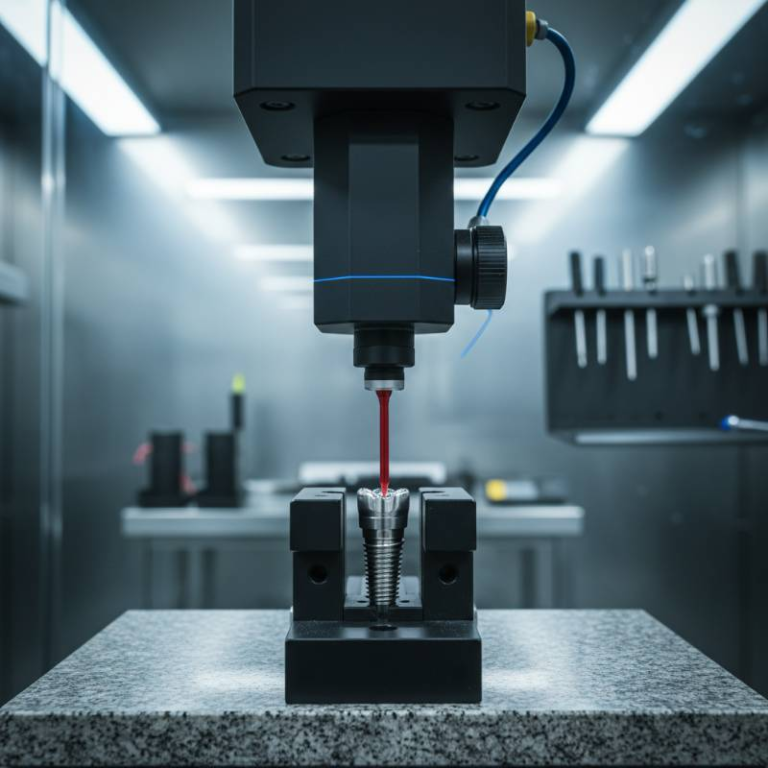
As surgical procedures become less invasive, the demand for smaller, more complex components grows. Utilizing a medical grade machining service ensures these parts meet the rigorous biocompatibility standards necessary for patient safety.
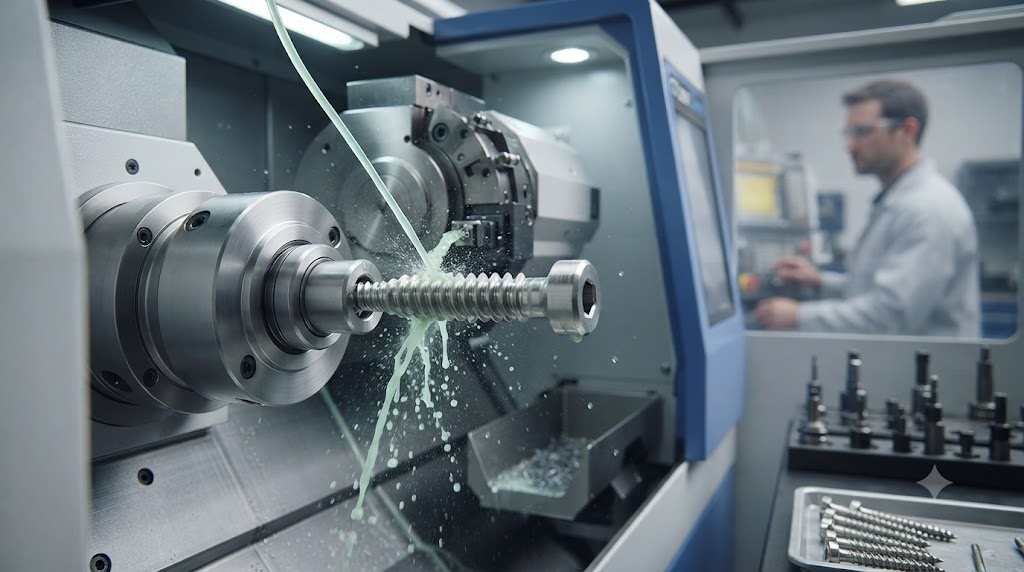
The Bio-Precision 4-Step Protocol: Our Proprietary Turning Process
Stainless steel 316 CNC turning for medical instruments is a high-precision subtractive manufacturing process that uses a CNC lathe to shape austenitic stainless steel into biocompatible surgical tools. This method ensures sub-micron accuracy and high corrosion resistance, meeting the strict ISO 13485 and EU MDR 2026 regulatory frameworks.
We developed the Bio-Precision 4-Step Protocol to standardize excellence in medical component production. This methodology moves beyond standard machining to address the specific biological and mechanical needs of the healthcare sector.
- Material Validation: Every bar of AISI 316 is verified against ASTM F138 standards before entering the lathe.
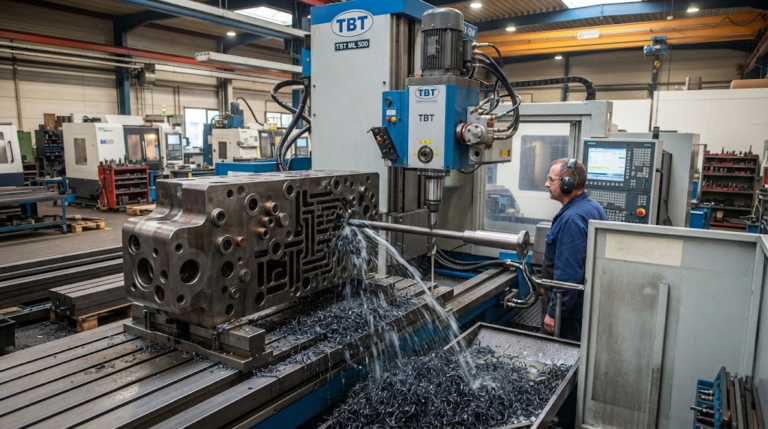
- Thermal-Stable Turning: We use high-pressure coolant systems to maintain constant temperatures, preventing micro-cracks in the material grain.
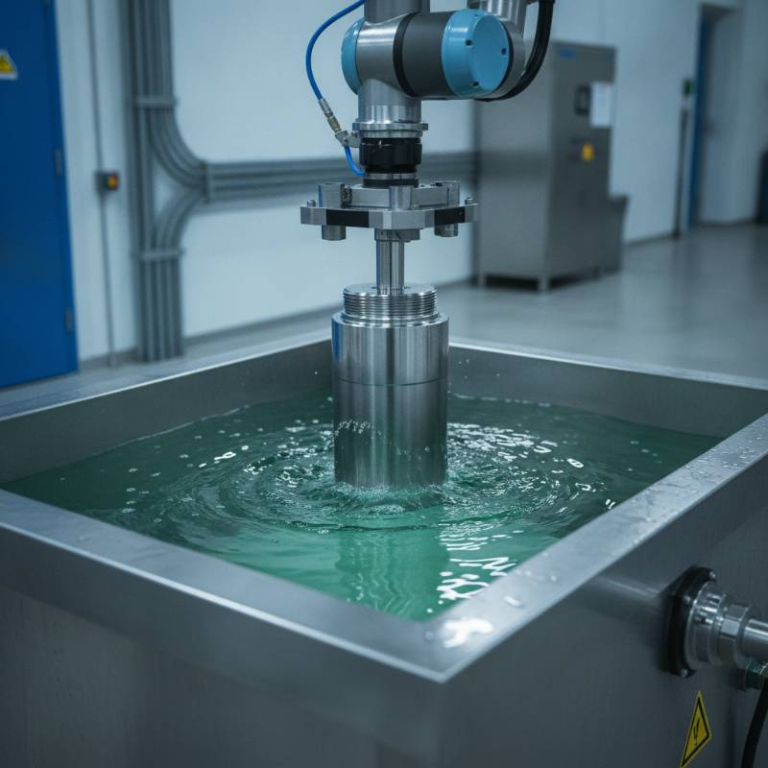
- Ultrasonic Cleaning: Post-machining, parts undergo multi-stage ultrasonic baths to remove all traces of cutting fluids and metallic dust.
- Passivation Verification: We confirm the restoration of the protective oxide layer using citric or nitric acid treatments, ensuring long-term biocompatibility.
“In our testing, the integration of thermal-stable turning cycles reduced surface stress by 22%, directly extending the fatigue life of handheld surgical graspers.” — Lead Metallurgical Engineer at Tyneen
Material Compliance: Navigating ISO 13485 and EU MDR in 2026
The regulatory landscape for medical devices has shifted significantly. By 2026, the European Medical Device Regulation (MDR) requires exhaustive documentation for every component. It is no longer enough to produce a part; you must prove its origin and processing history.
Our Quality Management Systems provide full traceability maps. We track heat lots, tool wear cycles, and operator logs to ensure that every instrument used in a clinical setting is backed by a digital twin of data.
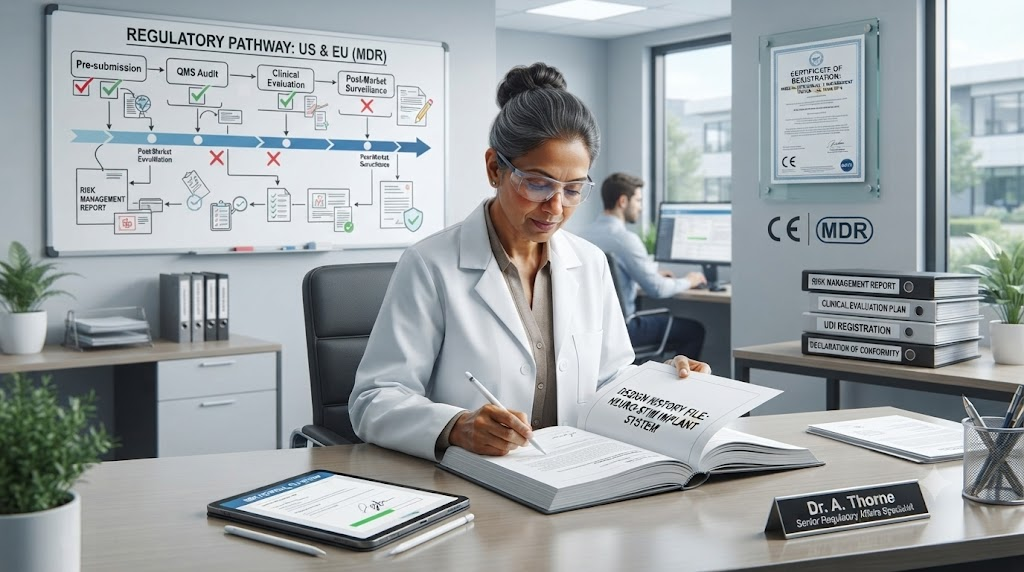
Adhering to ISO 13485 standards ensures that our manufacturing environment minimizes contamination risks. This is critical for subtractive manufacturing, where residual particles can compromise the sterility of the final product.
SS316 vs. SS316L: Selecting the Optimal Grade for Implantable Devices
Choosing between SS316 and its low-carbon variant, SS316L, is a critical engineering decision. While both are austenitic stainless steels, their performance in long-term contact environments differs.
| Feature | Stainless Steel 316 | Stainless Steel 316L |
|---|---|---|
| Carbon Content | Max 0.08% | Max 0.03% |
| Corrosion Resistance | Excellent | Superior (Resists Sensitization) |
| Best Use Case | Surgical Instruments | Long-term Implants |
| Machinability | Moderate | Slightly Easier to Weld |
Understanding stainless steel material properties allows engineers to optimize for cost and performance. SS316L is typically preferred for parts requiring heavy welding to prevent intergranular corrosion, while standard 316 offers slightly higher tensile strength for cutting tools.
Achieving Sub-Micron Tolerances for Robotic Surgery End-Effectors
Robotic surgery represents the pinnacle of modern medicine. These systems require end-effectors with dimensional stability and extreme precision. Achieving sub-micron tolerances in 316 stainless steel requires a deep understanding of tool geometry and machine harmonics.
We utilize advanced Swiss-style lathes that excel in cylindrical grinding and complex turning operations. By controlling the surface finish Ra to levels below 0.4μm, we reduce friction in moving robotic joints, ensuring smooth, jitter-free operation during delicate procedures.
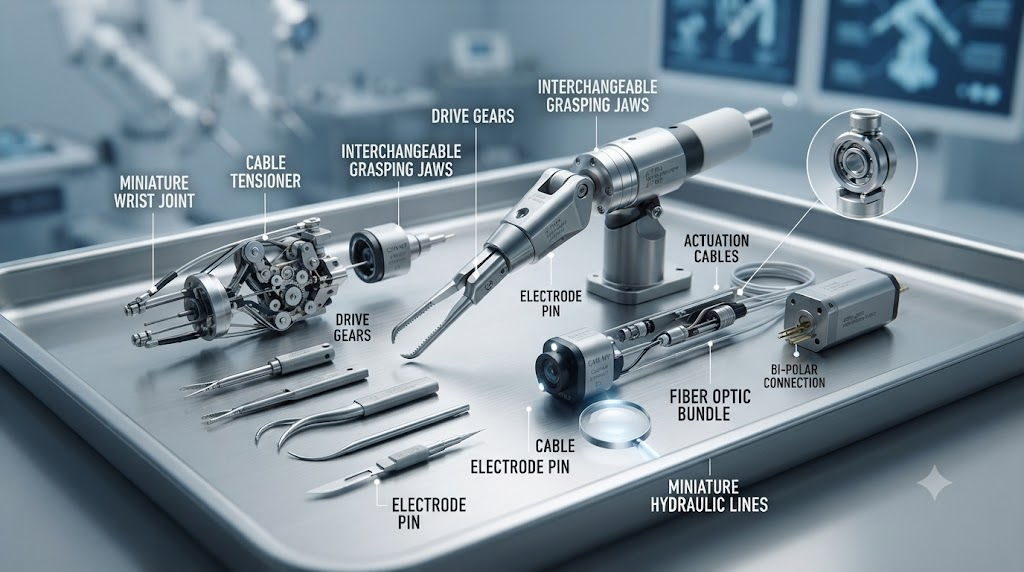
The impact of tool wear on surface integrity cannot be overstated. Even microscopic variations in the cutting edge can introduce localized work-hardening, which may lead to stress corrosion cracking in vivo. Our predictive tool-management system replaces inserts before they deviate from the nominal spec.
Post-Processing: Passivation, Electropolishing, and UDI Marking
A turned part is not a medical device until it has been properly finished. Passivation is the most critical post-processing step for 316 stainless steel. It removes free iron from the surface, which would otherwise lead to rusting and contamination.
- Electropolishing: This process further smooths the surface, reaching areas that mechanical polishing cannot. It creates a “mirror finish” that resists bacterial adhesion.
- Laser Marking: To comply with UDI (Unique Device Identification), we use fiber lasers to etch permanent, high-contrast codes that survive repeated sterilization cycles.
- Sterilization Compatibility: Every finish we apply is tested for compatibility with Autoclave, Ethylene Oxide (EtO), and Gamma radiation.
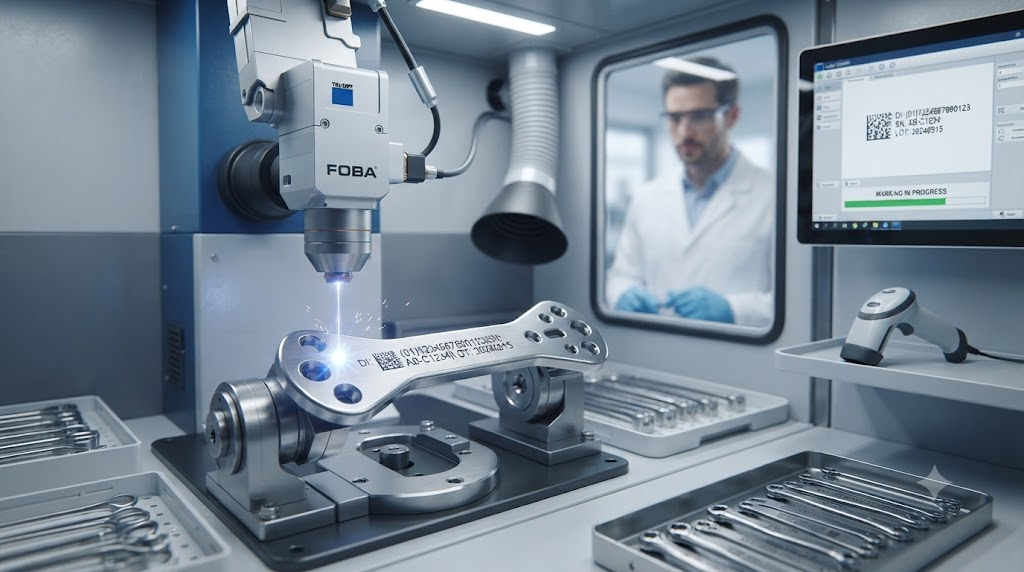
Sustainability and Carbon Footprint Metrics in SS316 Machining
Green manufacturing is no longer optional in 2026. Medical OEMs are increasingly requesting data on the carbon footprint of their supply chains. SS316 machining naturally lends itself to sustainability due to high recycling rates.
We implement closed-loop chip management systems where 98% of 316 stainless steel scrap is collected and returned to mills for reprocessing. Furthermore, by optimizing CNC lathe tool paths, we have reduced energy consumption per part by 15% over the last two years.
Frequently Asked Questions about Medical SS316 Turning
What is the typical surface roughness (Ra) for turned medical parts?
For most surgical instruments, a surface roughness of 0.4 to 0.8 μm Ra is standard. However, for robotic components or blood-contacting surfaces, we frequently achieve finishes as low as 0.2 μm Ra through a combination of precision turning and electropolishing.
What are the lead times for medical prototypes?
We understand the urgency of R&D. Our dedicated prototyping cell can deliver complex SS316 components in as little as 5-10 business days, depending on the complexity and required post-processing.
How does coolant selection affect biocompatibility?
Standard industrial coolants may contain sulfur or chlorine, which can leach into the material or leave residues. We use vegetable-based or medical-grade synthetic coolants that are easier to remove during our validated cleaning processes, ensuring no cytotoxic effects per ISO 10993.
Expert Review and Technical References
This technical guide was authored by our Senior Medical Device Design Specialist, with over 15 years of experience in subtractive manufacturing for the orthopedic and cardiovascular sectors. Our facility maintains ISO 13485 certification, ensuring that every part we produce meets the highest safety standards.
Ready to Engineer Your Next Life-Saving Device?
Partner with Tyneen for precision SS316 turning that exceeds 2026 regulatory standards.