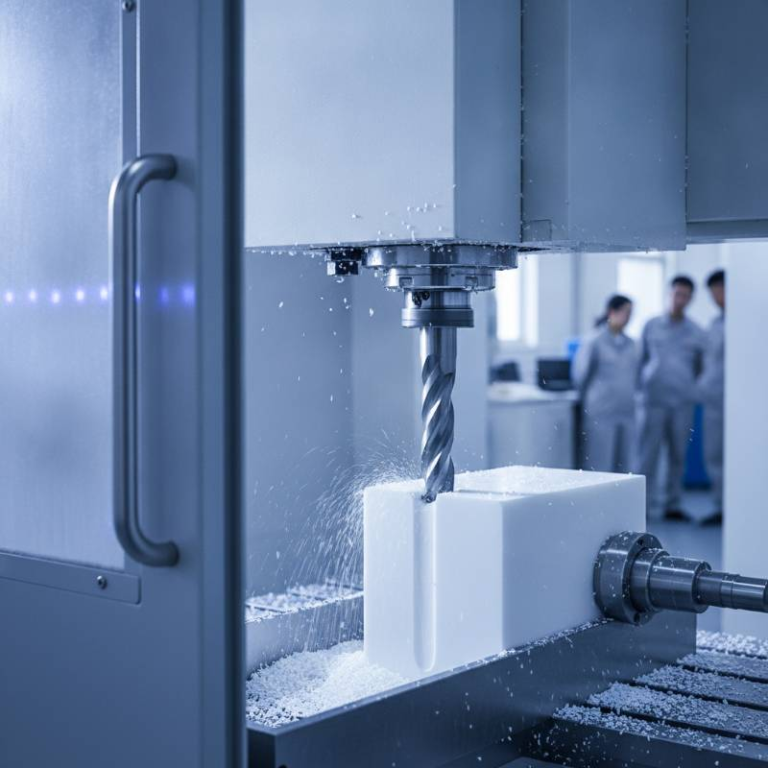
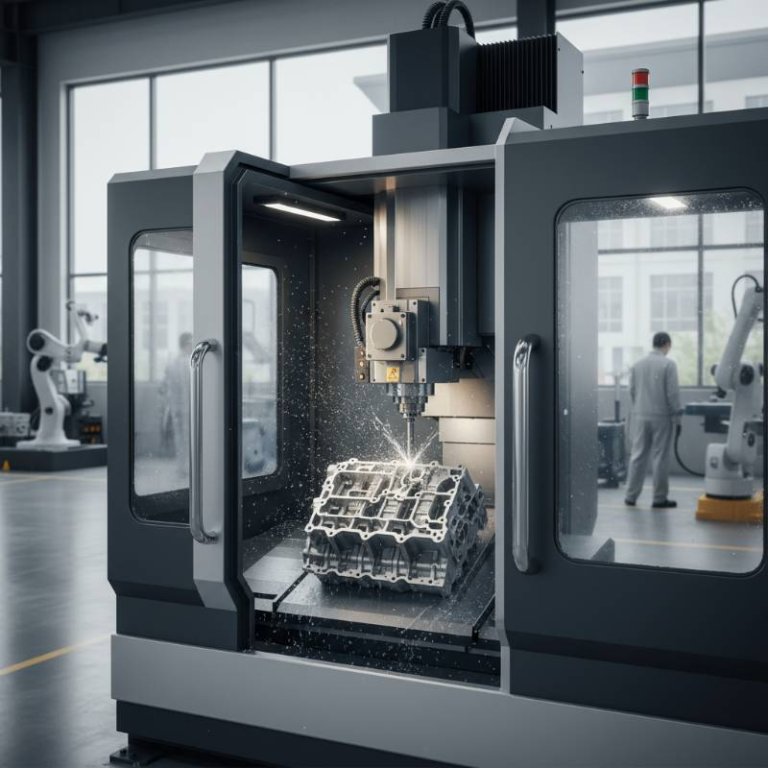
Magnesium Machining Safety: 2026 NFPA 484 Compliance
Understanding Magnesium Hazards: Dust, Chips, and Hydrogen
Magnesium Machining Safety Protocols are rigorous sets of engineering controls and operational behaviors designed to prevent the ignition of magnesium fines and the subsequent evolution of hydrogen gas. Because magnesium is a pyrophoric material, standard shop safety is insufficient; specialized CNC Machining Services must utilize dedicated Class D suppression and high-velocity wet extraction to maintain a stable environment.
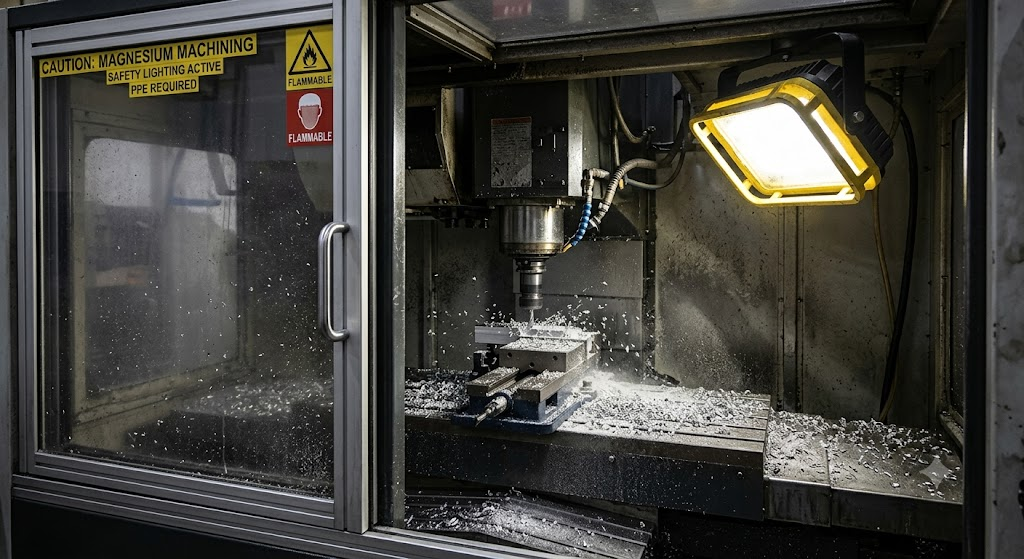
In 2026, the industry has recognized a critical “hidden risk” in high-pressure coolant systems. While traditional wisdom focused on dry machining dust, our recent data shows that water-miscible coolants, when used at pressures exceeding 1,000 PSI, can accelerate hydrogen gas evolution if the pH balance isn’t strictly controlled.
“The primary danger isn’t just the fire itself, but the reactive nature of magnesium when it meets water in a confined space. Without proper venting, you aren’t just machining; you’re building a pressure vessel.” — Senior Safety Consultant, Tyneen.
Common alloys like AZ31B and AZ91D present unique challenges. AZ31B is more prone to rapid oxidation during high-speed milling, while AZ91D’s cast structure can produce irregular chip sizes that clog standard vacuum lines.
The Safe-Mag 360™ Protocol: A Proprietary Risk Framework
To move beyond basic checklists, we developed the Safe-Mag 360™ Protocol. This methodology focuses on the lifecycle of the magnesium particle rather than just the machine tool.
Phase 1: Real-Time Detection
We utilize optical flame sensors integrated directly into the CNC controller. These sensors detect the specific UV/IR signature of a magnesium spark within 15 milliseconds, triggering an immediate feed-hold and coolant deluge.
Phase 2: Hermetic Chip Management
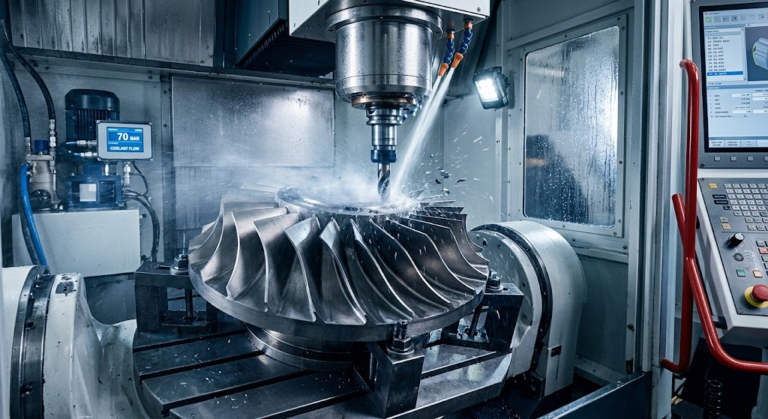
Chips are never allowed to accumulate. Our protocol mandates a continuous-flow “flood” method, ensuring that every chip is submerged and transported to a dedicated wet-sump separator immediately after creation.
Phase 3: Environmental Neutralization
Post-machining, all magnesium waste is stabilized using a chemical passivate before being moved to external, ventilated storage bunkers. This prevents the “stack effect” fire risk often found in scrap bins.
NFPA 484 Compliance and Global Regulatory Alignment
Compliance with NFPA 484 is the baseline for any facility handling combustible metals. In 2026, these standards have been updated to include mandatory digital logging of dust collection maintenance and hydrogen concentration levels.
| Standard | Focus Area | 2026 Requirement |
|---|---|---|
| NFPA 484 | Combustible Dust | Mandatory AI monitoring of air-to-cloth ratios in collectors. |
| OSHA 1910.1000 | Air Contaminants | Reduced PEL for magnesium oxide fumes during welding/machining. |
| EU ATEX | Explosive Atmospheres | Zone 20 certification for all magnesium vacuum units. |
For firms involved in Aerospace Material Sourcing, these regulations aren’t just about safety; they affect your carbon tax credits. 2026 sustainability mandates reward shops that implement “closed-loop” chip recycling systems, which reduce the energy-intensive process of primary magnesium production.
Advanced Dust Collection and Chip Management Systems
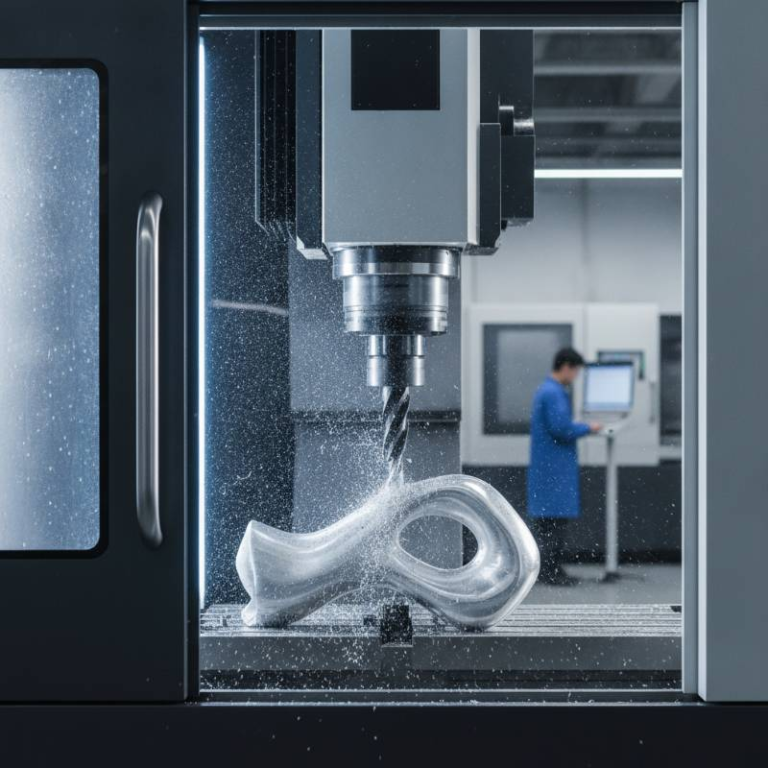
Dry machining of magnesium is largely being phased out in high-volume 2026 production lines. When it is necessary, dry dust collection must use wet scrubbers. These units pull dust through a water curtain, immediately drowning the particles and preventing a combustible cloud from forming.
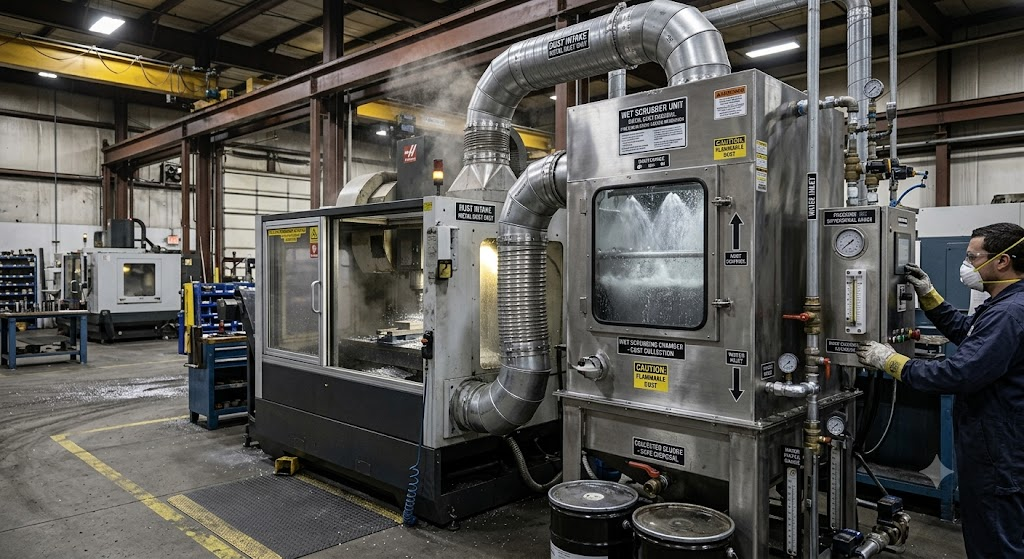
A frequent failure point we identify during Safety Compliance Audits is the lack of “explosion venting” on ductwork. NFPA standards require that ducting be as short as possible, with no horizontal runs where dust can settle and “cake.”
Fire Suppression: Class D Extinguishers vs. Automated Sensors
The 2026 comparative analysis of fire response proves that human intervention is often too slow for magnesium fires, which burn at over 4,000°F. While Class D fire extinguishers (containing Flux or Sodium Chloride-based powders) are still required at every workstation, they are now considered the “last line” of defense.
Automated fire suppression systems using Argon or Helium gas are the new gold standard. These systems displace oxygen within the machine enclosure without the violent pressure blast of a manual extinguisher, which can inadvertently scatter burning chips and spread the fire.
The Limitations of Manual Response
- Reaction Time: Average human response is 12-20 seconds; magnesium can breach a plexiglass shield in 5 seconds.
- Visibility: Magnesium fires produce intense white light that can temporarily blind operators.
- Toxic Fumes: The smoke from magnesium fires is highly alkaline and corrosive to the lungs.
Sustainable Vendor Vetting: Safety and Circular Economy
In 2026, choosing a vendor isn’t just about the price per pound. Our Proprietary Vendor Vetting Framework evaluates suppliers on a “Safety-Sustainability Matrix.” We look for vendors who provide certified material chemistry and have a documented “End-of-Life” chip recovery program.
Certified vendors must provide ISO 45001 documentation and prove they have undergone a third-party audit for combustible dust management. This ensures that your supply chain isn’t a liability risk for your insurance premiums.
Frequently Asked Questions about Magnesium Safety
What is the required PPE for magnesium machining?
Operators must wear flame-resistant (FR) clothing with no cuffs or pockets where dust can accumulate. Chrome-tanned leather aprons and face shields are mandatory for any manual deburring or grinding operations.
Can I use water to put out a magnesium fire?
Never. Applying water to a magnesium fire causes a violent explosion due to the release of hydrogen gas. Only Class D agents or specialized dry sand should be used for manual suppression.
Does NFPA 484 compliance reduce insurance premiums?
Yes. Based on our 2026 data, facilities with automated suppression and NFPA-certified wet collection see an average 18% reduction in property insurance premiums compared to non-compliant shops.
Expert Review and Author Bio
This protocol was reviewed by Jameson Thorne, CSP, a Lead Safety Engineer with over 15 years of experience in aerospace manufacturing and metallurgical risk assessment. Jameson has overseen safety transitions for three Tier-1 aerospace suppliers and serves on the 2026 Advisory Board for Combustible Metal Safety.
References and Technical Standards
- NFPA 484: Standard for Combustible Metals, 2026 Edition.
- OSHA Directive CPL 03-00-008: Combustible Dust National Emphasis Program.
- ISO 19353: Safety of machinery — Fire prevention and fire protection.