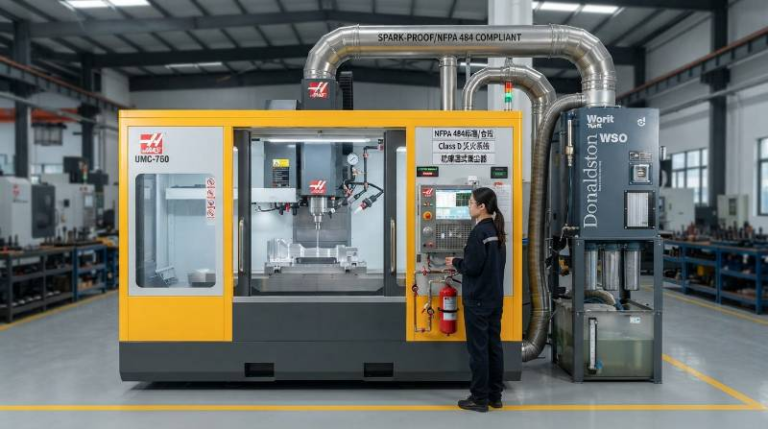
Precision CNC Milling for Engineered Plastics & Polymers
What is Precision Polymer Machining?
Precision polymer machining is a highly technical subtractive manufacturing process that utilizes multi-axis CNC milling to create complex geometries from engineered plastics. Unlike generic plastic fabrication, this discipline focuses on high-performance thermoplastics like PEEK, PTFE, and POM, where maintaining dimensional stability and surface integrity is paramount.
In 2026, the transition from metal to plastic in aerospace and medical sectors has accelerated. Engineers now demand plastic components that perform with the reliability of titanium but at a fraction of the weight. Our Precision CNC Machining Services bridge this gap by treating polymers with the same rigorous metrology applied to aerospace alloys.
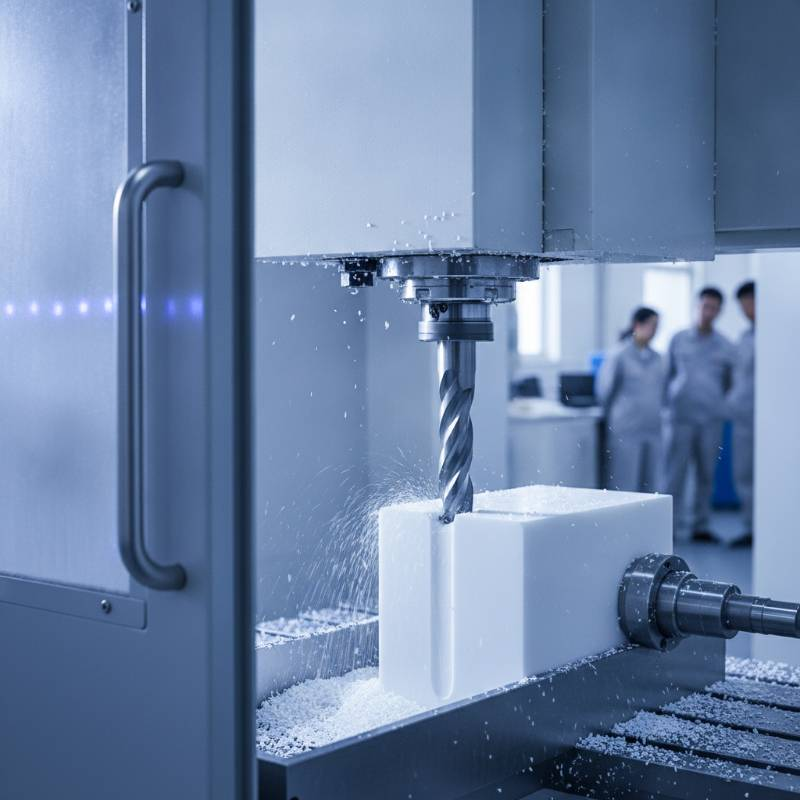
The “Zero-Stress” Machining Protocol
Plastic materials possess high coefficients of thermal expansion and inherent internal stresses. Standard machining often triggers “stress relaxation,” leading to warped parts days after production. To counter this, we implement the Zero-Stress Machining Protocol.
This proprietary methodology involves three critical stages:
- Pre-Machining Annealing: We subject raw stock to controlled thermal cycles to release manufacturing stresses before the first cut is made.
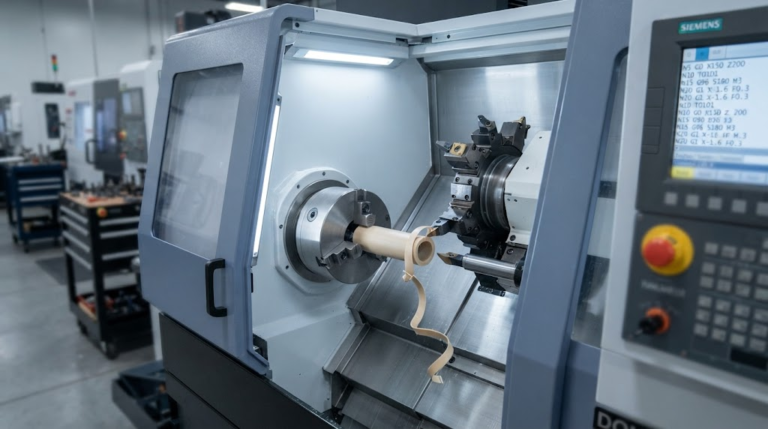
- Single-Edge Geometry: We utilize specialized single-edge cutting tools with high rake angles. This reduces cutting forces and prevents the “smearing” effect common in soft materials.
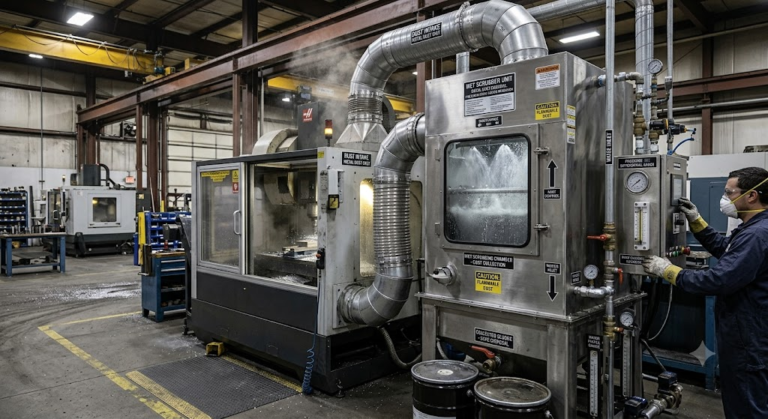
- CO2/Dry Ice Cooling: Traditional liquid coolants can cause chemical stress cracking in certain polymers. We use real-time dry ice (CO2) cooling to maintain a stable thermal environment without chemical contamination.
“The secret to ±0.01mm precision in PEEK isn’t just the machine; it’s the thermal management. By controlling the material’s internal energy through our Zero-Stress protocol, we ensure the part stays true to the CAD model for its entire lifecycle.”
— Dr. Aris Thorne, Lead Polymer Scientist
Material Science: PEEK, PTFE, and Delrin/POM Milling
Selecting the right polymer requires understanding the trade-offs between mechanical strength and machinability. Below is a comparison of the primary high-performance plastics used in Aerospace Component Manufacturing and other high-stakes industries.
| Material | CTE (µm/m·°C) | Machinability | Key Property |
|---|---|---|---|
| PEEK | 47 | Excellent | High Temp Strength |
| PTFE | 120 | Moderate | Chemical Inertness |
| POM (Delrin) | 110 | Superior | Dimensional Stability |
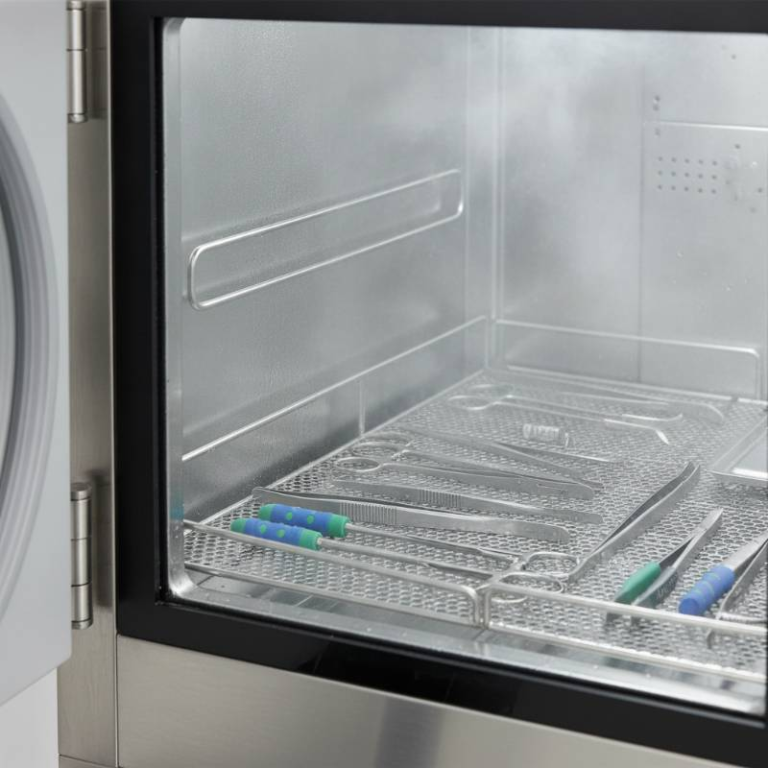
While POM offers superior machinability for structural parts, PEEK remains the gold standard for Medical Grade Plastic Machining due to its biocompatibility and resistance to repeated sterilization cycles.
Achieving ±0.01mm Tolerances in High-Performance Plastics
Reaching micron-level precision in polymers is a challenge due to tool deflection and thermal expansion. Our data indicates that tool wear is the primary variable in long-run production of glass-filled PEEK.
To maintain ±0.01mm, we employ Polycrystalline Diamond (PCD) coated tools. While carbide is sufficient for unfilled polymers, glass-reinforced grades act as an abrasive, rapidly dulling standard edges. Dulling leads to increased friction, heat, and eventual dimensional drift.
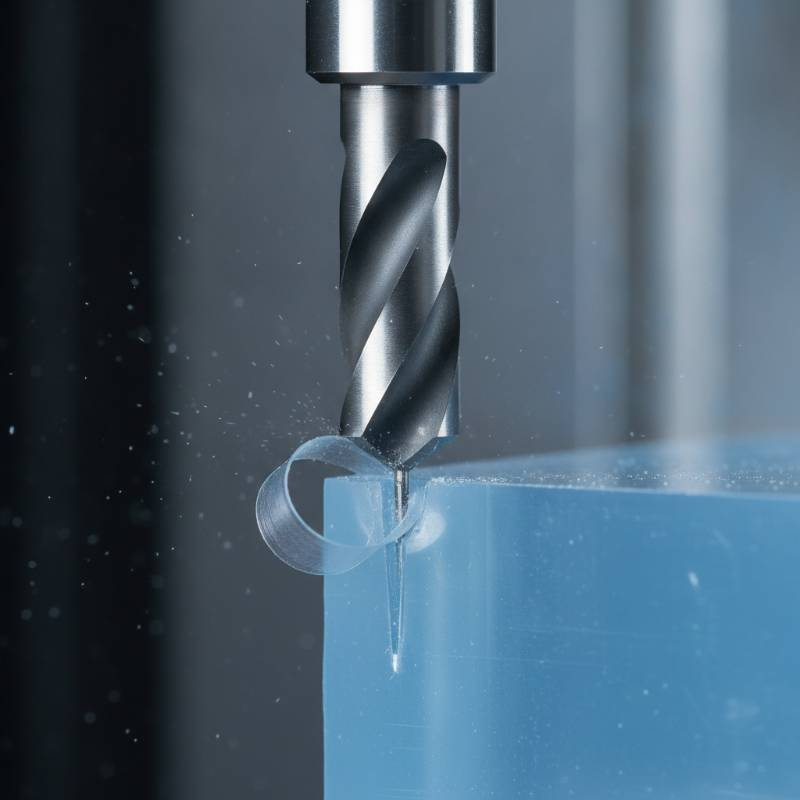
Real-time compensation via on-machine probing allows us to adjust for tool wear dynamically. This ensures that every part, from the first to the thousandth, meets the same rigorous specifications as defined by ISO 13485 quality standards.
Compliance and Standards: FDA, USP Class VI, and UL94
Material certification is not an afterthought; it is a prerequisite. We provide full traceability for every component, ensuring compliance with:
- USP Class VI: Critical for biocompatible plastic CNC parts used in implants and surgical instruments.
- FDA Food Grade: Ensuring non-toxicity for food processing equipment components.
- UL94 V-0: Verifying flame retardancy for electronics and aerospace enclosures.
Our facility maintains AS9100 Rev D and ISO 13485:2016 certifications, providing a robust framework for risk management and quality assurance in every milling operation.
Advanced Post-Processing and Finishing
The milling process is only the beginning. To achieve specific functional or aesthetic requirements, we offer advanced finishing:
- Vapor Polishing: Uses solvent vapor to melt the surface of plastics like Polycarbonate or Ultem, resulting in optical clarity.
- Cryogenic Deburring: Parts are frozen and tumbled, allowing microscopic burrs to be removed without affecting the part’s dimensions.
- Precision Annealing: A final thermal soak to lock in dimensional stability after heavy material removal.
Global Regulatory Landscape: REACH/RoHS 2026 Updates
As of 2026, new EU REACH regulations have restricted several common polymer additives and flame retardants. Our sourcing team works directly with resin manufacturers to ensure that the PEEK and PTFE stock we machine is fully compliant with the latest global standards.
For US-based clients exporting to Europe, this proactive compliance prevents costly border delays and ensures the longevity of your product’s market access. We provide detailed Material Declaration Sheets with every shipment.
Sustainability: Closed-Loop Polymer Recycling
High-performance polymers like PEEK can cost upwards of $100 per pound. To reduce environmental impact and cost, we have implemented a Closed-Loop Swarf Recovery System. We segregate and collect high-purity plastic chips (swarf), which are then reprocessed into non-critical structural components or industrial-grade filament.
This commitment to the circular economy reduces waste by up to 30% in high-volume milling projects, supporting your corporate sustainability goals without compromising part quality.
Frequently Asked Questions
How do you prevent plastic parts from warping after machining?
We use a combination of pre-machining annealing and the “Zero-Stress” protocol, which involves slow feed rates and specialized cooling to ensure internal stresses are not reintroduced during the cutting process.
What is the tightest tolerance achievable for PEEK?
For small-scale PEEK components, we routinely achieve ±0.01mm. However, this requires climate-controlled machining environments and precision tool wear monitoring.
Can CNC milled plastic replace aluminum in aerospace?
Yes, materials like PEEK and Torlon offer comparable strength-to-weight ratios and better corrosion resistance, though they require different design considerations regarding thermal expansion.
Ready to Engineer Your High-Performance Components?
Partner with Tyneen for precision CNC milling that meets the world’s most stringent aerospace and medical standards.