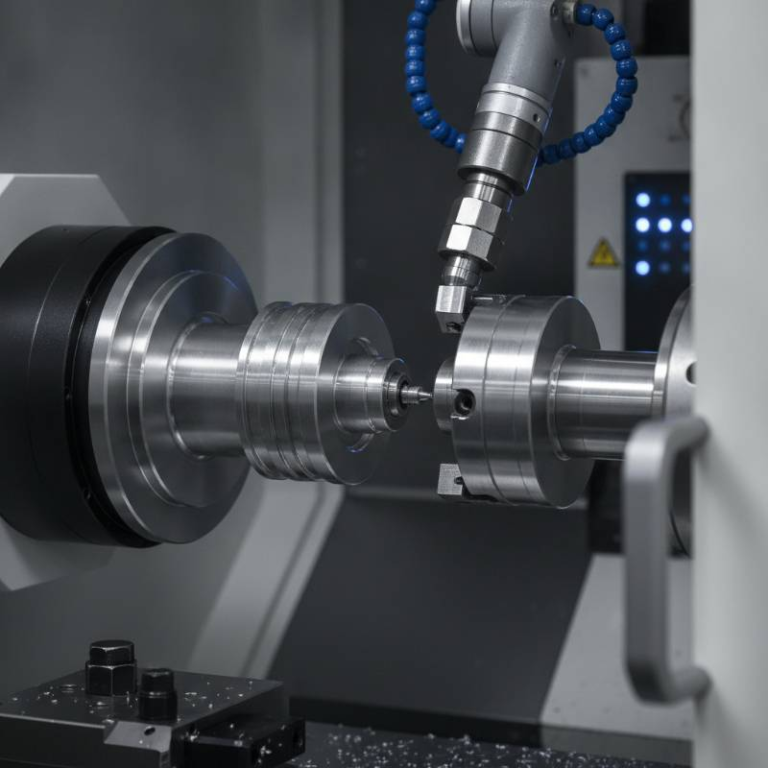
Precision Plastic CNC Turning: Technical Guide & RFQ
Engineering polymers exhibit low thermal conductivity, high elasticity, sensitive glass transition thresholds, and massive coefficients of thermal expansion. Achieving linear tolerances down to ±0.005 mm and surface finishes of Ra 0.4 μm requires specialized cutter geometry, customized workpiece holding, multi-stage stress-relief cycles, and climate-controlled metrology environments.
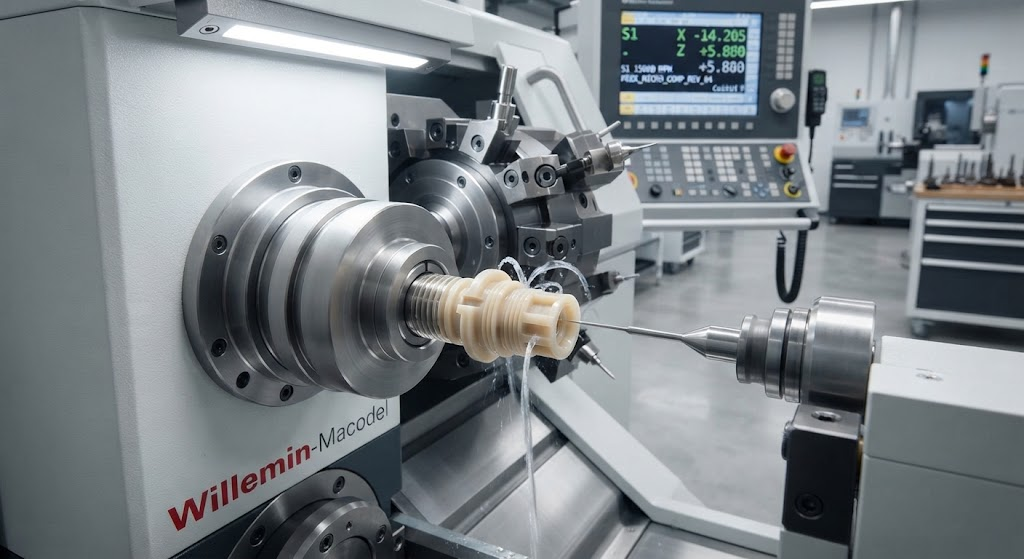
The Polymer Machining Dilemma: Overcoming Thermal Expansion, Clamping Drift, and Elastic Deflection
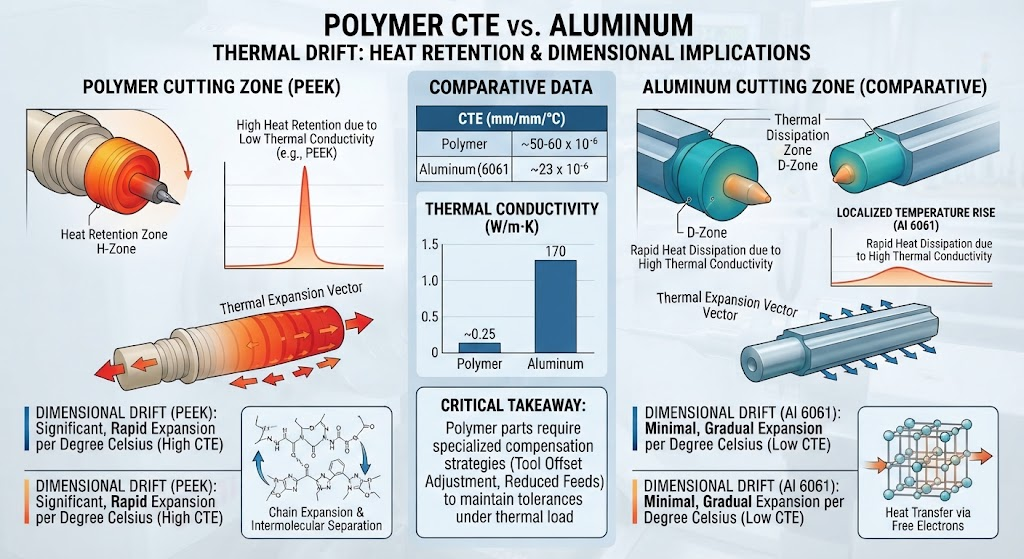
Machining engineering polymers differs fundamentally from metal cutting. In metals, cutting energy dissipates largely through chip evacuation and tool conduction. In polymers, thermal conductivity is roughly two orders of magnitude lower than aluminum (e.g., 0.25 W/m·K for unreinforced PEEK versus ~160 W/m·K for 6061-T6 aluminum).
Frictional heat generated at the shear zone remains concentrated within the workpiece surface and cutting edge. This thermal concentration triggers rapid localized thermal expansion, continuous workpiece softening, and accelerated tool wear. Review our engineering plastic materials catalog for detailed thermal conductivity and thermodynamic profiles.
Polymer Turning Mechanics: Engineering plastics exhibit a low modulus of elasticity (2.5 to 4.0 GPa vs. 70 GPa for aluminum) paired with high linear thermal expansion (30 to 120 × 10⁻⁶ K⁻¹). Lathe operations must counteract tool push-back, hydrodynamic elastic deflection, and compressive clamping distortion to maintain micron-level roundness and diameter accuracy.
When turning cylindrical polymer bars, conventional three-jaw steel chucks crush the outer diameter, introducing ovality and runout errors. Furthermore, cutting forces generate elastic deflection rather than crisp chip shear. Once the tool passes, the material springs back, leading to undersized bores or oversized shaft diameters.
Managing High CTE in PEEK, Delrin (POM-C), and Torlon (PAI)
Linear thermal expansion is the primary driver of scrap in high-tolerance plastic lathe turning. While 6061 aluminum expands at 23 × 10⁻⁶ /°C, unfilled Delrin (POM-C) expands at 110 × 10⁻⁶ /°C, and unfilled PEEK expands at 47 × 10⁻⁶ /°C below its glass transition temperature (Tg).
ΔL: Dimensional shift (mm), L₀: Nominal dimension (mm), α: Linear CTE (m/m·°C), ΔT: Temperature variance from 20°C standard (°C)
For a ⌀50.00 mm Delrin turned component, a machine enclosure temperature rise of just 8°C during high-speed roughing induces a dimensional drift of:
ΔL = 50.00 mm × (110 × 10⁻⁶ /°C) × 8°C = +0.044 mm
This 0.044 mm expansion completely consumes a standard ±0.010 mm drawing tolerance. If the machinist measures the warm component on the lathe bed and offsets the tool to nominal, the part will shrink below lower tolerance limits once it cools to room temperature.
Multi-Stage Stress-Relief Annealing Protocols for Semi-Crystalline Polymers
Extruded or compression-molded polymer stock contains significant frozen internal stresses from rapid cooling during material production. As turning removes outer skin layers, internal stress balances collapse, causing parts to bow, warp, or go out of round within 24 to 48 hours.
To establish metallurgical-grade dimensional stability, semi-crystalline materials require a multi-stage thermal annealing cycle before machining and an intermediate cycle between rough turning and final finishing.
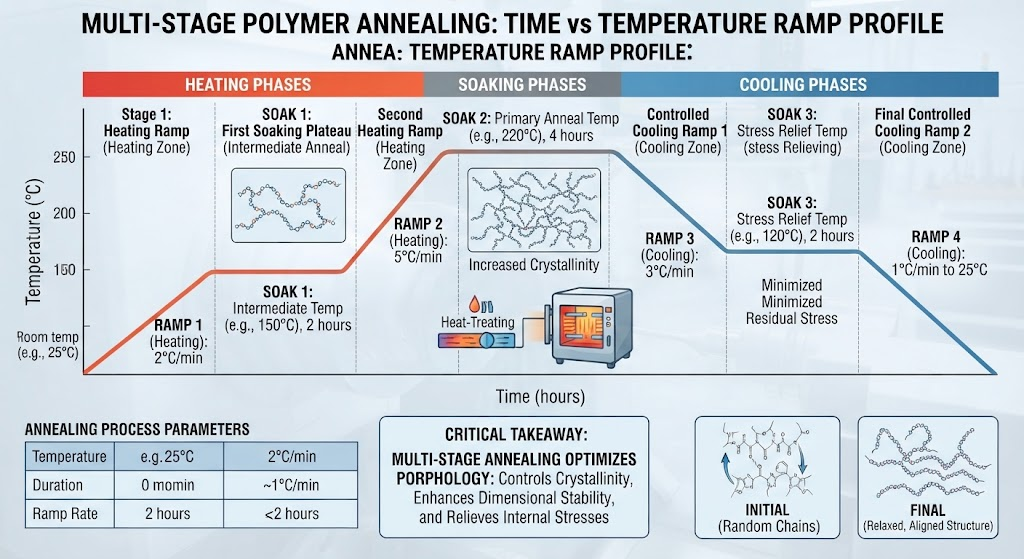
- Pre-Machining Anneal: Ramp raw stock in a nitrogen-purged convection oven at 10°C to 15°C/hr up to material-specific soak temperature (200°C for PEEK, 140°C for Delrin, 260°C for Torlon 4203).
- Thermal Soak: Hold part at peak temperature for 1 hour per 25 mm of cross-sectional thickness to homogenize crystalline structures according to ASTM D6100 guidelines.
- Controlled Cool-Down: Decrease temperature at a rate not exceeding 5°C to 10°C/hr until reaching 40°C before removing parts from the oven.
- Intermediate Stress Relief: Perform rough turning to within +0.5 mm of finished stock, then execute a secondary stress-relief cycle at 80% peak soak temperature before finishing passes.
The Tyneen 4-Phase Polymer Turning & Thermal Stabilization Framework (P-TTS Protocol)
To eliminate post-machining dimensional drift and achieve micro-tolerances reliably, Tyneen deploys our proprietary P-TTS Protocol (Polymer Turning & Thermal Stabilization) across our advanced CNC machining services.
| Phase | Engineering Process | Target Parameter / Control Method | Quality Impact |
|---|---|---|---|
| 1. Raw Stock Conditioning | Ultrasonic resin void detection & multi-stage thermal oven soak | Calibrated ramp rates (10°C/hr), 100% void-free verification | Prevents internal voids and internal core stress release |
| 2. Adaptive Fixturing | Custom 360° pie jaws, pie collets, and expanding mandrels | Controlled clamping pressure (0.2 to 0.5 MPa hydraulic/pneumatic) | Eliminates tri-lobe roundness distortion and hoop deformation |
| 3. Micro-Shear Lathe Turning | PCD diamond mirror tooling with high-pressure vortex cold air | High rake (+15°), zero thermal cutting oil contamination | Ra 0.4 μm surface finish with zero burrs or edge rolling |
| 4. Climate-Stabilized CMM | 24-hour thermal stabilization at 20°C ±0.5°C prior to inspection | Zeiss non-contact optical & low-force touch-probe routines | Guarantees certified true position and diameter to ±0.005 mm |
Tooling Geometries and Cutting Parameters for Burr-Free Polymer Lathe Turning
Plastics cannot be cut using standard negative-rake carbide inserts designed for steel. Negative rakes push into ductile polymers, creating excessive friction, melting, and large plastic deformations. Instead, lathe tooling for polymers must cut with slicing action.
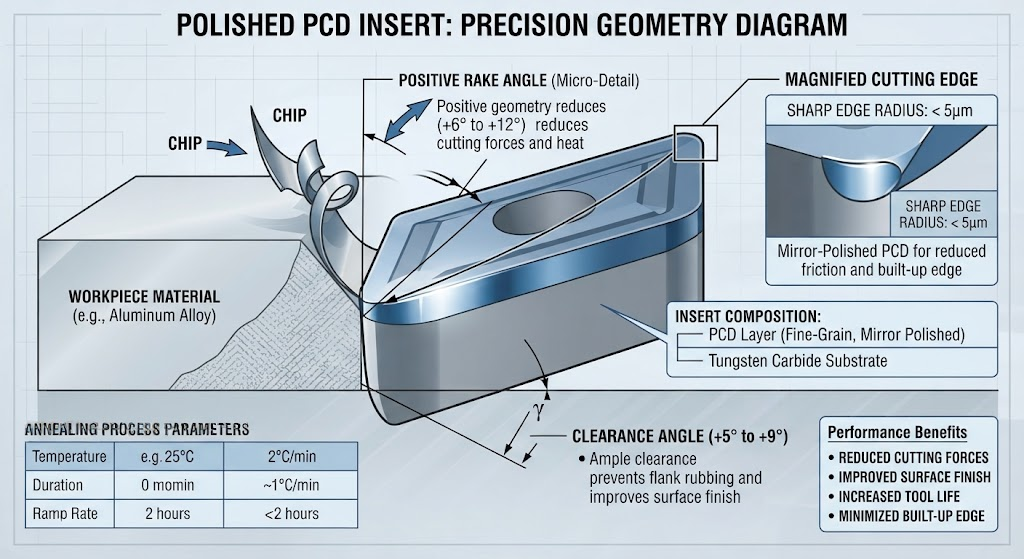
Engineers must implement specific tool geometry guidelines across turning operations:
- Top Rake Angle (γ): Maintain a positive top rake between +10° and +20°. This reduces cutting forces and allows chips to flow smoothly across the tool face.
- Front & Side Clearance (α): Use generous relief angles of 10° to 15° to prevent the tool flank from rubbing against the resilient polymer OD/ID.
- Nose Radius (rε): Keep nose radii small (0.1 mm to 0.4 mm). Large nose radii increase tool contact area, generating deflection, chatter, and localized heat.
- Cutting Edge Radius: Tools must feature a dead-sharp edge (<0.005 mm hone). Polished Polycrystalline Diamond (PCD) or uncoated micro-grain carbide with mirror-lapped rake faces prevents chip adhesion and burr formation.
Vc: Cutting Speed (m/min), D: Workpiece Diameter (mm), n: Spindle Speed (RPM), Vf: Table Feed Rate (mm/min), f: Feed per Revolution (mm/rev)
For unfilled PEEK, optimal cutting parameters involve cutting speeds (Vc) of 150 to 300 m/min, feeds (f) of 0.05 to 0.15 mm/rev for finishing, and depths of cut (ap) of 0.2 to 0.5 mm. High-pressure chilled compressed air or vortex tube air guns must be directed right at the shear point to shatter continuous ribbon chips without liquid coolant contamination.
Swiss-Type CNC Lathes vs. Multi-Axis Turret Turning Centers for High-Performance Polymers
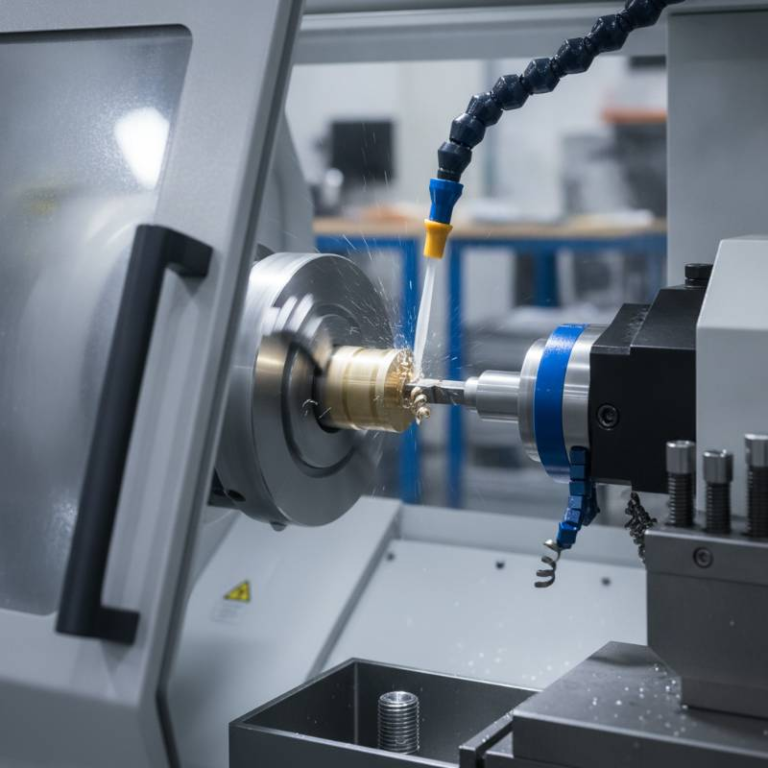
Selecting the proper machine kinematic configuration is critical for maintaining polymer geometric stability. Tyneen leverages an extensive fleet of multi-axis Swiss-type screw machines and multi-spindle turret turning centers through our dedicated precision CNC turning services.
Swiss-Type Lathes with Guide Bushings: Ideal for long, slender polymer shafts, miniature medical pins, and thin-walled valve bodies (⌀0.5 mm to ⌀32 mm). The polymer bar feeds continuously through a synchronized guide bushing while cutting tools engage millimeters from the support point. This completely eliminates bar bending and deflection under radial cutting pressure.
Multi-Axis Live-Tooling Turret Centers: Preferred for large-diameter polymer housings, manifold rings, and heavy-duty structural bushings (⌀30 mm to ⌀350 mm). Featuring rigid Meehanite iron beds, liquid-chilled high-torque spindles, and programmable C/Y/B-axis live tooling, our DMG MORI lathes execute OD turning, deep boring, cross-hole drilling, and micro-milling in a single unified clamping setup.
Extreme Niche Case Study: Thin-Walled Micro-Tolerance Medical Valves in PEEK and Torlon
A global medical device client required a critical fluid dispensing valve component manufactured from implant-grade PEEK-OPTIMA and Torlon 4203 PAI. The application demanded micro-geometry holding ultra-stringent mechanical criteria.
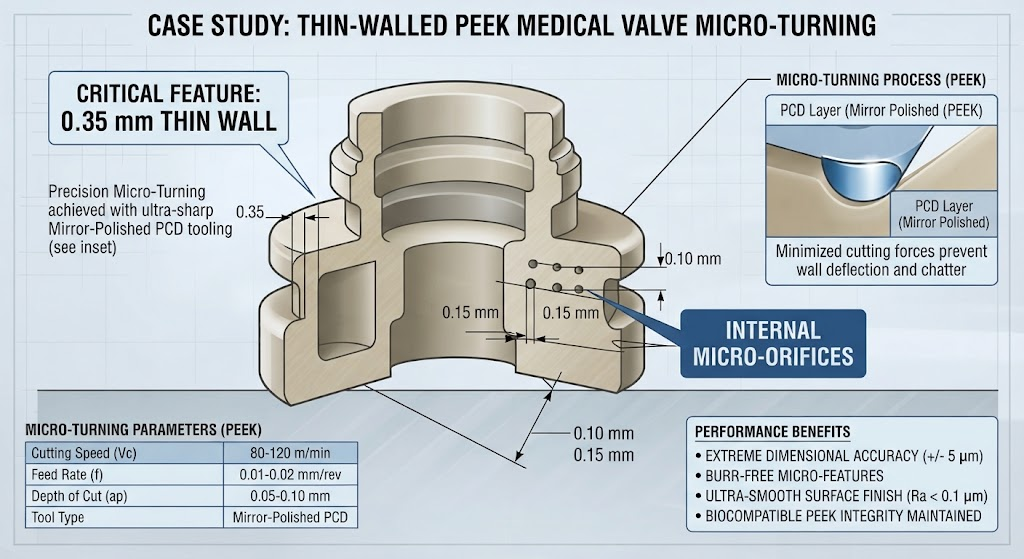
- Critical Wall Thickness: Outer cylinder wall stepped down to 0.35 mm over an axial length of 14.5 mm.
- Dimensional Tolerances: Outer diameter turned to ⌀4.250 mm (+0.005 / -0.000 mm); internal metering bore held to ⌀3.550 mm (±0.004 mm).
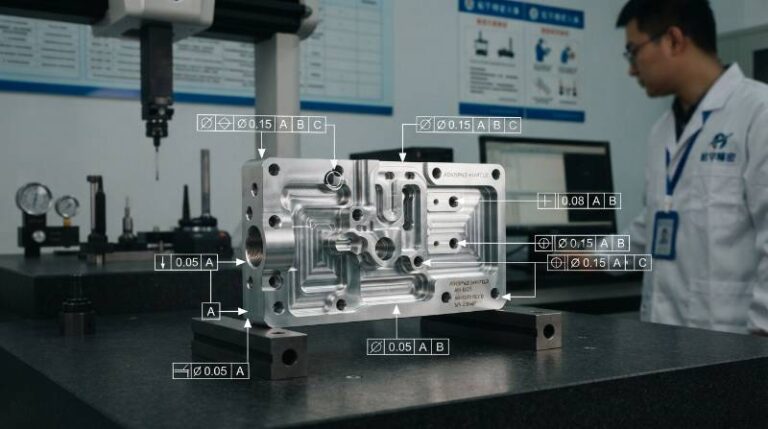
- Geometric Dimensioning & Tolerancing (GD&T): True position of internal bore to OD datum within 0.010 mm; Total Cylindricity within 0.006 mm.
- Surface Finish: Ra 0.4 μm across the internal sealing seat, strictly burr-free at 30× optical magnification without secondary tumbling or manual polishing.
Tyneen Engineering Resolution: We deployed an 8-axis Swiss-type lathe fitted with customized ceramic guide bushings to prevent marking. Tooling utilized custom-ground single-crystal natural diamond (SCD) boring bars with +18° rake geometry and dedicated vortex cold-air nozzles.
Roughing and finishing were performed in synchronized balanced cuts to prevent thin-wall buckling. 100% First Article Inspection (FAI) on our Zeiss O-INSPECT multisensor CMM verified complete compliance, yielding 99.6% production throughput over 12,000 units.
Substantiating Performance: Cost Breakevens, Material Selection, and Quality Verification
Design teams frequently weigh the trade-offs between precision plastic turning and injection molding. Choosing the optimal route requires assessing tooling expenditures, cycle iterations, geometric constraints, and material mechanical properties.
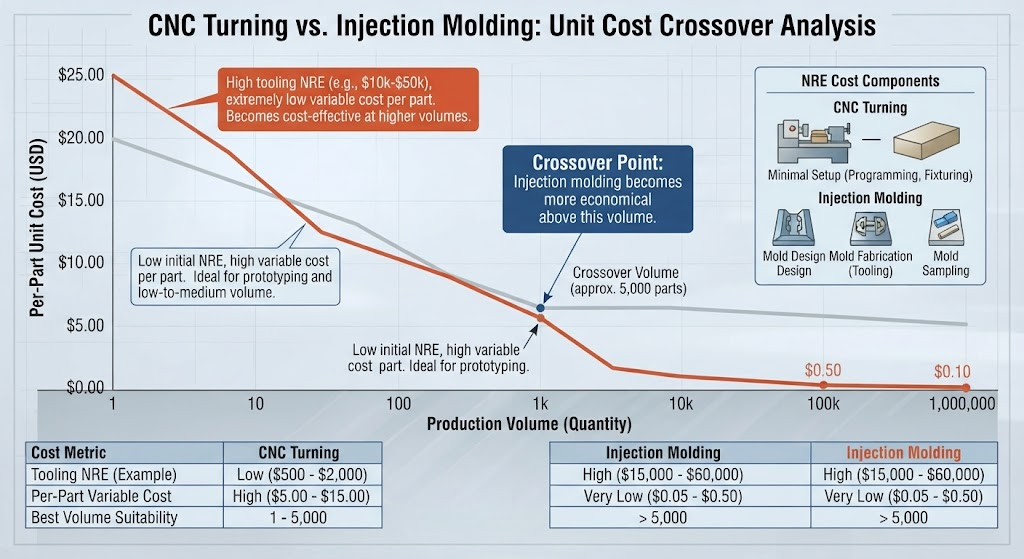
Plastic CNC Turning vs. Injection Molding: Breakeven Unit-Cost Analysis
Injection molding demands steep Non-Recurring Engineering (NRE) tooling investments (8,000 to60,000+ for micro-precision hardened steel molds) and 6 to 12 weeks of mold lead time. CNC turning requires zero hard tooling NRE, offers same-day setup flexibility, and handles frequent CAD revisions instantly.
| Evaluation Parameter | Precision Plastic CNC Turning | High-Precision Injection Molding |
|---|---|---|
| Initial Tooling Investment (NRE) | $0 (Standard fixture & soft jaw setup) | 10,000 to75,000+ (Tool steel molds) |
| Lead Time to First Article | 1 to 3 Business Days | 6 to 12 Weeks (Tool build & T1 trials) |
| Achievable Tolerances | ±0.005 mm (High consistency via CMM feedback) | ±0.050 mm to ±0.100 mm (Limited by mold shrinkage) |
| Wall Thickness Flexibility | Variable thickness, heavy solid cores, no sink marks | Strict uniform wall rules to prevent sink & voids |
| Economic Crossover Batch Size | 1 to 3,500 parts (Highly economical) | >5,000 to 100,000+ parts |
Engineering Polymer Selection Matrix: PEEK, Delrin, Torlon, PTFE, and Ultem PEI
Selecting the right polymer balance depends on thermal limits, mechanical load, machinability, and chemical environment. Review the performance characteristics below:
| Polymer Material | Tensile Modulus (GPa) | Continuous Temp (°C) | Machinability Index | Primary Application Strengths |
|---|---|---|---|---|
| PEEK (Polyetheretherketone) | 3.8 to 4.2 | 250°C | Excellent (Rigid chip) | Biocompatibility, gamma sterilizable, steam resistance |
| Delrin (Acetal POM-C/H) | 2.8 to 3.2 | 90°C | Superior (Free-machining) | High dimensional stability, low friction, cost-effective gears |
| Torlon (PAI Polyamide-imide) | 4.5 to 5.0 | 260°C | Good (Abrasive on tools) | Extreme load bearing at elevated temps, cryogenic seals |
| PTFE (Teflon) | 0.4 to 0.6 | 260°C | Moderate (High creep/burr) | Universal chemical inertness, near-zero friction coefficient |
| Ultem 1000 (PEI) | 3.2 to 3.6 | 170°C | Good (Notch sensitive) | High dielectric strength, flame resistance, optical clarity |
Quality Assurance, Metrology & Certified 20°C Climate-Controlled Inspection
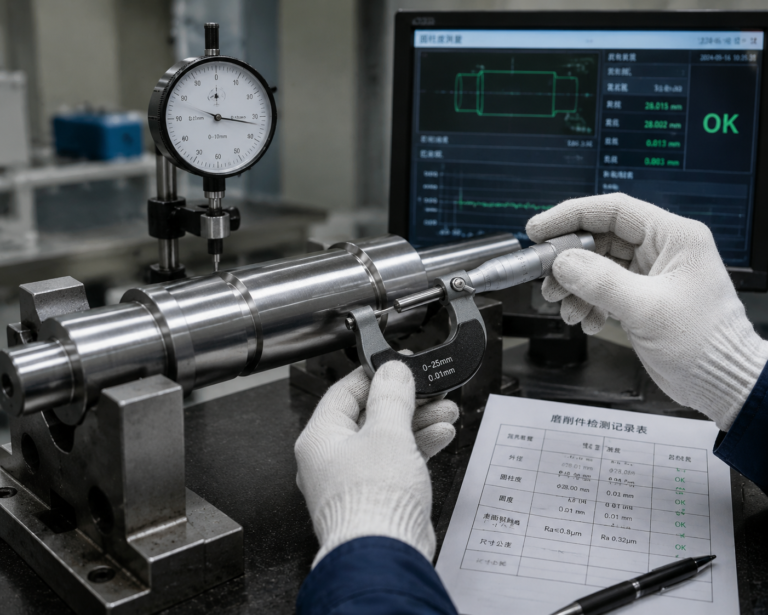
Accurate verification of turned polymer components requires specialized metrology infrastructure. Traditional vernier calipers and high-force mechanical micrometers compress plastic surfaces by 0.010 mm to 0.030 mm during measurement, yielding false scrap readings.
Tyneen operates certified quality labs compliant with ISO 9001:2015, IATF 16949, and AS9100D standards, featuring strict 20°C ±0.5°C environmental climate controls.
- Non-Contact Optical Inspection: High-speed Keyence optical comparators capture entire part profiles in 2D/3D without physical surface contact, eliminating tactile deformation on soft elastomers and PTFE.
- Low-Force Zeiss Coordinate Measuring Machines (CMM): Outfitted with high-sensitivity scanning probes operating at micro-Newton contact forces (0.05 N) to map true positions, cylindricity, and concentricity down to ±0.001 mm.
- Certified Material Traceability: Complete material lot traceability with full physical and chemical inspection test reports (EN 10204 3.1), USP Class VI biological evaluation compliance, and RoHS/REACH regulatory documentation.
Streamlined 3-Step Production Pathway: Fast DFM to Micro-Tolerance Lathe Delivery
Transitioning from complex CAD models to high-precision turned polymer components is rapid and frictionless with Tyneen’s digital engineering workflow.
Get Your Precision Turned Plastic Parts Manufactured
- Step 1: Upload 3D CAD / 2D Drawings: Submit your STEP, IGES, or DXF files with GD&T specifications via our secure server.
- Step 2: Instant DFM & Thermal Review (<2 Hours): Receive a comprehensive Design for Manufacturability evaluation, toolpath strategy, and transparent pricing.
- Step 3: Precision Production & CMM Dispatch: Fast-turn CNC Swiss/turret lathe production, 100% Zeiss CMM verification report, and express global delivery.
Frequently Asked Questions About Precision Plastic CNC Turning
What is the tightest tolerance achievable in CNC plastic turning?
On stable, rigid semi-crystalline and amorphous thermoplastics like PEEK, Torlon, and Ultem, Tyneen routinely holds diameter tolerances of ±0.005 mm and bore true position within 0.010 mm using multi-axis Swiss CNC lathes in temperature-stabilized cells.
Can flood coolant be used when turning medical-grade plastics?
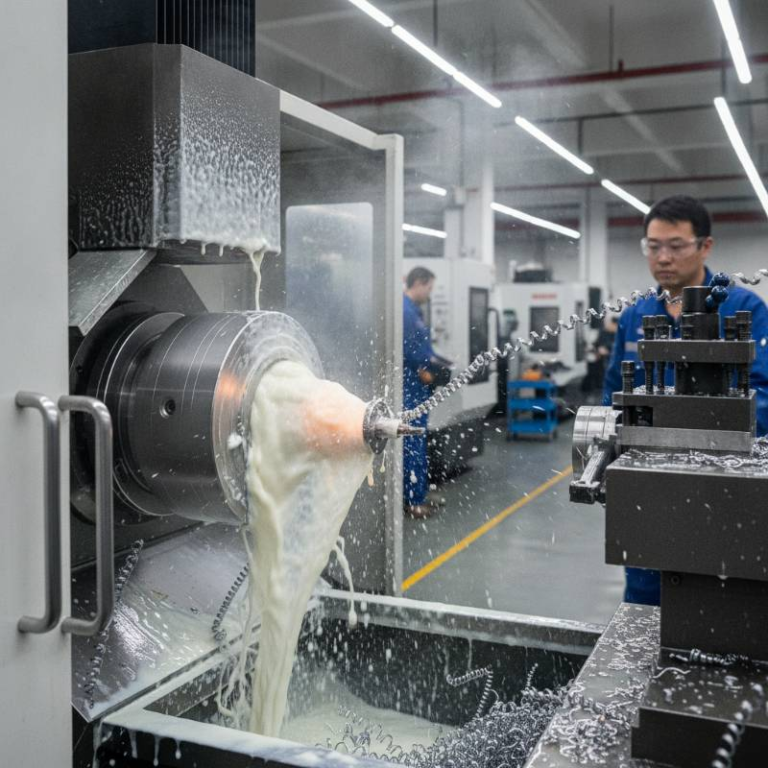
Standard mineral-oil cutting fluids must be avoided for medical or implant polymers due to absorption, chemical stress cracking, and biological contamination risks. Tyneen employs purified chilled vortex cold-air guns or USP-compliant deionized water mist lubrication.
What is the minimum wall thickness recommended for turned polymer sleeves?
While standard plastic machining guidelines recommend minimum wall thicknesses of 0.8 mm to 1.0 mm, Tyneen’s synchronized Swiss-type turning processes achieve robust thin walls down to 0.35 mm in PEEK and Torlon without taper or chatter defects.
How do you prevent burrs on ductile plastics like PTFE and UHMW-PE?
Preventing burrs on soft, high-elongation plastics requires razor-sharp Polycrystalline Diamond (PCD) inserts with positive rake angles (+15° to +20°), fast surface speeds, light finish cuts, and cryogenic pre-cooling or air vortex chilling to raise material shear rigidity.