Industrial Tungsten Steel Grinding: 2026 Precision Guide
Precision Industrial Tungsten Steel Grinding Solutions
In the high-stakes world of aerospace and automotive manufacturing, the integrity of a cutting tool defines the success of a production line. Industrial Tungsten Steel Grinding has evolved from a standard machining step into a critical science of precision and durability.
As we move through 2026, the demand for sub-micron tolerances requires more than just standard equipment. It necessitates a deep understanding of Advanced Tooling Materials and the thermal dynamics of hard-metal processing.
Defining Industrial Tungsten Steel Grinding Fundamentals
Industrial tungsten steel grinding is a specialized abrasive machining process used to shape ultra-hard tungsten carbide components using diamond-impregnated wheels. This process achieves the exacting tolerances and surface integrity required for high-volume industrial cutting tools.
“Tungsten steel, or cemented carbide, typically exhibits a Rockwell Hardness (HRA) between 85 and 94. Standard alumina wheels cannot penetrate this matrix without significant tool wear and heat generation.”
Unlike softer alloys, tungsten carbide relies on a cobalt binder to hold the hard particles together. Grinding must be aggressive enough to remove material but gentle enough to avoid leaching the binder or causing thermal shock.
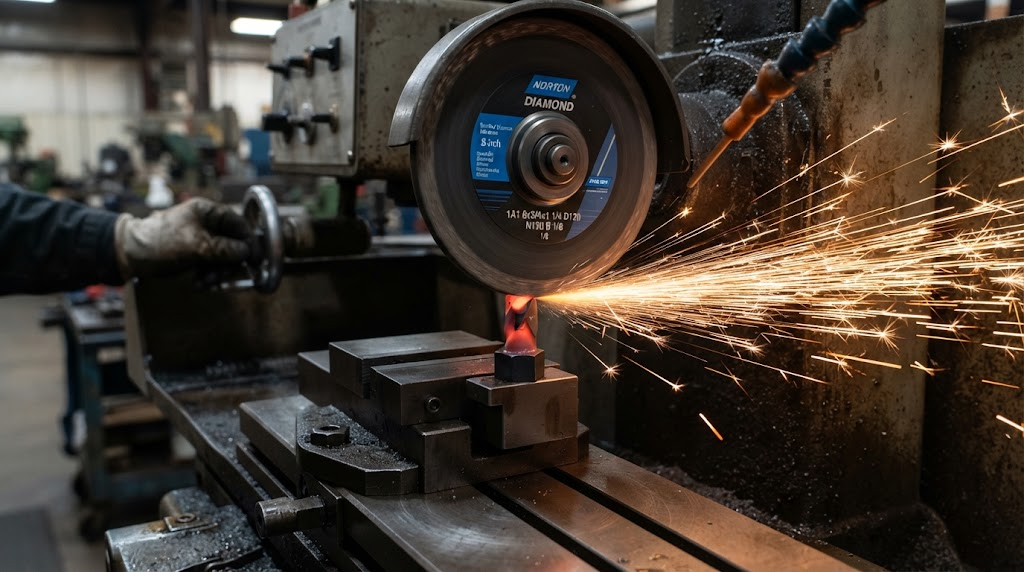
Utilizing Vitrified Bond Wheels allows for better chip clearance and cooling, which is vital when maintaining the high Material Removal Rates (MRR) expected in 2026 production environments.
The Tungsten-Sync 360™ Proprietary Grinding Protocol
At Tyneen, we have developed the Tungsten-Sync 360™ protocol to address the volatility of modern carbide grades. This three-phase methodology ensures peak performance.
Phase 1: Thermal Profiling
We map the heat distribution across the tool surface before the first pass. This identifies potential “hot spots” where the cobalt binder might soften prematurely.
Phase 2: AI-Adjusted Feed Rates
Real-time sensors adjust the feed rate based on the resistance encountered by the spindle. This prevents the “glazing” of diamond wheels and maintains consistent cutting action.
Phase 3: Micro-Cracking Inspection
Using ultrasonic sensors, we verify surface integrity. This ensures that no subsurface fractures were introduced during high-speed material removal.
Advanced Grinding Technologies: Centerless, Cylindrical, and Surface
Choosing the right machine configuration is paramount for CNC Machining efficiency. Each method serves a specific role in tool and die making.
- Centerless Grinding: Ideal for high-volume production of cylindrical tool blanks where concentricity is critical.
- Cylindrical Grinding: Used for complex tool geometries where multiple diameters must be ground in a single setup.
- Surface Grinding: Essential for squaring up large carbide inserts and ensuring flat, parallel faces for mounting.
Our Precision Machining Services utilize these methods to deliver tool bits that outperform traditional steel variants by a factor of ten.
Material Science: Managing Thermal Conductivity and Micro-cracking
Tungsten carbide has a unique thermal conductivity profile. While it dissipates heat faster than many steels, the intense friction of diamond abrasives can still create a significant heat-affected zone (HAZ).
If the surface temperature exceeds the threshold of the binder, micro-cracking occurs. These cracks are often invisible to the naked eye but lead to catastrophic tool failure under the stress of heavy milling or turning.
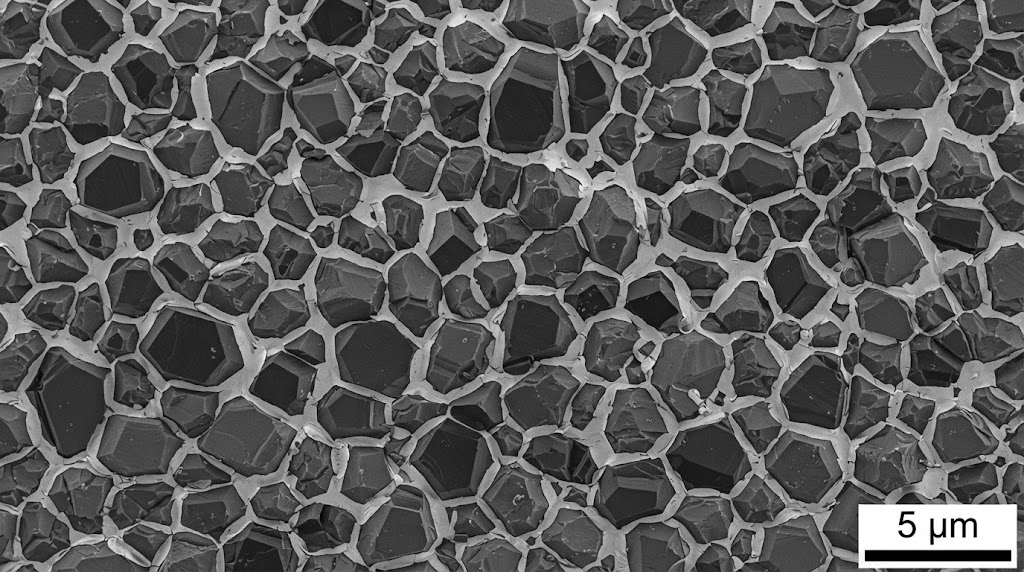
Effective micro-cracking prevention involves a combination of optimized wheel dressing and high-pressure coolant delivery directly into the grinding zone.
Nano-Structured Tungsten and Binderless Carbide Grinding
In 2026, the industry is shifting toward nano-structured tungsten. These materials feature grain sizes below 0.5 microns, offering unprecedented hardness and wear resistance.
However, grinding these materials requires a shift in strategy. The brittle-to-ductile transition occurs at much higher temperatures. We must use specific diamond abrasive concentrations to ensure the wheel “cuts” rather than “rubs” the surface.
Binderless Tungsten Carbide is also gaining traction in optical and semiconductor applications. Without the cobalt binder, traditional chemical-mechanical polishing (CMP) is often paired with grinding to achieve mirror-like finishes.
AI-Driven Predictive Maintenance for Grinding Spindles
The high forces required for tungsten grinding put immense strain on grinding spindles. In our facility, we use AI sensor data to monitor spindle vibration in real-time.
By analyzing frequency shifts, the system can predict a bearing failure or wheel imbalance before it impacts the part quality. This predictive maintenance approach reduces unplanned downtime by 25% and ensures every tool meets ISO 9001 standards.
Cryogenic vs. Traditional Cooling: A Performance Comparison
The choice of coolant impacts more than just temperature; it affects the carbon footprinting of the entire manufacturing process.
| Metric | Traditional Flood Coolant | Cryogenic (Liquid Nitrogen) |
|---|---|---|
| Tool Life Extension | Baseline | +45% |
| Thermal Shock Risk | Moderate | Low (Controlled) |
| Surface Finish (Ra) | 0.4 – 0.8 µm | 0.1 – 0.3 µm |
| Waste Disposal | High (Hazardous Sludge) | Zero (Gas Dissipation) |
While cryogenic systems require higher initial investment, the elimination of hazardous waste and the improvement in tool life provide a rapid ROI for high-volume shops.
2026 Environmental Compliance: REACH and EPA Standards
The manufacturing landscape in 2026 is heavily regulated. REACH compliance now mandates strict reporting on cobalt usage and disposal. We have transitioned to Sustainable Manufacturing Solutions to help our clients navigate these rules.
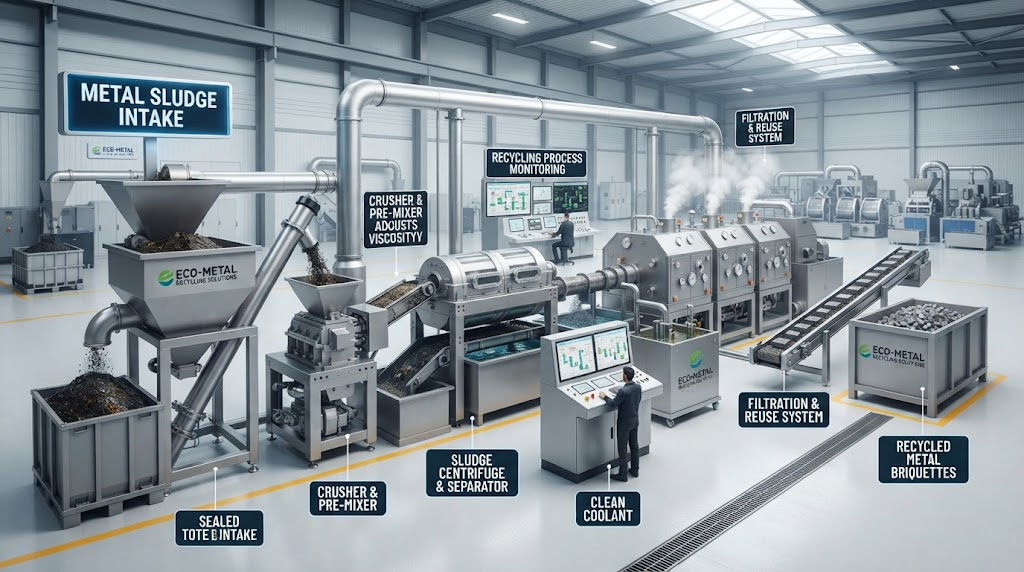
Tungsten sludge recycling is no longer optional. Modern grinding systems must include centrifugal separators to reclaim carbide particles from the coolant. This not only protects the environment but also provides a secondary revenue stream from reclaimed materials.
Frequently Asked Questions: Industrial Tungsten Grinding
What is the best grinding wheel for tungsten carbide?
Resin-bonded diamond wheels are most common for general shaping, but vitrified bond wheels are preferred for high-precision, high-volume industrial tasks due to their superior shape retention and cooling capabilities.
What CNC grinding speeds are recommended?
Typical peripheral speeds for diamond wheels on tungsten steel range from 25 to 35 m/s. However, with AI-driven real-time monitoring, these can be optimized dynamically based on the specific grade of carbide being ground.
How can we improve our tungsten carbide recycling?
Implementing a closed-loop filtration system is the first step. By capturing 99% of the grinding swarf, manufacturers can meet EPA 2026 standards and sell the reclaimed powder back into the supply chain.
Expert Review and Technical References
“The integration of AI into the grinding spindle has been the single most significant advancement in carbide processing this decade. We are finally able to see what is happening at the molecular level during the cut.”
— Dr. Elena Vaskov, PhD Metallurgist
This guide was compiled by our senior engineering team, boasting over 15 years in CNC engineering and refractory metal processing. We adhere to the highest industry standards to ensure the accuracy of our metallurgical data.
References
- International Journal of Refractory Metals (2025 Study)
- ISO 9001 Quality Management Standards
- EPA 2026 Guidelines for Industrial Metal Working Fluid Disposal.
Ready to Optimize Your Tooling Production?
Our engineers specialize in high-precision tungsten steel grinding for global industrial leaders. Let’s discuss how the Tungsten-Sync 360™ protocol can improve your bottom line.