2026 B2B CNC Engraving Services Cost Guide & DFM
2026 B2B CNC Engraving Services: Market Overview
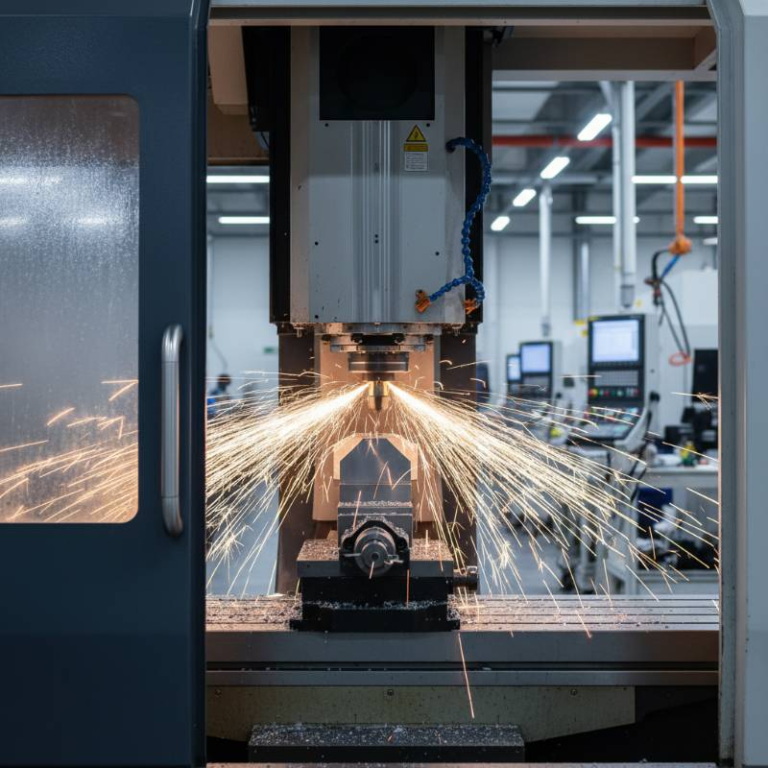
In 2026, industrial engraving has evolved beyond simple marking. It is now a critical component of subtractive manufacturing for branding, traceability, and functional micro-structures.
According to the ThomasNet 2026 Manufacturing Index, the demand for high-precision Industrial CNC Machining Services has surged. This is driven by the need for permanent, tamper-proof identification in the aerospace and medical sectors.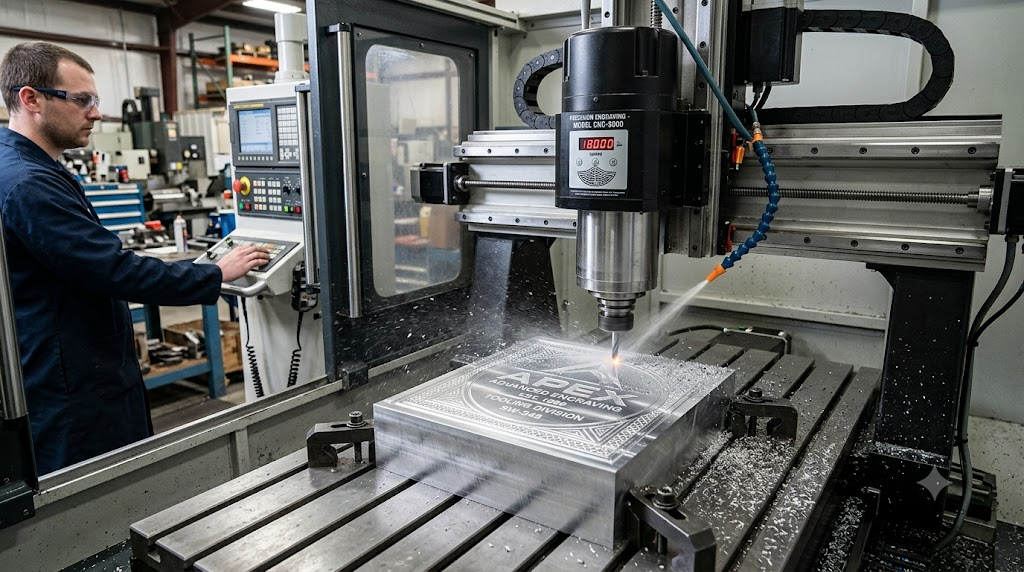
Procurement teams now face a more complex pricing landscape. Costs are no longer just about “shop time.” They now integrate AI-driven efficiency gains and rigorous ESG compliance metrics.
The Precision-to-Profit (P2P) Protocol: Our Proprietary Cost Framework
CNC engraving costs in 2026 are primarily determined by the Precision-to-Profit (P2P) Protocol, which calculates the intersection of machine hourly rates ($45-$120), material machinability multipliers (1.0x to 4.5x), and CAM programming complexity. By leveraging AI toolpath optimization, B2B buyers can reduce initial setup fees by up to 70% on batch sizes exceeding 1,000 units.
We developed the P2P Protocol to move away from “guesstimate” pricing. This framework prioritizes toolpath optimization early in the design phase.
By analyzing the relationship between surface finish requirements and cycle time, the P2P Protocol identifies the exact point where additional precision yields diminishing returns for your ROI.
B2B Hardcore Facts: 2026 CNC Engraving Cost Structure
Understanding the baseline rates is essential for accurate budgeting. In the 2026 North American market, labor and energy costs have stabilized, but machine sophistication has increased.
| Machine Type | Hourly Rate (USD) | Typical Setup Fee | Best For |
|---|---|---|---|
| Standard 3-Axis | $45 – $65 | $150 – $300 | Flat plates, simple logos |
| High-Speed 3-Axis | $65 – $85 | $200 – $400 | Micro-engraving, Aluminum |
| 5-Axis Interpolation | $85 – $120 | $500+ | Complex curved surfaces |
“We’ve observed that 2026 pricing is increasingly bifurcated. Commodity marking is cheaper than ever due to automation, but 5-axis micro-engraving for medical implants commands a premium due to ISO 13485 compliance costs.” — Lead Mechanical Engineer, Tyneen
Material Multipliers: How Hardness Impacts Your Quote
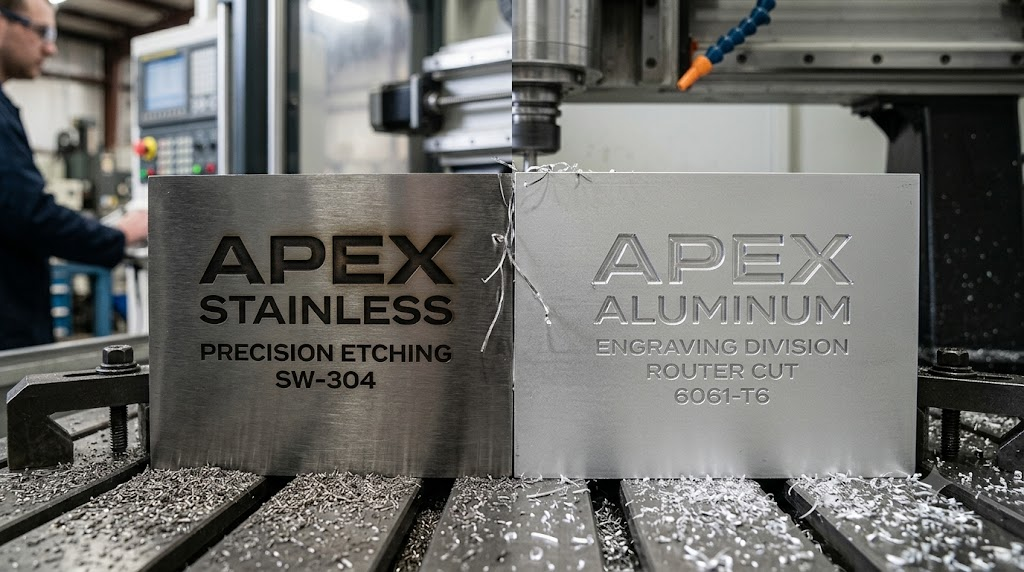
Material choice is the single biggest variable in tooling consumption. Engraving Stainless Steel requires slower feed rates and more frequent tool changes than Aluminum 6061.
Consult our Material Selection Guide to understand the chemical compatibility of your parts.
| Material | Hardness (Rockwell) | Cost Multiplier |
|---|---|---|
| Aluminum 6061 | 95 HRB | 1.0x (Base) |
| Stainless Steel 304 | 80 HRB | 1.8x – 2.2x |
| Titanium Grade 5 | 36 HRC | 3.5x – 4.0x |
DFM for CNC Engraving: Engineering for Lower Production Costs
Design for Manufacturing (DFM) is your most potent tool to reduce CNC machining costs. Small design changes can lead to massive savings in G-code complexity.
- Line Width: Maintain a minimum line width of 0.1mm. Narrower paths require fragile micro-cutters that break easily, increasing setup labor costs.
- Depth-to-Width Ratio: Keep the depth no more than 1x the width of the engraving tool to prevent tool deflection.
- Vector Graphics: Always provide clean vector graphics (DXF/STEP). Raster-to-vector conversion adds non-value-added CAM fixed costs.
Review our Design for Manufacturing (DFM) Resources for a full checklist of 2026 standards.
AI-Native Controls and Automated Toolpathing in 2026
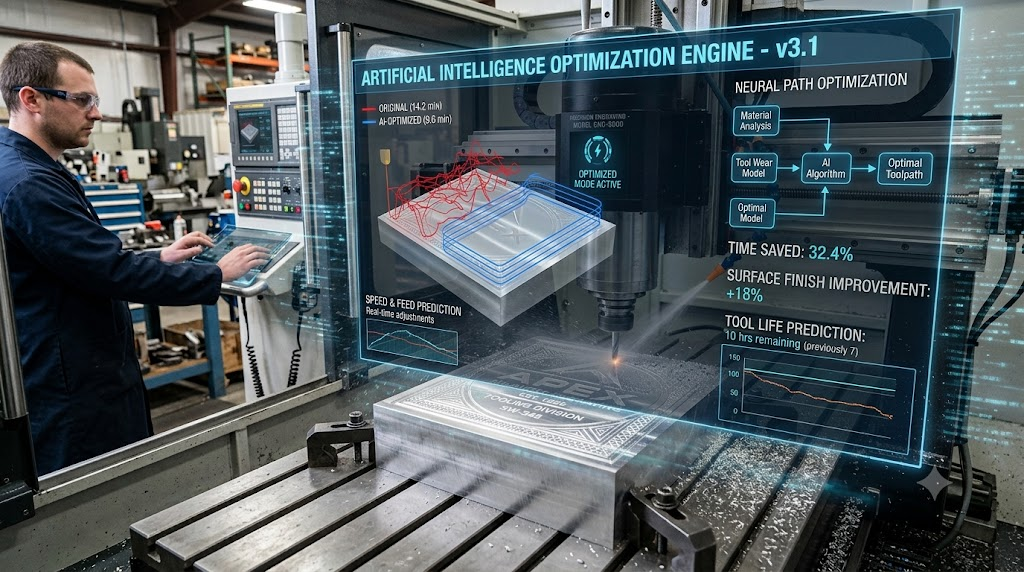
The biggest “information gain” for 2026 is the integration of AI-native controls. Modern CNC Machines now use real-time sensor feedback to adjust high-speed spindles on the fly.
This automated toolpathing has reduced setup labor by an average of 30% since 2024. By predicting tool wear before it happens, shops can maintain tighter 0.1mm tolerances without the “safety margin” slowdowns typical of older Computer Numerical Control systems.
Sustainability in Engraving: ESG and Carbon Footprint Reporting
In 2026, ESG reporting is no longer optional for B2B contracts. Procurement managers are now required to calculate the carbon footprint per part.
At Tyneen, we track the kWh consumption per engraving cycle. Because rotary engraving is a mechanical, subtractive manufacturing process, it often has a lower energy profile than high-wattage laser engraving for thick-gauge materials.
Interactive B2B Engraving ROI & Cost Estimator
Stop guessing your production costs. Our 2026 engine factors in real-time material volatility and volume amortization.
Upload CAD for an Instant AI-Assisted Quote and receive a full DFM analysis in under 5 minutes.
Frequently Asked Questions About CNC Engraving Costs
What is the difference between mechanical engraving and chemical etching?
Mechanical engraving uses a physical cutting tool, offering greater depth and the ability to work on 3D surfaces. Chemical etching is better for extremely thin foils but lacks the structural integrity and surface finish control of CNC.
How do setup fees work for recurring orders?
In 2026, setup fees are typically waived or significantly reduced for recurring orders if the G-code remains unchanged. We store your toolpath optimization profiles to ensure “plug-and-play” production for future batches.
What is the standard lead time in 2026?
For standard B2B orders of 100-500 units, lead times average 5-7 business days. AI-assisted scheduling has shortened this from the 10-14 day average seen in previous years.