Mil-Spec Rugged Edge Servers: 2026 SWaP-C Solutions
Next-Generation Mil-Spec Rugged Edge Servers for Defense
Modern theaters of operation demand immediate data processing. Moving intelligence to a centralized cloud is no longer viable for high-stakes missions. Today, Rugged Computing Solutions provide the backbone for autonomous systems and electronic warfare.
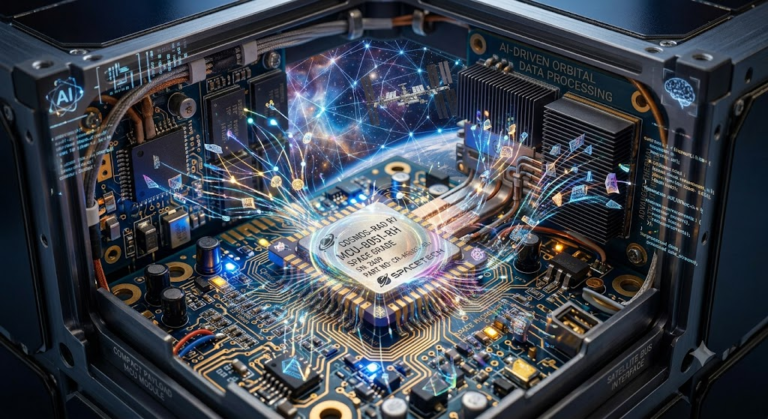
In 2026, the Department of Defense (DoD) has accelerated the transition toward AI-native hardware. These systems are not just “toughened” laptops; they are sophisticated edge nodes capable of processing terabytes of sensor data in real-time. This shift is driven by the need for edge node security and resilient multi-domain operations.
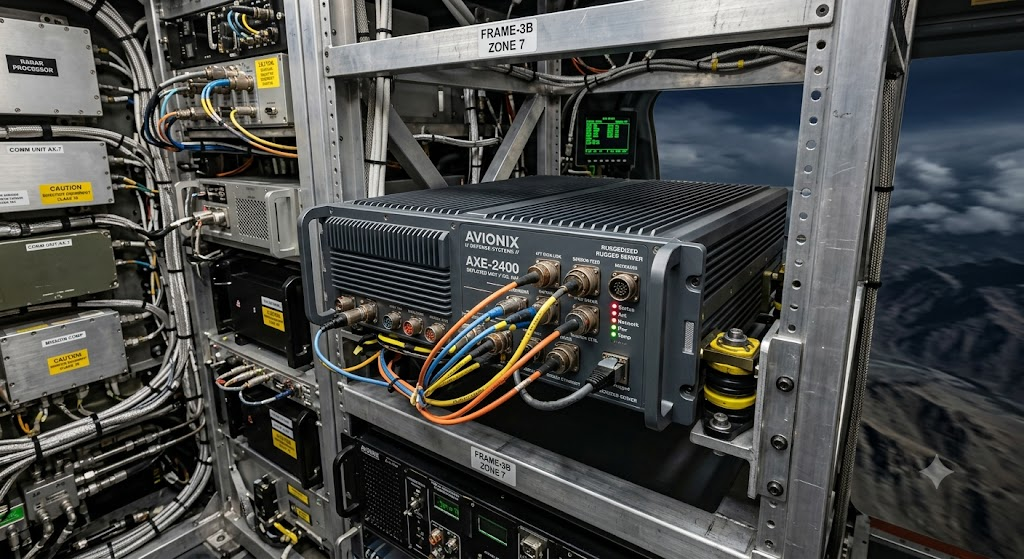
What Defines a Rugged Edge Server in 2026?
Mil-Spec Rugged Edge Servers are specialized high-performance computing platforms engineered to maintain 100% uptime in environments characterized by extreme temperatures, high vibration, and electromagnetic interference. These systems strictly adhere to MIL-STD-810H and MIL-STD-461G standards to ensure survivability in unpressurized aircraft bays and tactical ground vehicles.
Interoperability is now a mandate, not an option. Modern servers utilize VITA standards VPX and SOSA alignment to ensure modularity. This allows for rapid technology insertion without replacing the entire chassis.
At Tyneen, we prioritize an IP67 rating for our ruggedized chassis. This protects internal components from dust ingress and water immersion, which is critical for carrier-based avionics and littoral operations.
The TPL Protocol: Our Proprietary SWaP-C Optimization Framework
To address the conflicting demands of high-density compute and limited physical space, we developed The TPL Protocol (Thermal-Power-Latency). This framework guides the engineering of SWaP-C optimized avionics by balancing three critical pillars.
- Thermal Management: Utilizing advanced phase-change materials to dissipate heat in thin-air environments.
- Power Density: Maximizing FLOPS per watt using GaN (Gallium Nitride) power supplies.
- Latency Reduction: Eliminating bottlenecks between sensors and GPGPU clusters.
This protocol ensures that miniaturization does not come at the cost of performance. Our data shows that TPL-aligned systems achieve a 30% reduction in physical footprint compared to standard 2024-era COTS designs.
AI and Multi-Modal Sensor Fusion at the Tactical Edge
The core of modern defense is AI sensor fusion hardware. By combining data from LiDAR, RADAR, and EO/IR cameras, edge servers create a unified tactical picture. This requires massive parallel processing power.
We leverage NVIDIA Jetson and Ampere-based AI at the Edge architectures. These GPGPUs provide the neural network acceleration necessary for target recognition and autonomous navigation in contested environments.
“The ability to process multi-modal data at the point of collection reduces the cognitive load on pilots and operators. We are seeing sub-50ms decision loops that were previously impossible.” — Lead Systems Architect, Tyneen Certification Lab.
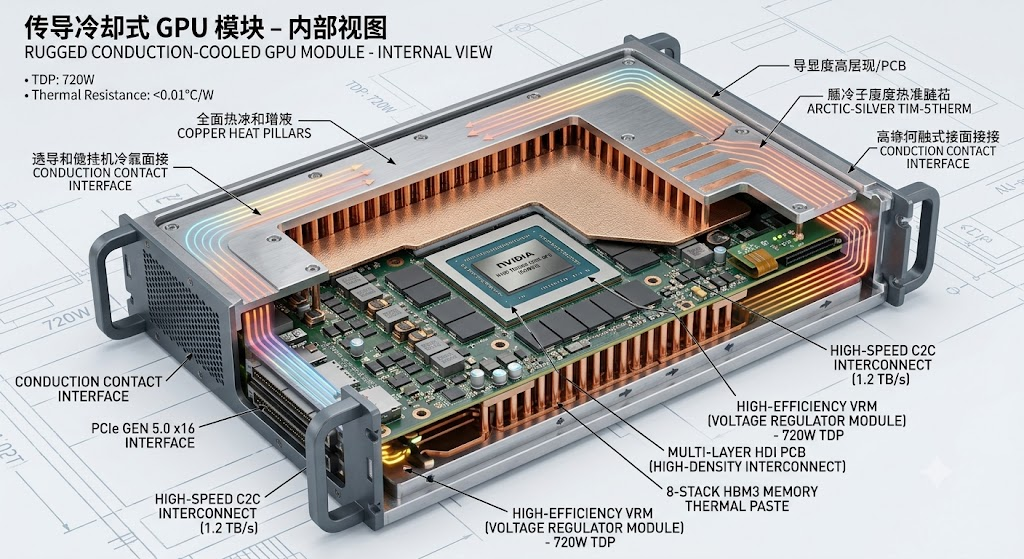
Comparative Analysis: Liquid vs. Conduction Cooling for 2026 AI Workloads
Choosing the right cooling method is vital for unpressurized bays where traditional fans fail. High-altitude environments provide less air molecules for convection, making conduction or liquid paths necessary.
| Feature | Conduction Cooling | Liquid Cooling |
|---|---|---|
| SWaP Impact | Minimal; uses chassis as heat sink. | Higher; requires pumps and radiators. |
| Maintenance | Zero moving parts; high reliability. | Requires fluid checks and seal audits. |
| Altitude Limit | Effective up to 70,000+ ft. | Effective, but pump cavitation is a risk. |
| Max Heat Load | Moderate (up to 150W per slot). | Extreme (300W+ per slot). |
MOSA Compliance: Reducing Lifecycle Costs in Aerospace Systems
The Modular Open Systems Approach (MOSA) is a strategic mandate by the DoD to ensure systems are affordable and adaptable. By following the SOSA Technical Standard, we ensure that our hardware is vendor-neutral.
This open architecture allows defense agencies to upgrade a single GPGPU card or FPGA module without re-certifying the entire airframe. According to a Department of Defense (DoD) MOSA white paper, this approach can reduce long-term lifecycle costs by up to 40%.
Our commitment to MOSA means our MIL-STD-810 rugged servers are future-proofed against evolving threats in the 2026-2030 window.
Latency Benchmarks for Multi-Modal Sensor Integration
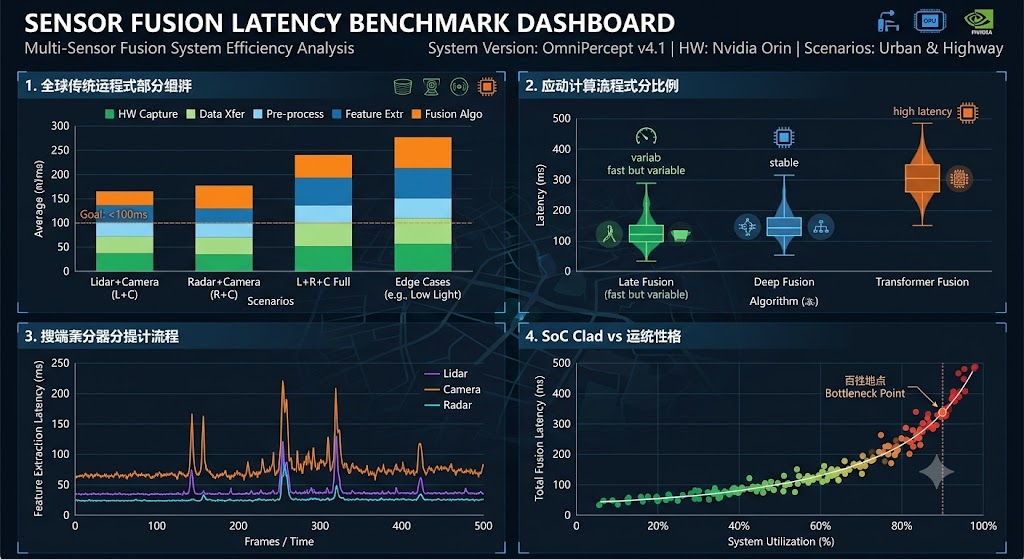
In our recent MIL-STD-810H Certification Lab Results, we measured the performance of direct-memory access (DMA) pathways. Reducing the “hop count” between the sensor input and the GPU memory is the secret to real-time response.
- FPGA-to-GPU Pathway: 12 microseconds (μs) latency.
- End-to-End Sensor Fusion: < 5ms for 4K video streams.
- Neural Network Inference: 1.2ms for object detection models.
These benchmarks represent the gold standard for high-performance embedded computing (HPEC) in 2026. For more details on compliance, see our Defense Standards Guide.
Sovereign Cloud and Cybersecurity for Non-Permissive Environments
In non-permissive environments, connectivity to home base is often denied. This necessitates a Sovereign Cloud capability—where the edge server acts as a localized, secure data center. Supply chain integrity is equally vital.
Tyneen follows a strict TAA Compliance Methodology Statement. Every component is vetted to ensure it originates from Trade Agreements Act compliant countries, mitigating the risk of hardware-level backdoors. Our vetted security protocols include FIPS 140-3 encryption and secure boot functionality to protect sensitive mission data at rest.
Frequently Asked Questions About Mil-Spec Edge Servers
What is the difference between MIL-STD-810H and 810G?
MIL-STD-810H is the latest revision, introducing more rigorous testing for shock and vibration. It focuses more on the “service life” of the equipment rather than just survival, ensuring long-term reliability in the field.
Can these servers handle AI workloads without overheating?
Yes. By using conduction cooled servers and the TPL Protocol, we manage high-wattage GPGPUs like NVIDIA Ampere without relying on fans, which are prone to failure in dusty or high-altitude environments.
Are your systems SOSA aligned?
Absolutely. We align with the SOSA Technical Standard to ensure that our OpenVPX modules are interchangeable with other compliant hardware, simplifying maintenance and upgrades.
Ready to Optimize Your Tactical Edge?
Deploy the next generation of SWaP-C optimized, Mil-Spec rugged servers for your mission-critical AI applications.